10 Cornrow Hairstyles For Black Women Over 50 Ideas
Selecting protective cornrow hairstyles after fifty requires a thoughtful balance between scalp health, root tension management, and timeless aesthetic elegance. As natural hair matures, strands naturally experience shifts in density, moisture retention, and tensile elasticity, making gentle braiding techniques essential for preserving delicate hairlines. In this comprehensive hair tutorial, you will explore ten sophisticated, low-tension cornrow hairstyle ideas designed specifically for mature Black women. You will learn professional methods for designing fluid parting patterns, integrating protective extensions weightlessly, executing low-manipulation updos, and maintaining lasting scalp hydration. Exploring these curated Pinterest ideas provides actionable guidance for refreshing your protective styling routine without subjecting fragile temple edges to excessive mechanical pull. Understanding how tailored braid sizes, nourishing botanical oils, and silk-lined accessories interact with mature afro-textured hair allows you to achieve clean structural lines, elegant facial framing, and effortless daily maintenance. This guide delivers step by step instructions to prepare you for clear salon consultations and confident home styling, ensuring your braided crown remains healthy, modern, and versatile across every professional and casual setting.
The Growing Value of Protective Cornrows for Mature Hair
Cornrow hairstyles continue to lead modern style inspiration for women over fifty because they combine cultural artistry with superior biological hair protection. As mature hair requires increased moisture retention and reduced daily manipulation to prevent breakage, structured cornrows offer a secure foundation that protects delicate ends from environmental stressors. These trending ideas dominate contemporary beauty platforms because they provide practical convenience while highlighting natural facial features, cheekbones, and jawline contours. Incorporating larger, low-tension braids with artistic parting lines delivers a beginner friendly protective approach that eliminates the weight associated with micro-braids or heavy extensions. Unlike high-manipulation styling routines that lead to unnecessary strand shedding, cornrows keep the hair shaft neatly tucked and moisturized for several weeks at a time. Furthermore, cornrows offer complete aesthetic versatility, allowing mature women to transition seamlessly from professional workplace environments to formal evening gatherings. By pairing structural hair preservation with refined minimalist style, cornrows remain an enduring, empowering styling choice for women over fifty.
Essential Tools, Products, and Scalp Preparation
Achieving clean, long-lasting, and comfortable cornrows requires systematic preparation, proper tool selection, and careful scalp analysis before braiding begins. The primary materials required include a metal tail parting comb, seamless sectioning clips, a continuous water misting spray bottle, a botanical leave-in conditioning cream, pre-stretched lightweight braiding hair, and pure jojoba or argan oil for scalp nourishment. Preparation begins by analyzing the client’s baseline hair density, scalp elasticity, and delicate hairline edges while the hair is completely dry. Cleanse the scalp thoroughly with a clarifying, sulfate-free moisturizing shampoo followed by a restorative deep conditioning treatment to fortify mature cuticles with moisture and proteins. Towel-blot hair to eighty percent dampness using a microfiber towel to prevent cuticle roughening and friction breakage. Gently detangle the lengths using a wide-toothed comb, starting from the ends and working upward toward the roots. Applying a light layer of water-based leave-in cream ensures the hair remains pliable and smooth during parting, preventing unnecessary tension during braid installation.
1. Classic Straight-Back Goddess Cornrows
Step-by-Step Guide
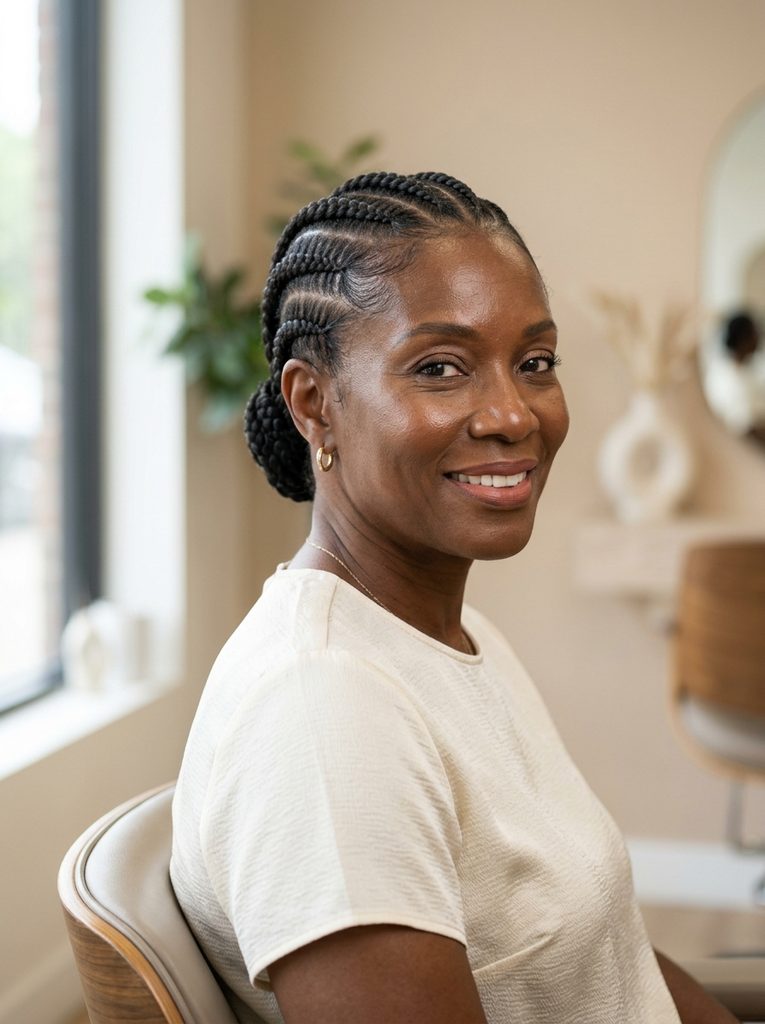
Classic straight-back goddess cornrows provide a clean, symmetrical silhouette that elongates the neck and draws focus directly to mature facial contours. This style features four to six thick, raised cornrows braided directly from the front hairline straight back to the nape of the neck. The increased thickness of goddess braids distributes tension evenly across a broader base of scalp hair, significantly reducing stress on individual follicles. This design is exceptionally beneficial for women over fifty seeking a low-maintenance, regal aesthetic that preserves fragile hairline edges while keeping daily manipulation to an absolute minimum.
To create this style, divide clean, moisturized hair into four to six vertical panels from the front hairline straight back to the nape using a metal tail parting comb. Secure the unused panels with sectioning clips to maintain crisp, clean parting lines. Apply a small amount of botanical styling butter along the base of the active section to smooth flyaways. Begin braiding at the hairline using an underhand technique, gradually incorporating small, uniform amounts of hair as you move straight back along the scalp. If added length or volume is desired, feed in lightweight pre-stretched synthetic or human hair gradually to avoid heavy root bulk. Secure the ends with clear elastic bands or dip the braided tips in hot water.
 SAVE TO PINTEREST
2. Elegant Curved Side-Swept Cornrow Updo
Execution Process
The elegant curved side-swept cornrow updo introduces fluid, asymmetrical geometry that softens mature facial angles and highlights the cheekbones. This concept features cornrows that originate from a deep side part or temple curve, sweeping gracefully across the crown into a gathered low or high bun. The curved parting lines add dynamic movement to the hairstyle, preventing it from appearing rigid or severe. This style functions as an elevated protective look for special events, formal dinners, and professional settings where sophisticated refinement is required.
Begin by mapping out the sweeping parting lines on damp, conditioned hair, carving a soft C-shaped part starting from the left temple across the crown toward the right ear. Clip away the hair outside the working section, and apply a light water-based gel to the parted edges for clean definition. Braid each cornrow along the curved path using gentle underhand tension, ensuring the roots remain flexible rather than tightly pulled against the scalp. Direct all braid tails toward a central gathering point at the side or back of the head. Gather the loose braid ends into a neat chignon or spiral bun, securing the perimeter firmly with smooth, u-shaped hairpins.
 SAVE TO PINTEREST
3. High Bun with Intersecting Geometric Cornrows
Setup Method
The high bun with intersecting geometric cornrows pairs architectural parting patterns along the scalp with the dramatic height of a topknot bun. This design features thin-to-medium cornrows that crisscross or converge upward toward the vertex of the head, culminating in a full, voluminous bun. Directing the cornrows upward creates an immediate lifting effect for the eyes and brow line, while the elevated bun keeps the neck cool and uncluttered. This style is ideal for active mature women who desire a secure, long-lasting protective style that stays out of the face.
Start by sectioning the hair into four equal quadrants around a central crown anchor point using clips on detangled, moisturized hair. Create geometric sub-parts, such as diagonal or diamond lines, within each quadrant using the fine tip of a parting comb. Braid each section upward toward the center crown, incorporating lightweight feed-in hair gradually to build smooth, uniform braid density without pulling the hairline. Once all cornrows reach the crown, gather the loose braid ends together and secure them with a soft, seamless fabric hair tie. Wrap the lengths around the central base to form a high bun, anchoring the shape with discreet bobby pins.
 SAVE TO PINTEREST
4. Tapered Nape Cornrows with Loose Textured Crown
How to Create
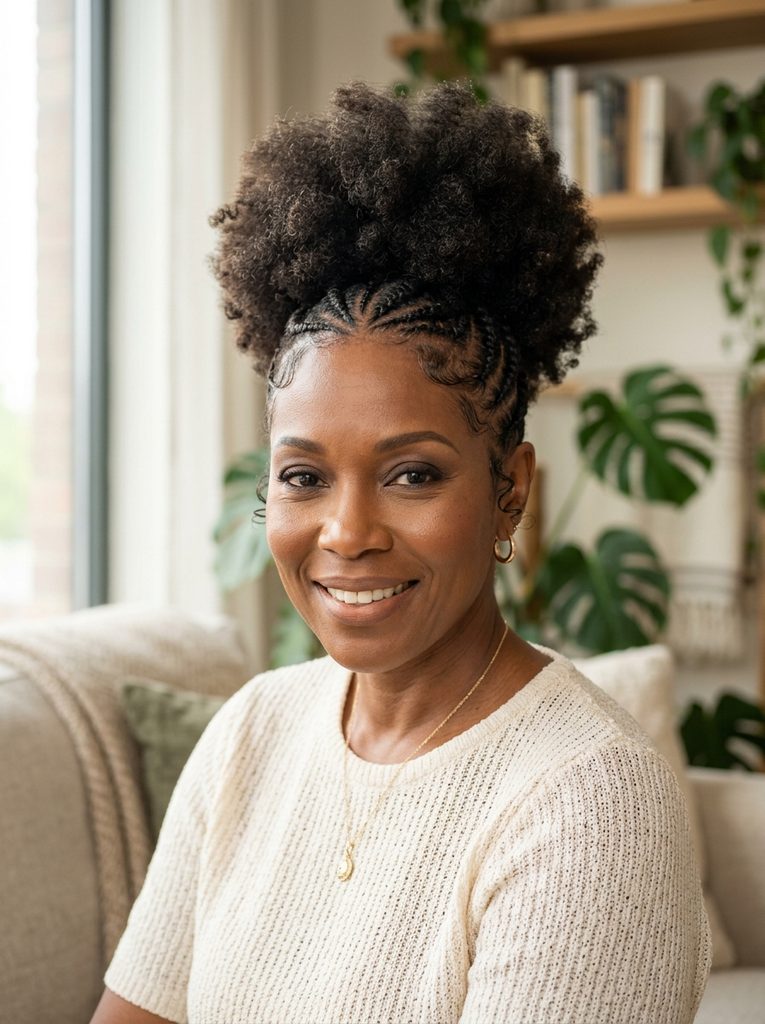
The tapered nape cornrows with a loose textured crown combine structured scalp braiding at the back with the soft volume of an afro puff on top. In this hybrid design, the lower half of the head from the ears down to the nape is braided in upward-traveling cornrows, while the upper crown hair is left loose, twisted, or coiled. This configuration protects the fragile nape area against friction from coat collars and scarves, while allowing the top natural curls to frame the face with soft, youthful density.
To construct this style, part the hair horizontally from the top of the left ear across to the top of the right ear, securing the upper crown bulk with a large clip. Divide the lower nape section into five to seven vertical or diagonal sub-sections. Braid each lower sub-section upward toward the horizontal parting line, securing the braid ends at the dividing line with mini rubber bands. Release the top crown section and apply a generous amount of curl defining cream or leave-in conditioner to damp coils. Use your fingers to define the natural curl pattern or install chunky two-strand twists across the crown, creating an effortless, voluminous textured top.
 SAVE TO PINTEREST
5. Low Chignon with Flat-Twist Cornrow Accents
Step-by-Step Guide
The low chignon with flat-twist cornrow accents offers a gentle, sophisticated styling option that utilizes two-strand flat twists along the scalp instead of traditional three-strand braids. This technique minimizes tension on mature hair follicles while delivering the clean, patterned look of classic cornrows. The flat twists travel smoothly from the hairline back to the nape of the neck, where they merge into a polished low chignon. This style is particularly flattering for mature women with fine or thinning hair, as flat twists create the appearance of fuller, plumper hair bands.
Begin by parting clean, damp hair down the center or along an off-center diagonal part using a metal tail comb. Distribute a quarter-sized amount of nourishing styling cream across the hair to enhance slip and reduce friction. Divide each side into three to four medium-sized panels. Starting at the front hairline, take two strands of hair and twist them around each other along the scalp, incorporating base hair into the twist as you travel toward the nape. Keep your hands close to the scalp to ensure a smooth roll without pulling tightly. Gather all twist tails at the nape, roll them into a compact low chignon, and pin securely with hairpins.
 SAVE TO PINTEREST
6. Feed-In Halo Cornrow with Wispy Edge Framing
Execution Process
The feed-in halo cornrow with wispy edge framing creates a single or double continuous braided crown that circles the entire perimeter of the head. This regal design incorporates lightweight feed-in hair gradually along the braid path, resulting in a seamless, plumping braid that appears natural and full. Leaving fine, soft tendrils or wisps around the temples and ears softens the overall look and ensures the delicate mature hairline remains completely free from mechanical pulling or tension alopecia risks.
To assemble this halo style, establish a clean circular parting around the perimeter of the head, keeping a half-inch buffer along the natural hairline to protect fragile edges. Begin braiding behind one ear, using an underhand cornrow technique that follows the circular perimeter toward the forehead, across the opposite temple, and back around the nape. Feed in small, lightweight synthetic or human hair strands every two inches to maintain consistent thickness and structural stability throughout the halo. Once the braid completes the circle, tuck the remaining tail beneath the starting point and stitch it down with a needle and thread or bobby pins. Style the isolated hairline wisps softly with a dab of light edge butter.
 SAVE TO PINTEREST
7. Chunky Ghana Braids with Wooden Bead Accents
Setup Method
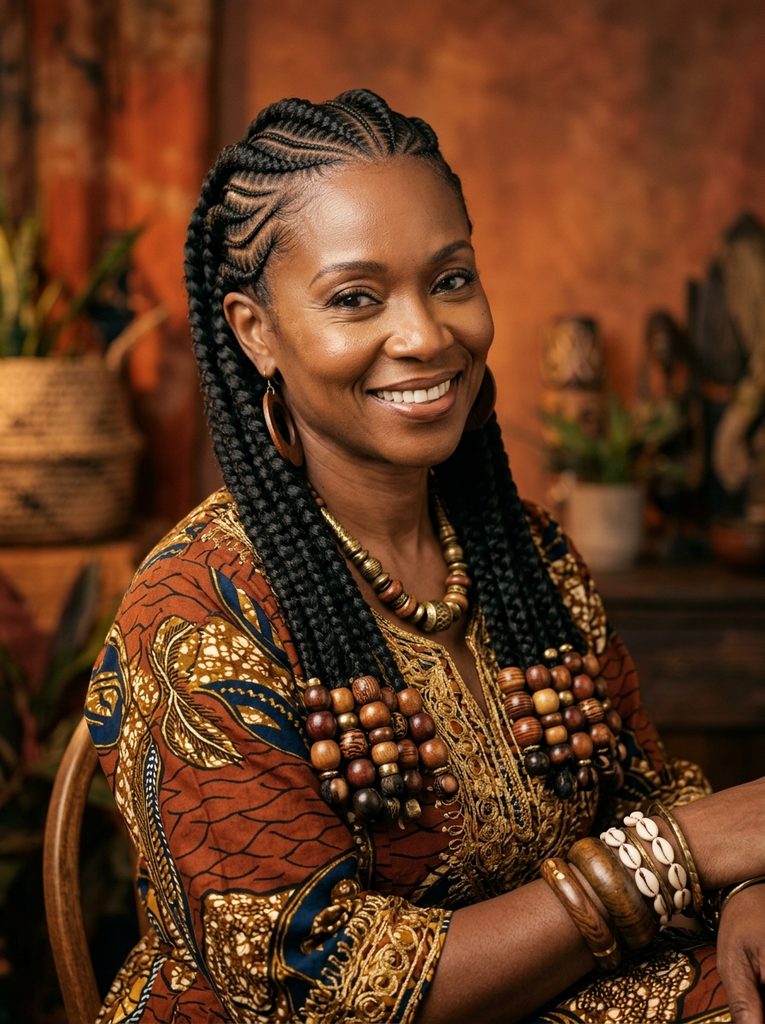
Chunky Ghana braids with wooden bead accents celebrate traditional African styling aesthetics through thick, pronounced cornrows adorned with earthy, handmade accessories. This design features four to six large feed-in cornrows that start small at the hairline and thicken substantially as they travel toward the back. Adding polished wooden or metallic beads to the braided ends provides textural contrast and cultural charm. This style is exceptionally protective for mature women, as the larger braid sections minimize tension points and allow easy access to the scalp for routine moisturizing treatments.
 SAVE TO PINTEREST
Start with freshly cleansed, deep-conditioned hair that has been gently stretched using a blow dryer on low heat with a comb attachment. Divide the head into five symmetrical vertical panels from forehead to nape. Begin braiding each panel with natural hair, feeding in small ribbons of braiding hair after the first two stitches to gradually build thickness along the scalp. Continue braiding down to the ends, ensuring uniform tension throughout. Thread decorative natural wooden beads onto the braid ends using a beading tool, securing the final bead in place with a small clear rubber band wrapped beneath it.
8. Diagonal Zig-Zag Parted Cornrows with Low Bun
How to Create
Diagonal zig-zag parted cornrows with a low bun modernize classic straight-back styles by incorporating dynamic, geometric parting lines across the scalp. The zig-zag parts create visual intrigue and artistic depth, transforming simple cornrows into a striking statement piece. The braids travel diagonally across the head to gather into a low, structured bun at the base of the neck. This low positioning avoids unnecessary gravitational pull on the crown, making it a comfortable, headache-free protective choice for mature women.
To create this geometric design, use the fine tip of a metal tail comb to carve precise zig-zag partings diagonally from the front hairline back toward the opposite nape corner. Clip away adjacent hair panels to preserve the sharp angles of each parting line. Apply a lightweight smoothing pomade along the parted tracks to keep the base neat and defined. Braid each diagonal section smoothly along its zig-zag path, keeping tension uniform and gentle. Gather all the braided ends at the lower nape, twist them together into a smooth circular bun, and anchor firmly with hairpins.
 SAVE TO PINTEREST
9. Half-Up Half-Down Cornrow and Free-Flowing Curls
Step-by-Step Guide
The half-up half-down cornrow style combines the structured precision of scalp braids on top with the soft, flowing movement of loose curls in the back. This design features straight or curved cornrows braided from the front hairline to the middle vertex, while the back half of the hair is left loose, set in defined curls or crochet waves. This combination allows mature women to enjoy the low-maintenance benefits of front cornrows while retaining the youthful, feminine drape of flowing textured locks.
Begin by parting the hair horizontally from ear to ear across the middle of the crown, securing the lower half with a large clip. Divide the upper front section into six to eight vertical cornrow panels. Braid each panel from the hairline back to the horizontal dividing line, securing each braid end with a small rubber band or allowing them to hang freely over the back section. Release the lower back section and apply a generous amount of moisturizing leave-in cream and curl mousse to damp hair. Define the back curls using a flexi-rod set, diffuser bowl, or crochet-installed textured waves, blending the front braid tails smoothly into the loose curls.
 SAVE TO PINTEREST
10. Minimalist Asymmetric Cornrow Bob
Execution Process
The minimalist asymmetric cornrow bob pairs sleek scalp braiding with a chic, jawline-grazing cut that angles forward to frame mature facial features. This design features cornrows that travel diagonally across the crown, transitioning into individual free-hanging braided ends that are cut and sealed into an angled bob silhouette. The shorter length eliminates heavy weight against the scalp, making it an exceptionally lightweight and comfortable option for women over fifty seeking an edgy, modern protective style.
To construct this tailored bob, divide clean, moisturized hair into diagonal panels originating from a defined side part. Braid each cornrow along the scalp using small feed-in extensions to ensure smooth consistency and durability. Once the braids leave the scalp, continue braiding the individual ends down past the jawline. Measure the desired forward angle relative to the jawline and collarbone, and trim the braid ends along a diagonal traveling line. Seal the ends by dipping them carefully into boiling hot water, then roll the warm tips in a towel to establish a smooth, blunt bob perimeter that curves gently toward the chin.
 SAVE TO PINTEREST
Common Cornrow Mistakes and Practical Prevention
Maintaining protective cornrows after fifty requires avoiding common installation and maintenance mistakes that lead to follicle stress, hairline recession, or scalp irritation. A frequent error is allowing the stylist to pull the front hairline too tightly during the initial braid stitches, which can cause tension bumps and permanent traction alopecia along fragile temples. Prevent this by communicating clearly with your braider to leave fine baby hairs out of the braid foundation and keep root tension comfortable. Another common mistake is leaving cornrows installed for too long without washing the scalp, leading to product buildup, clogged follicles, and excessive shedding during takedown. Limit cornrow wear to four to six weeks maximum, and cleanse the scalp bi-weekly using a diluted shampoo rinse applied with a nozzle bottle. Additionally, avoid using heavy, petrolatum-based greases on the scalp; choose lightweight botanical oils like jojoba or squalane that absorb without suffocating the skin.
+------------------------------------+---------------------------------------+
| Common Cornrow Styling Mistake     | Practical Prevention Strategy         |
+------------------------------------+---------------------------------------+
| Excessive tension on hairline edges| Leave delicate temple edges loose     |
| Keeping braids installed too long  | Remove styles within 4 to 6 weeks     |
| Heavy mineral oil scalp buildup    | Apply lightweight jojoba/argan oils   |
| Neglecting nighttime protection    | Wear silk bonnets or use silk pillows |
+------------------------------------+---------------------------------------+
Practical Tips for Healthier Braids and Better Results
Achieving salon-quality results at home relies on consistent scalp care habits and proper mechanical handling techniques that support mature hair elasticity. When cleansing cornrows, always apply a diluted sulfate-free shampoo directly to the scalp tracks using an applicator bottle, massaging gently with the pads of your fingers rather than fingernails to prevent frizzing the braid surface. Rinse thoroughly with lukewarm water and ensure the braids dry completely using a hooded dryer or warm diffuser to prevent moisture retention and mildew at the core of thick cornrows. To maintain healthy moisture balance throughout the wear period, mist the hair daily with a lightweight blend of rosewater and vegetable glycerin, followed by two drops of argan oil pressed gently along the braid lengths. Sleep with a wide-band 100% mulberry silk bonnet to eliminate friction against cotton bedding, keeping braid lines neat and preventing mechanical breakage overnight.
Styling, Presentation, and Wardrobe Integration
The inherent versatility of cornrow hairstyles allows for diverse daily styling adaptations that suit various personal aesthetics, professional environments, and formal social events. For active mornings or fitness routines, gather straight-back or curved cornrows into a low, silk-wrapped chignon to keep hair elevated away from sweat without creating root pull. For corporate business meetings, pair geometric cornrows or a feed-in halo braid with tailored blazers, crisp collared shirts, and minimalist gold stud earrings to project modern authority. Cornrows can be elevated for evening galas and cultural celebrations by incorporating delicate metallic hair cuffs, gold wire wrapping, or polished wooden beads that complement your wardrobe palette. Coordinating your braided hairstyle with defined eyebrow grooming and bold statement eyewear further accentuates your facial architecture, celebrating mature elegance with effortless confidence.
Budget Allocation and Protective Hair Care Planning
Building a sustainable protective hair care routine requires disciplined budget allocation and strategic purchasing focused on high-quality botanical ingredients rather than excessive styling tools. Because mature hair thrives on clean scalp environments, prioritize spending on premium sulfate-free cleansers, restorative deep conditioners, and cold-pressed botanical sealing oils. Professional braiding services should be budgeted every six to eight weeks, factoring in maintenance appointments for braid touch-ups or gentle takedown treatments. When purchasing synthetic braiding hair, invest in lightweight, hypoallergenic pre-stretched hair to prevent scalp itching and excessive gravitational weight. Investing in durable silk accessories, such as high-grade silk pillowcases and wide-band bonnets, protects your financial investment in professional styling, extending the wearable life of your cornrows while preserving natural hair health across multiple seasons.
Creative Expansion and Advanced Styling Inspiration
Once you have mastered foundational cornrow maintenance, you can explore creative customizations to adapt your protective style to changing seasons and personal style preferences. Experiment with subtle multi-tonal braiding hair blends that incorporate soft honey blonde, warm caramel, or radiant silver strands to add multi-dimensional depth across the cornrow tracks without chemical coloring. You can also integrate intricate stitch-braid techniques or curved fishbone parting designs for unique architectural flair during festive holidays or family celebrations. For formal banquets, weave a delicate silk ribbon or metallic cord through the center of a halo cornrow to transform a classic protective style into an intricate statement piece. These creative expansions allow your cornrow hairstyles to evolve continuously, offering a versatile, empowering medium for sophisticated, confident self-expression throughout every decade of life.