The goal of this style is to avoid rigid structure and instead promote soft, flowing shapes. It works well for individuals with naturally wavy hair but can also be adapted for straight hair using styling techniques. The result is a balanced combination of volume and texture that feels light and dynamic.
To create this cut, start by sectioning the hair and identifying areas where layers will enhance movement. Use point cutting to create irregular edges that support natural wave patterns. Avoid straight, blunt cuts as they can reduce the textured effect.
After cutting, lightly scrunch the hair while damp to encourage wave formation. Allow it to air dry or use minimal heat styling. This process keeps the look natural and aligns with DIY styling approaches. The final result is a relaxed haircut that complements everyday styling needs.
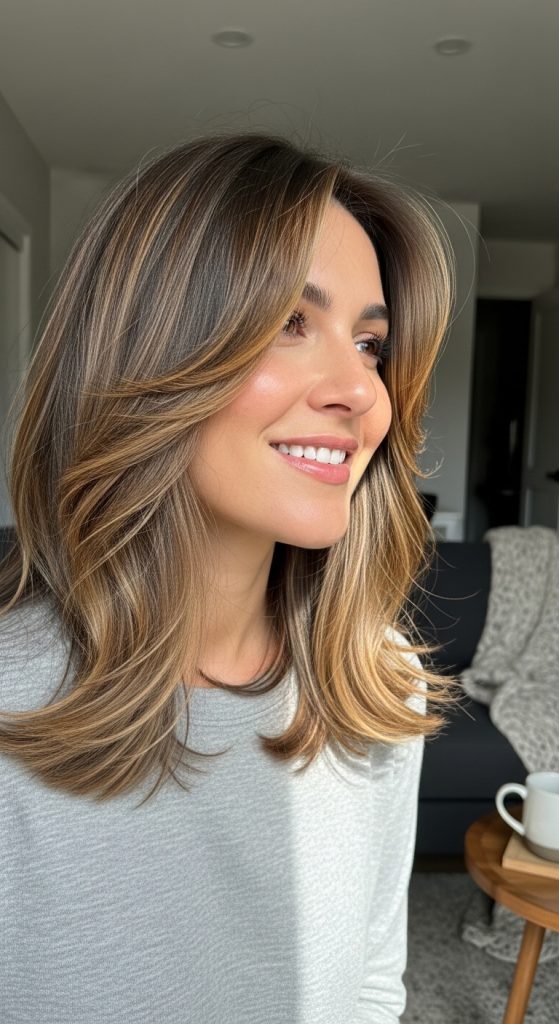
Idea 4: Face-Framing Layers
Execution Process
Face-framing layers focus on highlighting facial features by adding shorter layers around the front of the hair. This technique draws attention to the face while maintaining the overall length of the haircut. It is commonly used in modern design hairstyles that prioritize balance and structure.