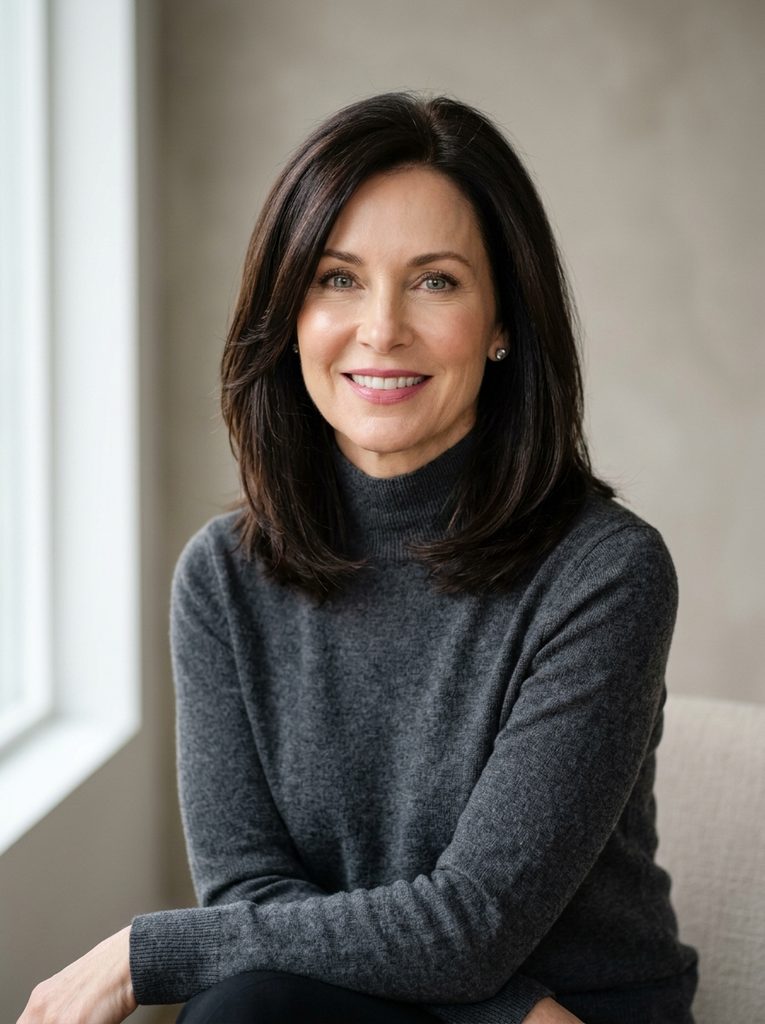
Selecting an intentional dark hairstyle after fifty offers a transformative opportunity to restore visual hair density, accentuate facial bone structure, and establish an elegant daily grooming routine. Deep color palettes—ranging from rich espresso and dark chestnut to glossy obsidian—deliver high surface reflectivity that instantly makes mature strands look healthier, thicker, and more vibrant. As hair texture and natural pigmentation shift over time, pairing rich dark tones with strategic structural haircutting prevents dark shades from appearing harsh or solid against evolving complexions. Throughout this comprehensive guide, readers will explore ten distinct dark hairstyle concepts engineered to balance geometric precision, soft face-framing textures, and manageable maintenance schedules. You will discover how subtle undertone selection, internal weight removal, and tailored perimeter graduation prevent monochromatic heaviness around the jawline. These creative ideas merge classical hair foundation work with modern design simplicity, giving you practical inspiration to transform your personal grooming into an easy project. Whether seeking structured short crops or flowing shoulder-length waves, this guide delivers actionable methods to align hair density, skin undertones, and daily styling needs with absolute precision.
+-------------------------------------------------------+
|  DARK HAIR TONAL MATRIX & CUTTING BLUEPRINT           |
|                                                       |
|   Level 2-4 Deep Canvas: Rich espresso / chestnut base|
|   Reflective Glaze: Translucent blue/violet gloss seal|
|   Canopy Layer: 90-degree internal weight dispersal   |
|   Perimeter Line: Softened, beveled structural border |
+-------------------------------------------------------+
Why This Idea Is Trending or Useful
Contemporary Pinterest ideas focusing on mature style increasingly celebrate dark hair colors as a luxurious, bold alternative to automatic all-over blonde transitions. Modern trending ideas prioritize radiant hair health, structural perimeter definition, and high-shine finishes that frame facial contours with intentional elegance. Dark hairstyles provide significant practical value because deep pigment molecules fill porous hair shafts, restoring a smooth cuticle surface that reflects natural light effortlessly. The design relevance centers on creating balanced contrast that sharpens jawlines, lifts the eyes, and complements warm, cool, or neutral mature complexions without looking artificial. For beginners exploring a return to deeper hues, these concepts offer an accessible, beginner friendly foundation supported by gentle glossing treatments and low-maintenance haircuts. The minimalist style inherent in deep brunette and soft black tones eliminates visual distraction, highlighting clean cutting angles and natural hair movement. By combining rich color saturation with textured layers, these dark hair concepts deliver sustainable elegance that effortlessly suits corporate environments and casual lifestyles alike.
Materials and Preparation
Achieving an optimal dark hairstyle outcome requires assembling the correct physical implements, selecting professional-grade color formulas, and conducting thorough structural planning before starting. Essential physical tools include high-grade stainless steel cutting shears, point-texturizing shears, non-slip sectioning clips, and fine-tooth tail combs. For color application and maintenance, gather ammonia-free demi-permanent glosses, low-volume deposit developers, and acid-balanced color-locking cleansing shampoos. Daily styling setups require a high-velocity ceramic blow dryer equipped with a directional concentrator nozzle, medium-sized ceramic round brushes, and a flat wrap brush. Preparation begins by assessing natural gray distribution, scalp sensitivity, and hair elasticity through a dedicated strand analysis. Before visiting a salon or applying color, gather visual inspiration depicting dark haircuts on individuals with similar hair textures. Cleanse the hair forty-eight hours prior to coloring using a clarifying shampoo to eliminate product buildup, establishing a clean, uniform canvas for optimal dye absorption. Taking these deliberate preparation steps guarantees transparent communication with your colorist and establishes a reliable foundation for precise execution.
1. Deep Espresso Textured Lob with Soft Layers
Step-by-Step Guide
The deep espresso textured lob rests precisely along the collarbone, pairing a rich coffee-brown base with subtle vertical graduation throughout the interior. This design prevents dark hair from looking heavy or flat around the shoulders by using point-cut interior layers to create continuous movement. The dark espresso tone provides high light reflection, giving fine or thinning strands the visual appearance of increased thickness along the bottom edge. Face-framing layers begin just below the cheekbones, contouring the face and directing visual attention upward toward the eyes. This cut suits medium to thick hair densities, balancing depth with an airy, fluid perimeter.
       .-''''-.
     .'  ====  '.      <- Deep Espresso Surface Shine
    /   ======   \
   |   / \  / \   |
   |   \  \/  /   |    <- Cheekbone-Level Soft Framing
    \   `----'   /
     '. ====== .'      <- Clavicle Resting Perimeter
       `'----'`
Implementation begins by applying a level three neutral espresso demi-permanent glaze evenly from roots to ends to establish a saturated base. Section the damp hair into four quadrants and cut the baseline straight across the collarbone with zero elevation for maximum perimeter strength. Release the top canopy, elevate sections vertically to ninety degrees, and point-cut the ends to create diffused interior weight distribution. To style, apply a dime-sized amount of thermal smoothing serum to damp mid-lengths, blow-dry using a medium ceramic round brush, and roll the ends backward away from the face to create soft, glossy bends.