Repurposing amber plastic medicine bottles offers an innovative approach to home organization, functional storage, and handmade crafting. These ubiquitous cylindrical containers possess durable construction, airtight seals, and UV-blocking amber tinting that protect delicate contents from light degradation. This comprehensive guide delivers ten distinct, practical projects that transform everyday plastic containers into aesthetically pleasing household items and portable tools. Readers will explore versatile methods for converting standard medicine bottles into functional desktop organizers, travel pill cases, miniature sewing kits, and decorative home accessories. Each tutorial emphasizes step-by-step techniques, structural modifications, surface treatments, and proper adhesive selections to ensure long-lasting utility. Integrating these upcycled solutions into daily routines reduces plastic waste while providing customized organization systems for small supplies. By controlling the surface finish, hardware attachment, and decorative detailing, crafters can elevate simple utility items into cohesive decor pieces that enhance workshop spaces, vanity tables, and travel kits.
The Practical Appeal and Aesthetic Relevance of Upcycled Amber Glassware
Upcycling amber medicine bottles has become a popular design choice within modern DIY culture, aligning with sustainable living trends and practical organization goals. The warm, amber-toned hue of these containers naturally complements minimalist style interiors, apothecary-inspired bathroom decor, and modern rustic workshop environments. Beyond visual appeal, the structural integrity of medical-grade plastic or glass provides inherent functional benefits, including water resistance, impact durability, and secure screw-top or push-and-turn closures. These projects carry high DIY appeal because they require minimal financial investment, utilizing readily available household tools and basic craft supplies. For beginners, working with smaller containers allows for quick completion times and immediate practical results without requiring advanced technical skills or specialized machinery. The versatile nature of amber containers makes them ideal candidates for customized storage units, decorative accents, and portable tool kits. Implementing these creative ideas establishes efficient storage solutions while giving discarded items a second functional purpose within the home.
Material Gathering and Surface Preparation Guidelines
Achieving professional results with amber bottle crafts requires thorough surface cleaning, proper material selection, and strategic planning before starting any assembly steps. Essential supplies for these projects include empty amber prescription bottles, fine-grit sandpaper, isopropyl alcohol, multi-surface primers, industrial adhesives, and protective clear coats. Useful tools include precision craft knives, hot glue guns, small paintbrushes, measuring tape, and safety goggles. Preparing the containers begins with removing paper labels and adhesive residue, which is accomplished by soaking the bottles in warm, soapy water or applying rubbing alcohol. Once clean, lightly sanding the slick plastic or glass exterior creates a textured surface that allows paint, fabric, and glue to bond securely. Planning considerations should include assessing the intended function of each container, measuring storage spaces, and selecting hardware or closures that match the overall design aesthetic.
Architectural Faux-Brass Desktop Pen Caddy
Setup Method
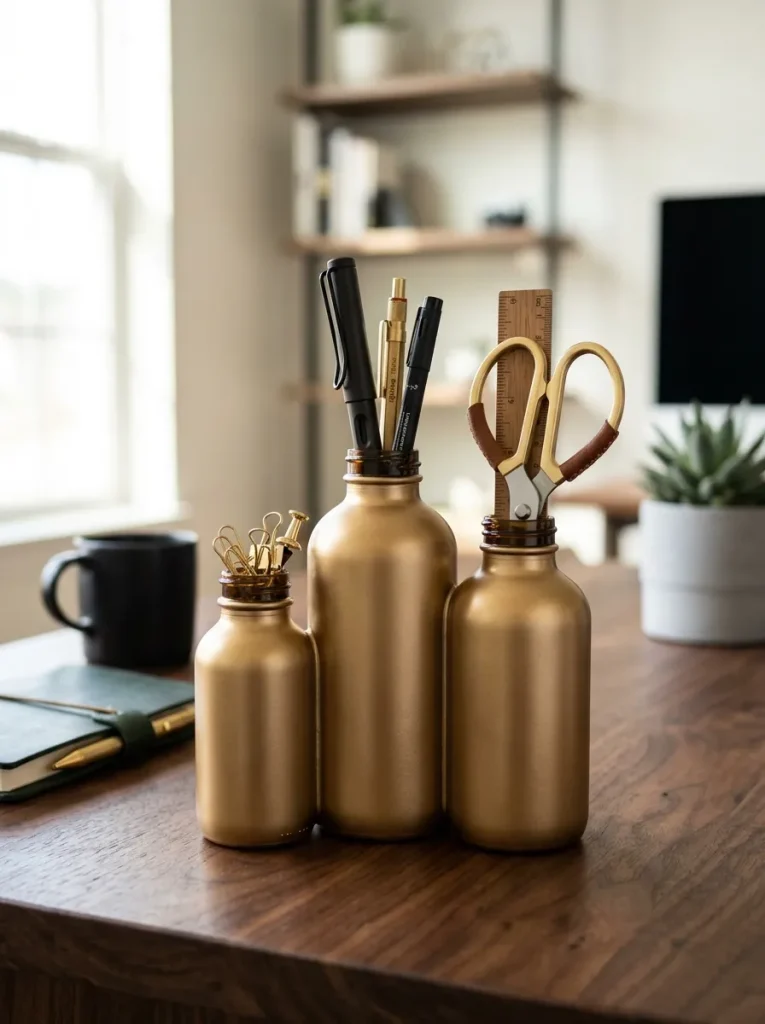
The architectural faux-brass desktop pen caddy turns plain amber plastic bottles into a sophisticated desktop accessory that resembles vintage metalwork. This project joins three amber containers of varying heights together, coating the exterior in a metallic warm-brass paint to create a unified geometric structure. The resulting organizer provides dedicated compartments for pens, pencils, scissors, and small office supplies, decluttering workspaces while introducing a classic industrial accent. The amber interior remains partially visible or fully covered based on paint application, offering contrast against dark wood desks and minimalist office configurations. This durable setup stands firmly on flat surfaces, preventing small stationery items from rolling across work areas.
To create this desktop organizer, select three empty amber bottles of different heights and clean them thoroughly with isopropyl alcohol. Lightly sand the entire exterior surface of each container using three-hundred-grit sandpaper to promote paint adhesion. Arrange the three bottles in a tight triangular formation on a flat surface, ensuring the bases sit flush against one another. Join the side walls of the containers using a continuous line of heavy-duty construction adhesive, clamping them together with rubber bands until the glue cures fully. Once set, apply two thin coats of metallic brass spray paint over the entire outer assembly, allowing forty-five minutes of drying time between applications. Finish by adding a weighted felt pad to the bottom base to prevent desk surface scratching.