Another advantage of the textured shag is its adaptability to different hair textures. Straight, wavy, and curly hair can all benefit from the layered structure. The haircut encourages natural movement, which reduces the need for extensive styling.
Because the layers are distributed evenly throughout the hair, the shag haircut provides volume and shape while maintaining a casual aesthetic.
Execution Process
Divide the hair into multiple horizontal sections starting from the crown. Secure each section with clips to maintain organization during the cutting process.
Cut shorter layers near the crown of the head. These layers should be noticeably shorter than the surrounding hair to encourage lift and volume.
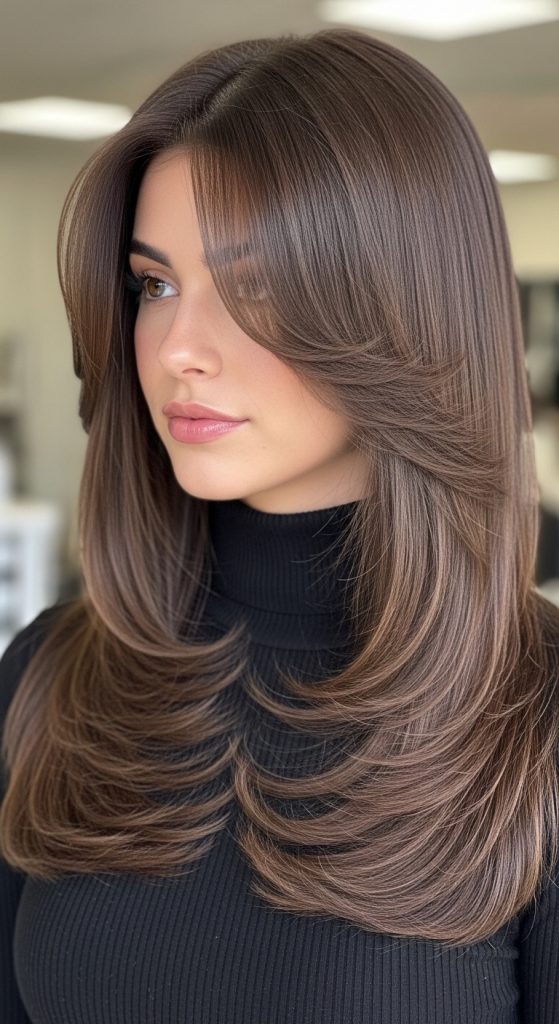
Gradually increase the length of each layer as you move downward toward the ends of the hair. This technique creates the signature shag shape.
Use point cutting along the ends to soften the edges and enhance the textured appearance.
Finish by styling the hair with loose waves or natural texture. The layered structure of the shag haircut will create movement and volume around the oval face.
Idea 6: Long Straight Hair with Face-Framing Layers
How to Create
Long straight hair combined with face-framing layers is a simple yet effective haircut for oval face shapes. Pinterest ideas often highlight this style because it maintains length while subtly enhancing facial features. The long length complements the vertical proportions of the oval face, while the face-framing layers soften the overall look.
The face-framing layers typically begin near the cheekbones or chin. These shorter sections blend gradually into the rest of the hair, creating a smooth transition between lengths. This technique draws attention toward the center of the face while maintaining balance.
Because the layers are concentrated around the front of the hair, the rest of the hairstyle retains its natural density. This structure works well for individuals who prefer long hair but want to add movement and dimension.
The haircut also allows versatile styling options. It can be worn sleek and straight for a polished appearance or styled with gentle waves to create additional texture.
Step-by-Step Guide
Begin by separating the front portion of the hair where the face-framing layers will be created. Clip the remaining hair back to maintain clear sections.
Trim the front strands slightly shorter than the rest of the hair, starting near chin level.
Blend these shorter pieces into the surrounding hair by gradually increasing the length of each section.