10 Haircut Ideas at Home
 SAVE TO PINTEREST
This guide presents ten haircut ideas that can be done at home using beginner friendly techniques. Each idea explains the haircut concept clearly and provides a structured method for achieving the style. The focus remains on simple approaches that allow individuals to maintain or slightly modify their hairstyle without advanced training. These ideas are especially useful for people who want to experiment with creative ideas or perform routine trims between professional appointments.
Readers will learn about haircut structures such as layered cuts, blunt trims, curtain bangs, and simple shaping techniques. The article also explains preparation steps, essential materials, and safe cutting methods. By understanding the fundamentals of hair sectioning and gradual trimming, individuals can confidently perform a haircut at home while maintaining balance and shape.
Why This Idea Is Trending or Useful
Haircut ideas at home have become a trending topic on Pinterest because they combine practicality with creative self-care routines. Many people search for haircut inspiration that allows them to manage their hair independently. This interest increased significantly as individuals looked for convenient ways to maintain hairstyles without relying on salon visits. Pinterest tutorials and visual guides have made these techniques more accessible to beginners.
Another reason these ideas remain popular is the growing interest in DIY beauty routines. Cutting or trimming hair at home can be a simple creative project when approached with patience and proper preparation. Many haircut styles, especially trims and light layering, require only basic tools and careful technique. These styles often focus on small adjustments rather than dramatic transformations.
Home haircuts also support budget planning. Regular salon appointments may not always be practical for everyone. Learning basic haircut methods allows individuals to maintain healthy hair and refresh their style when needed. Because many of these techniques are beginner friendly and adaptable to different hair lengths, they continue to appear among trending ideas in beauty and personal care content.
Materials and Preparation
Before attempting a haircut at home, preparing the correct materials and workspace is essential. Proper tools improve accuracy and help prevent uneven cuts. The most important tool is a pair of sharp hair-cutting scissors. Regular household scissors are not ideal because they may create rough edges. A fine-tooth comb is also necessary for separating hair sections and maintaining control during the cutting process.
Additional tools include hair clips, elastic bands, a mirror, and a spray bottle filled with water. Clips help divide the hair into manageable sections, while elastic bands can guide trimming lines for simple styles. A spray bottle allows hair to remain slightly damp, which helps maintain straight lines while cutting.
Preparation also involves creating a well-lit workspace with access to a mirror. Some individuals prefer using two mirrors to view the back of the head. Hair should be washed, conditioned, and gently detangled before cutting. Damp hair is easier to manage and provides more precise results.
Planning the haircut before starting is important. Reviewing reference images and understanding the shape of the haircut helps ensure that the trimming process remains controlled and gradual. Careful preparation reduces mistakes and allows the haircut to be completed safely.
Idea 1: Simple Straight Trim
How to Create
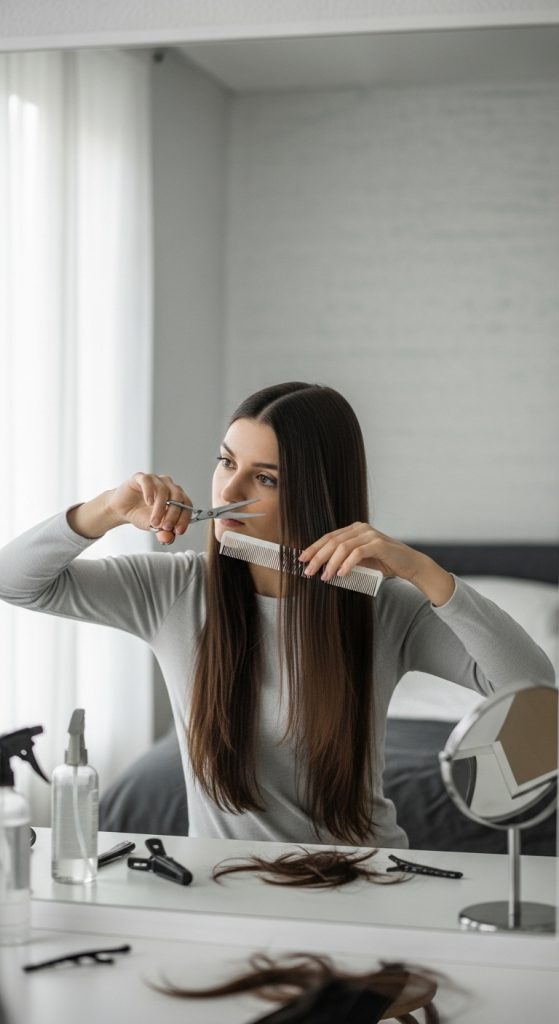
A simple straight trim is one of the most beginner friendly haircut ideas at home. This method focuses on maintaining the overall length of the hair while removing uneven or damaged ends. The haircut creates a clean horizontal edge along the bottom of the hair, which helps maintain a neat and polished appearance.
 SAVE TO PINTEREST
This haircut works well for medium to long hair lengths because the straight edge helps preserve thickness and fullness. Unlike layered styles, the straight trim maintains the same length across the entire bottom edge. This structure can make the hair appear healthier and more uniform.
To perform this haircut at home, begin by combing the hair carefully to remove tangles. Divide the hair down the center into two equal sections. Bring both sections forward over the shoulders so they are visible in the mirror. Hold the hair between the fingers at the desired length.
Using sharp hair scissors, cut small amounts across the bottom edge while keeping the scissors parallel to the floor. Avoid cutting too much at once. After completing the trim, comb the hair again to check for uneven areas. Small adjustments can be made by trimming individual strands.
Idea 2: Soft Face-Framing Layers
Step-by-Step Guide
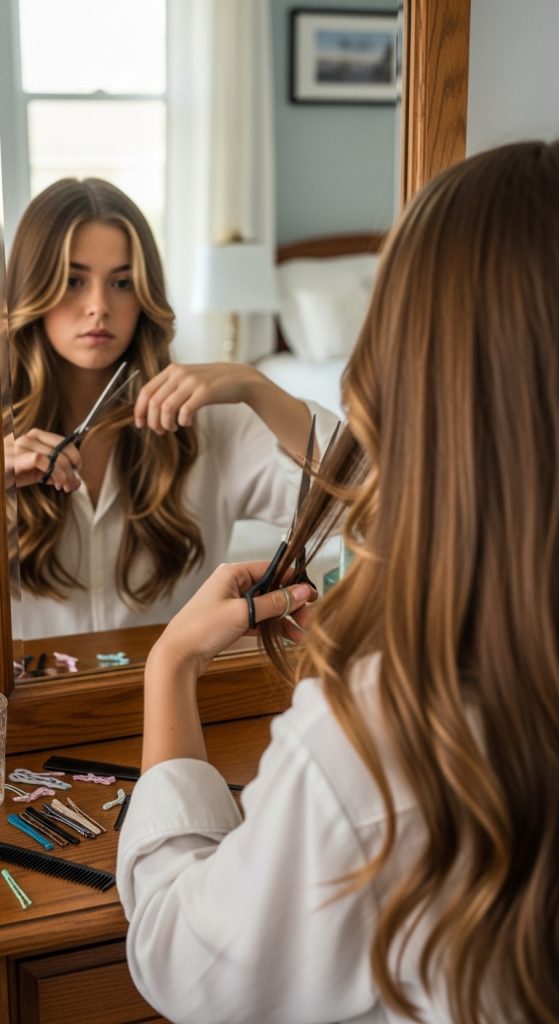
Soft face-framing layers create gentle movement around the front of the hair while maintaining the overall length. This haircut focuses on shaping the hair near the face rather than cutting the entire head evenly. The layers help the hair fall naturally while adding dimension to the style.
This haircut works especially well for individuals with medium to long hair because the front layers blend gradually into the longer back sections. The layers soften the overall appearance and highlight facial features. Many people choose this haircut because it creates subtle change without removing significant length.
To create face-framing layers at home, begin by parting the hair down the center. Separate the front sections of hair from the rest using clips. Comb the front sections forward so they fall naturally beside the face.
 SAVE TO PINTEREST
Hold a small section of hair between the fingers and gently angle the scissors downward. Cut small diagonal trims beginning slightly below the chin. Repeat this process gradually on both sides, ensuring the layers remain symmetrical. Comb the hair frequently to check the shape and adjust as necessary.
Idea 3: Long Layered Haircut
How to Make
The long layered haircut adds movement and texture throughout the length of the hair. Unlike simple trims, layered haircuts remove weight from the lower sections of hair while creating a flowing shape. Layers help reduce heaviness and allow the hair to move more freely.
 SAVE TO PINTEREST
This haircut is particularly useful for thick hair because it prevents the ends from appearing overly bulky. The layers create a cascading effect that distributes volume evenly. The overall shape remains long while the layers add subtle variation.
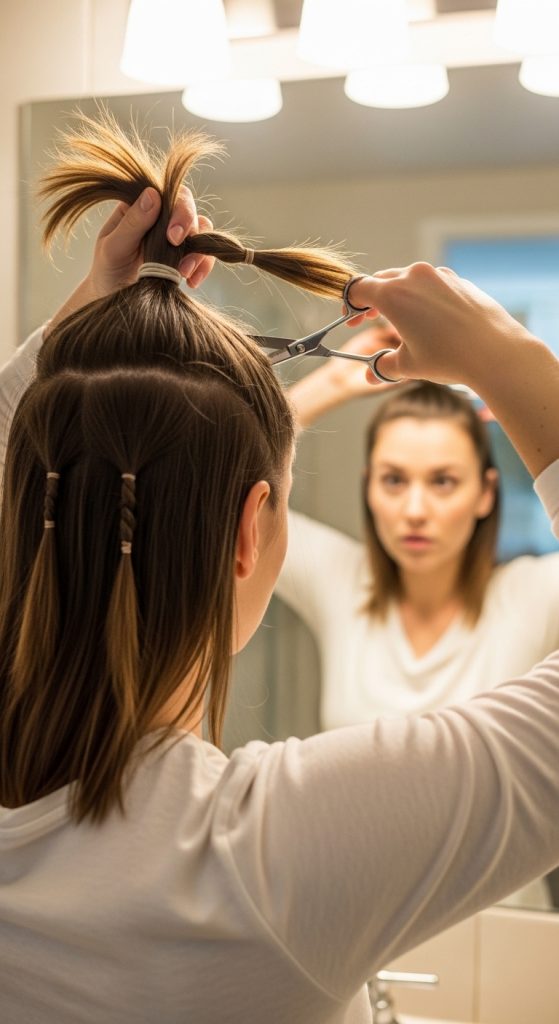
To create long layers at home, begin by gathering the hair into a high ponytail positioned at the top of the head. Ensure the ponytail sits centered to maintain even distribution. Secure the ponytail with an elastic band.
Hold the ponytail upward and trim a small portion from the end using straight scissors. Cutting the ponytail in this position automatically creates gradual layers once the hair is released. After cutting, remove the elastic band and comb the hair to reveal the layered structure.
Idea 4: Curtain Bangs
Execution Process
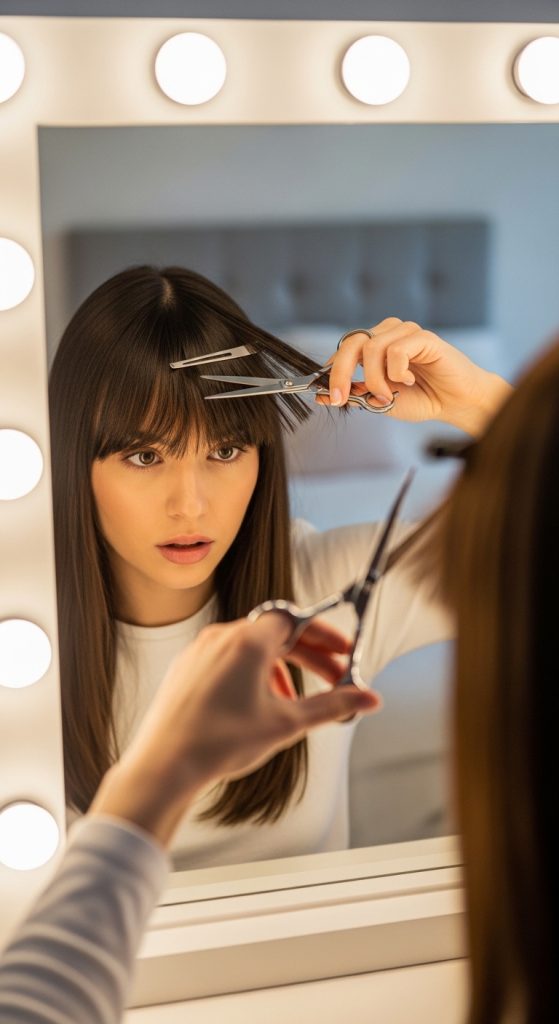
Curtain bangs are a popular haircut that frames the face with parted front strands. These bangs create a soft and balanced appearance because they open outward from the center of the forehead. The design allows the bangs to blend naturally into longer layers.
 SAVE TO PINTEREST
Curtain bangs are considered beginner friendly because they require only a small front section of hair. The rest of the hair remains untouched, which reduces the risk of major mistakes. The result is a gentle framing effect that complements many hairstyles.
To cut curtain bangs at home, begin by creating a triangular section at the front of the hairline. Comb this section forward so it falls across the forehead. Divide the section into two equal parts.
Hold one side between the fingers and angle the scissors downward. Trim gradually so the hair becomes slightly shorter near the center and longer toward the sides. Repeat the process on the opposite side, ensuring the lengths match.
Idea 5: Blunt Bob Trim
How to Create
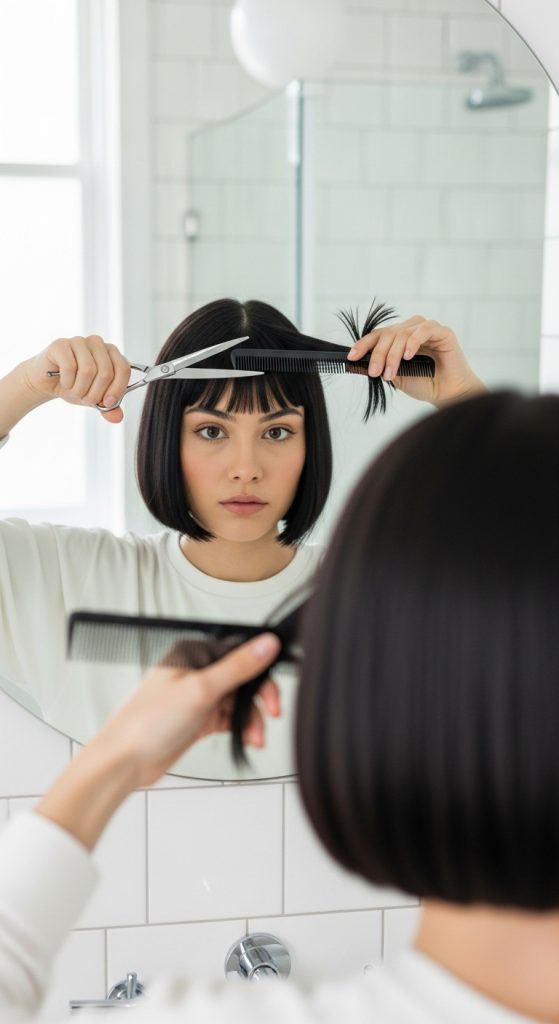
The blunt bob trim focuses on maintaining a straight and even haircut along the jawline or slightly below it. This haircut produces a sharp edge that emphasizes structure and simplicity.
 SAVE TO PINTEREST
To create the blunt bob trim, begin by dividing the hair into sections. Start cutting from the back and move gradually toward the front. Keep the scissors parallel to maintain a straight edge.
Use a comb frequently to ensure the line remains even across all sections.
Idea 6: Curly Hair Dusting
 SAVE TO PINTEREST
Setup Method
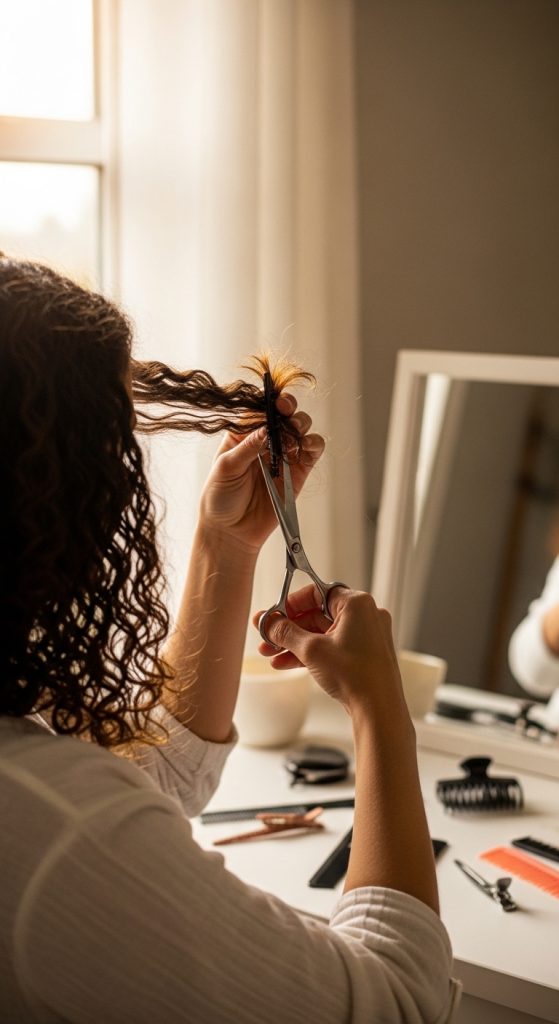
Curly hair dusting removes small amounts of hair from the ends without altering the curl pattern. The technique focuses on trimming only damaged tips.
To perform this haircut, allow the hair to dry naturally so the curl pattern becomes visible. Identify individual curls that extend beyond the main shape and trim only the very ends.
This method preserves the natural curl structure.
Idea 7: Shoulder-Length Trim
How to Create
 SAVE TO PINTEREST
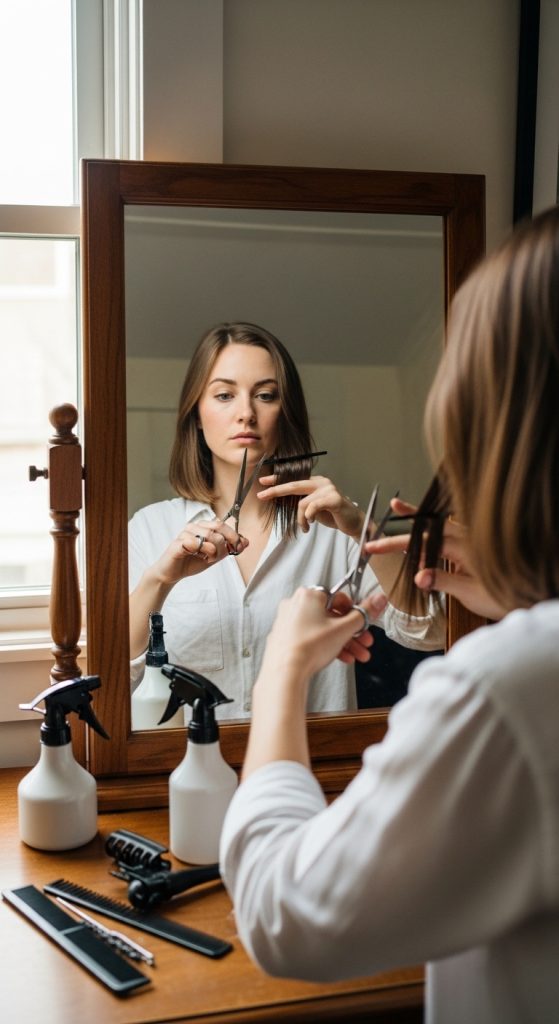
The shoulder-length trim shortens long hair to a balanced length near the shoulders. This haircut is useful for refreshing long hair while keeping styling manageable.
Divide the hair into several sections and trim gradually across the bottom.
Idea 8: Textured Ends Cut
Step-by-Step Guide
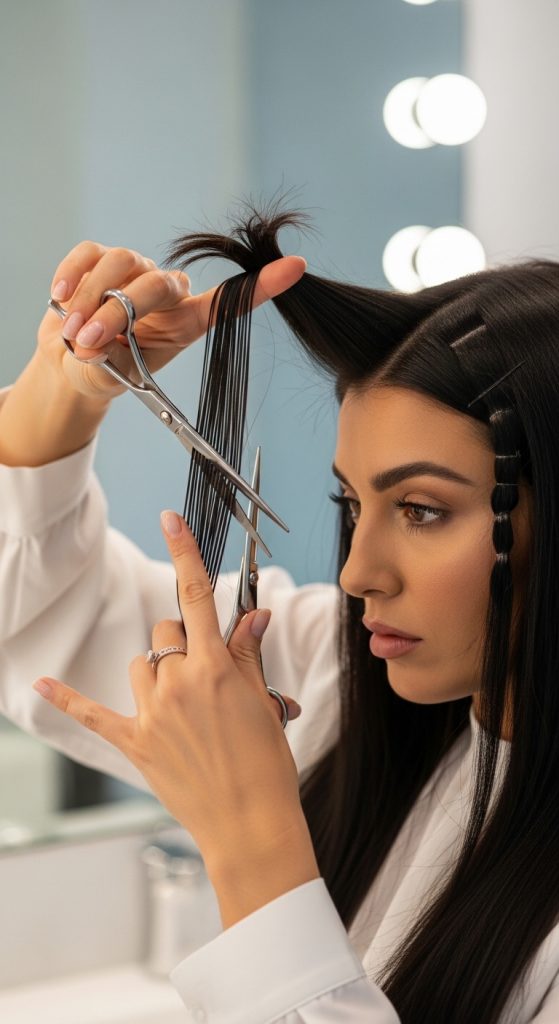
Textured ends create a softer finish by removing heavy blunt edges. The technique involves cutting small vertical snips into the ends of the hair.
 SAVE TO PINTEREST
Hold the scissors vertically and cut lightly into the ends to create texture.
Idea 9: Side Swept Bangs
How to Make
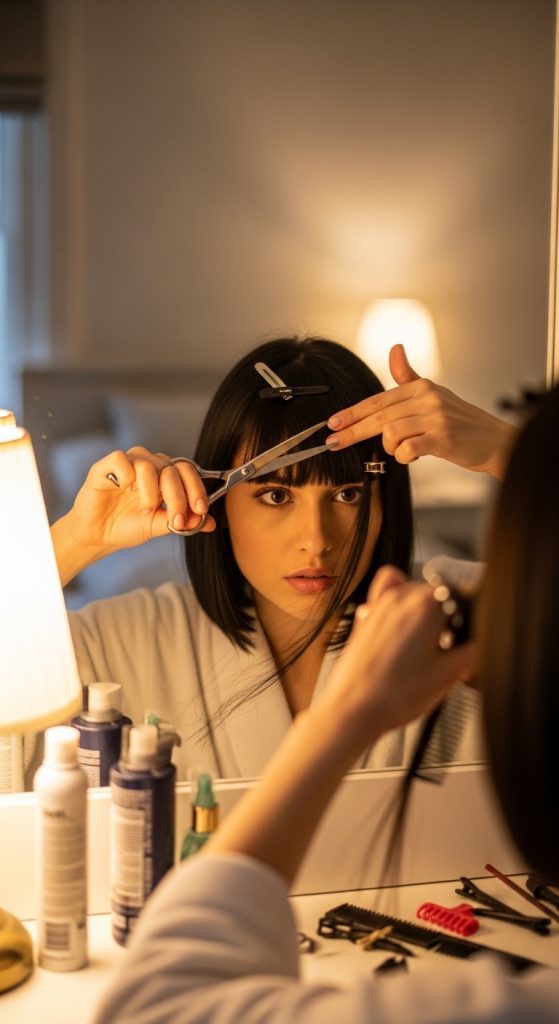
Side swept bangs create a diagonal fringe across the forehead. This haircut softens facial features and blends with layered hairstyles.
 SAVE TO PINTEREST
Section the front hair and trim diagonally from one side to the other.
Idea 10: Minimalist Long Hair Refresh
Execution Process
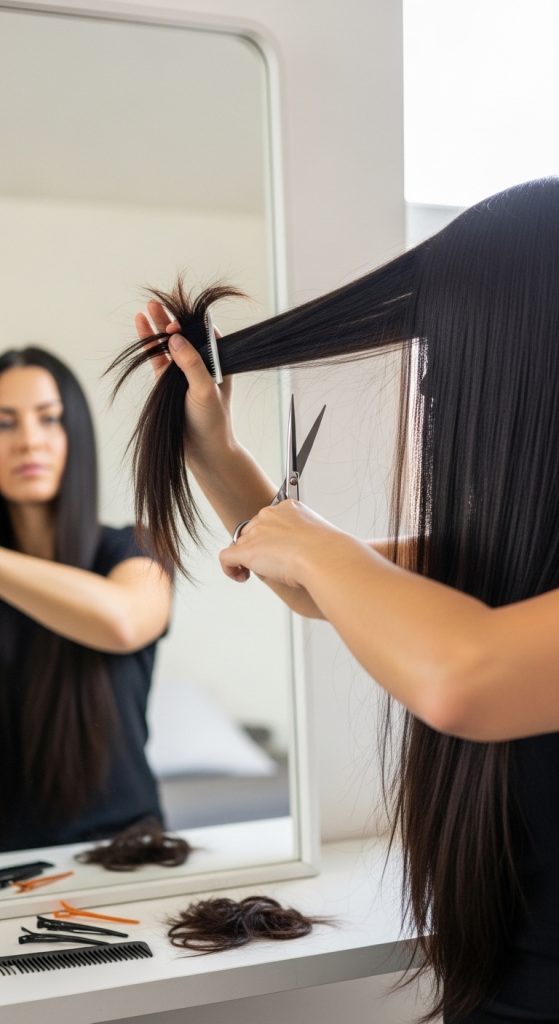
This haircut focuses on maintaining long hair while removing split ends. Only a small amount of hair is trimmed to maintain health.
 SAVE TO PINTEREST
Comb the hair forward and trim very small amounts across the ends.
Common Beginner Mistakes and How to Avoid Them
One common mistake in home haircuts is cutting too much hair at once. Gradual trimming helps maintain control and prevents uneven lengths. Another frequent error involves using dull scissors. Sharp haircutting scissors create clean edges and reduce damage to the hair.
Improper sectioning can also lead to uneven results. Dividing the hair into clear sections ensures that each area receives equal attention. Beginners should also avoid cutting hair that is tangled or poorly combed because this can distort the final shape.
Practicing patience and checking the haircut frequently in the mirror helps maintain balance throughout the process.
Practical Tips for Better Results
Cutting hair in small increments provides the best control. Trimming a few millimeters at a time allows adjustments before removing too much length. Using clips to divide the hair into sections also improves accuracy.
Keeping the scissors steady and parallel to the intended cutting line helps maintain symmetry. Regularly combing the hair during the process ensures that strands remain aligned.
Styling, Presentation, or Organization Ideas
After completing a haircut at home, styling helps highlight the final shape. Blow drying or curling the hair can reveal layers and framing sections more clearly.
Organizing haircut tools in advance ensures the process remains efficient. Clean scissors, combs, and clips should be placed within easy reach.
Budget or Time Planning
Haircuts at home provide a practical option for maintaining hair without frequent salon visits. Most haircut techniques require only basic tools and minimal time.
Setting aside enough time for careful cutting ensures better results and reduces the likelihood of mistakes.
Creative Expansion and Advanced Inspiration
Once comfortable with simple trims, individuals can experiment with more advanced techniques such as layered shaping or blending methods. Combining different haircut ideas allows personalized results.
Creative experimentation helps develop confidence while maintaining healthy hair and balanced styling.