Idea 2: The Terracotta Fluted Architectural Canister
How to Make
Incorporating deep terracotta hues and classical vertical fluting textures onto a compact plastic container introduces a compelling architectural artifact to your tabletop vanity home decor. This idea focuses on mathematical alignment, repeating linear geometry, and flat color application to achieve a clean look that aligns with modern Mediterranean design trends. By arranging half-round clay columns side-by-side around the perimeter of the bottle, you completely disguise its plastic origins while adding immense structural rigidity. This approach is highly successful for beginners because it relies on simple extrusion and alignment steps that generate a highly polished look with minimal advanced sculpting control. The resulting fluted canisters look exceptionally chic when grouped together inside a shallow wooden display tray on an entry console.
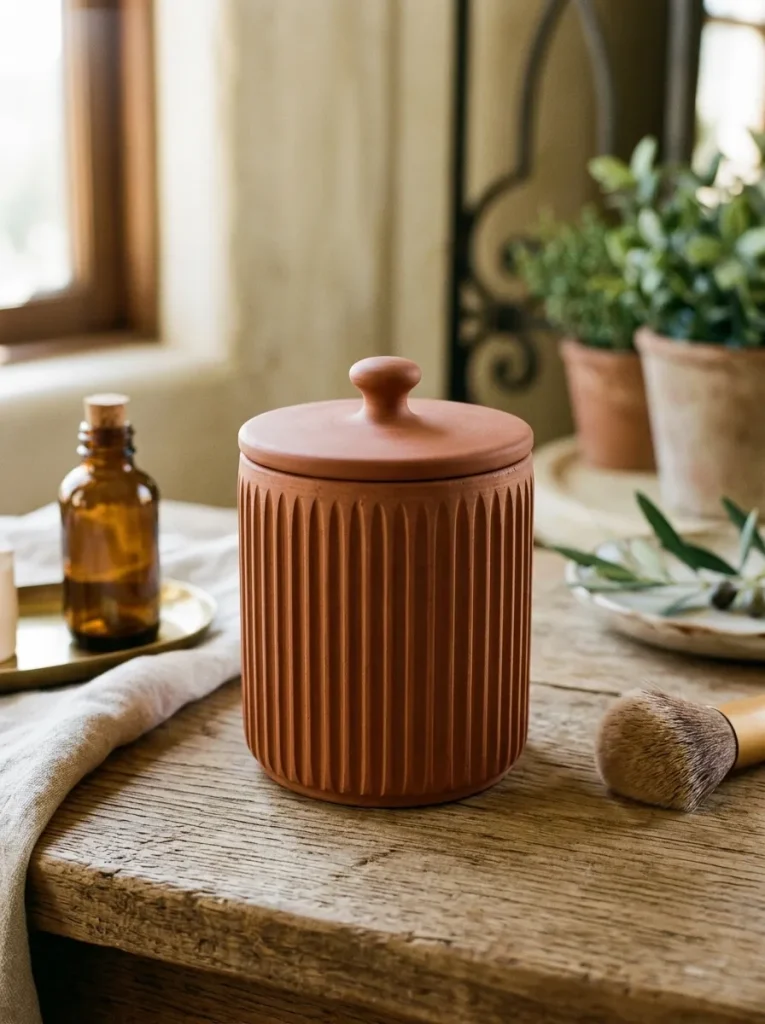
Select a wide-diameter prescription bottle, washing the interior with rubbing alcohol to remove natural skin oils before applying your gesso base primer coat. Condition a block of authentic terracotta-colored polymer clay, feeding the material through a clay extruder fitted with a half-circle die plate to create long, uniform fluted ribbons. Cut the extruded clay ribbons into equal vertical lengths that match the exact distance from the bottle’s lower base up to its upper neck ridge line. Apply a thin film of liquid clay adhesive to the primed plastic surface, pressing the flat sides of the fluted clay columns vertically against the bottle wall in a tight arrangement. Ensure there are no air bubbles trapped beneath the clay, smoothing the top and bottom junction lines cleanly with a flat silicone blending tool. Place the fluted container upright on a tile sheet, baking at the recommended threshold temperature for thirty minutes before finishing with a velvet matte topcoat.