10 Soft Curtain Layer Over 40 Haircut Ideas
Choosing an intentional hairstyle that complements evolving hair textures and facial contours is an essential element of modern personal grooming for women over forty. As hair undergoes natural hormonal transitions, changes in strand diameter, lipid production, and scalp elasticity often necessitate a shift away from heavy, blunt cuts toward softer, multi-dimensional shapes. Soft curtain layers combine the cheekbone-framing elegance of parted retro fringe with gentle, blended graduation throughout the perimeter and crown. This comprehensive styling tutorial delivers ten distinct soft curtain layer haircut concepts, ranging from collarbone-grazing lobs and feathered Italian bobs to flowing butterfly cascades and cropped bixie hybrids. Readers will discover the structural mechanics of slide-cutting angles, learn how outward-sweeping fringe opens up the eye area, and master thermal and heatless styling routines for daily wear. Exploring these professional methods provides the practical knowledge needed to select a flattering, manageable silhouette that restores natural root lift, softens expression lines, and elevates your overall aesthetic across professional, social, and casual settings.
Why This Idea Is Trending or Useful
Soft curtain layered haircuts continue to rank among the top trending ideas across modern style and visual inspiration channels due to their remarkable balance of visual softness and low-maintenance functionality. Traditional straight-across bangs often demand frequent salon trims, daily thermal straightening, and strict styling commitments that can feel restrictive for busy lifestyles. In contrast, soft curtain layers sweep outward diagonally from a center or gentle off-center parting, naturally drawing visual focus toward the cheekbones while framing the face without covering the brow. This structural design offers high practical value by removing excess interior weight from dense strands and creating buoyant vertical volume for finer textures. From a DIY styling perspective, curtain layers are beginner friendly and forgiving, transitioning gracefully as they grow out over several months without requiring urgent corrective appointments. The versatility of this modern design allows individuals to transition effortlessly between casual daytime air-dried textures and polished evening blowouts, delivering an enduring, youthful look with minimal morning effort.
Materials and Preparation
Achieving and maintaining the fluid, outward-sweeping motion of soft curtain layers requires gathering proper styling formulations, thermal appliances, and precision maintenance hardware before styling begins. Essential hardware includes an ionic blow dryer with a directional concentrator nozzle, medium and large ceramic round brushes with mixed natural boar bristles, an adjustable-temperature ceramic flat iron, and durable sectioning clips. If performing minor fringe trims at home, use professional-grade Japanese stainless steel cutting shears and point-cutting texturizing scissors. Foundational styling preparations comprise a lightweight thermal protectant spray, a volumizing root-lift foam, a hydrating botanical leave-in conditioner, and a weightless finishing oil such as squalane or argan oil. Preparation begins with a scalp-clarifying wash to remove product residues and environmental buildup, followed by a moisture-balancing conditioning treatment applied from mid-lengths to ends. Planning considerations require analyzing personal hairline growth cowlicks, forehead proportions, and natural curl shrinkage factors to ensure the shortest point of the curtain layer rests precisely at the most flattering facial landmark.
Collarbone-Grazing Lob with Cheekbone Curtain Wings
Step-by-Step Guide
The collarbone-grazing lob with cheekbone curtain wings combines a clean clavicle baseline with delicate, outward-flaring front layers that begin precisely at the cheekbones. This medium-length silhouette provides an ideal balance for women over forty, preserving sufficient length for versatile styling while eliminating the heavy downward pull that flattens roots. The curtain layers are slide-cut diagonally from the cheekbone down to the collarbone, creating a continuous, stepped frame that accentuates facial bone structure and softens the jawline. The interior mid-lengths feature subtle point-cutting, which prevents the perimeter from appearing boxy or dense. This cut offers exceptional versatility, working seamlessly with fine, medium, and coarse hair densities.
       +---------------------------------------------+
       |   Center-Parted Cheekbone Curtain Wings     |
       +---------------------------------------------+
                              |
       +---------------------------------------------+
       |   Seamless Diagonal Slide-Cut Transitions   |
       +---------------------------------------------+
                              |
       +---------------------------------------------+
       |   Collarbone-Grazing Textured Perimeter     |
       +---------------------------------------------+
To execute this lob style, apply a nickel-sized amount of thermal protectant cream and a pump of volumizing foam to clean, damp strands. Separate the triangular front curtain section using a tail comb, pinning the back sections away with clips. Using a medium ceramic round brush, blow-dry the curtain fringe forward toward the nose before rolling the brush backward and upward toward the temples while applying warm airflow. Secure the warm fringe section in a large velcro roller to set the outward curve. Blow-dry the remaining lob lengths downward with a paddle brush, keeping airflow aligned with the cuticle. Remove the roller after fifteen minutes, rake your fingers through the front wings to blend them with the side lengths, and mist with a flexible-hold hairspray.
 SAVE TO PINTEREST
Feathered Italian Bob with Soft Flowing Curtains
Execution Process
The feathered Italian bob with soft flowing curtains rests just below the chin, combining luxurious full-bodied volume with airy, cheekbone-skimming fringe. Unlike severe geometric bobs, the Italian bob embraces natural movement, utilizing hidden interior graduation to create a rounded, touchable shape across the crown. The soft curtain layers are blended into the front perimeter, curving gently outward to highlight the eyes before tucking softly around the neck. This haircut provides an immediate anti-aging visual lift by redistributing hair volume upward toward the parietal ridge, making it an exceptional choice for straight to gently waved hair textures seeking a sophisticated, retro-modern presence.
                 +---------------------------------+
                 |  Voluminous Crown with Lift     |
                 +---------------------------------+
                                  |
            +-------------------------------------------+
            |  Soft Outward-Curving Curtain Panels      |
            +-------------------------------------------+
                                  |
            +-------------------------------------------+
            |  Neck-Grazing Inward-Beveled Perimeter    |
            +-------------------------------------------+
To create and style this Italian bob, apply a volumizing blowout spray and a dime-sized amount of smoothing cream to damp hair. Divide the hair into horizontal sections starting at the nape, using a large ceramic round brush to dry each section upward from the scalp before rolling the brush inward at the ends to form large, bouncy curves. When reaching the front curtain fringe, roll the brush backward away from the face, directing warm air onto the barrel before hitting the cool shot button to lock in the arch. Release the hair, toss your head upside down, and gently brush through with a boar-bristle brush. Finish with a light mist of shine-enhancing hairspray to maintain the soft, rounded volume throughout the day.
 SAVE TO PINTEREST
Cascading Butterfly Long Layers with Flared Fringe
How to Create
The cascading butterfly cut with flared curtain fringe features a multi-tiered layer structure that delivers expansive volume without sacrificing overall perimeter length. The shorter top tier consists of feathered layers and flared curtain fringe that hit around the cheekbones and chin, creating the illusion of a shorter, bouncy cut from the front, while the lower tier flows down past the shoulder blades. This dual-layer architecture removes heavy downward gravitational pull from long hair, allowing mature hair to achieve dynamic root bounce and airy separation. The flared curtain fringe frames the temples and cheekbones, opening up the face and creating an elegant, glamorous aesthetic suitable for all occasions.
| Cut Tier | Layering Technique | Visual Purpose |
|---|---|---|
| Curtain Fringe | Diagonal Slide-Cutting | Accentuates cheekbones and opens eye area |
| Top Tier | 90-Degree Crown Elevation | Delivers weightless root lift and body |
| Mid Tier | 45-Degree Internal Tapering | Connects upper volume smoothly to lengths |
| Perimeter Base | Point-Cut U-Shaped Baseline | Preserves long, dense hemline with soft movement |
Styling this butterfly silhouette begins on towel-dried hair treated with a leave-in conditioner and a thermal protectant spray. Divide the hair into upper crown, middle, and lower tiers using sectioning clips. Using a large round brush, blow-dry each tier upward and away from the face, wrapping each warm section into jumbo velcro rollers immediately after drying. For the curtain fringe, roll the hair backward away from the forehead. Allow all rollers to cool completely for twenty minutes to lock in structural memory. Remove the rollers gently, shake out the curls with your fingers, and use a wide-tooth comb to blend the tiers into cascading, winged waves that frame the face with effortless bounce.
 SAVE TO PINTEREST
Wispy Bottleneck Curtain Layered Shag
Setup Method
The wispy bottleneck curtain layered shag merges the broken, piecey textures of a traditional shag with curved, narrow-to-wide front layers that resemble the neck of a bottle. The bottleneck layers sit close together near the center of the forehead before curving outward to hug the cheekbones and jawline. Unlike heavy vintage shags, this modern variation uses subtle razor-carving or slide-cutting to blend the crown layers into the collarbone perimeter without harsh disconnections. The resulting silhouette is light, fluid, and full of natural movement, making it an exceptional choice for naturally wavy or fine hair textures that benefit from touchable root body.
       +---------------------------------------------+
       |   Narrow Center-Split Bottleneck Fringe     |
       +---------------------------------------------+
                              |
       +---------------------------------------------+
       |   Outward-Curving Cheekbone & Jaw Framing   |
       +---------------------------------------------+
                              |
       +---------------------------------------------+
       |   Shattered, Piecey Mid-Length Baseline     |
       +---------------------------------------------+
To set up and style this bottleneck shag, apply a leave-in curl cream and a texturizing sea-salt mist across clean, towel-dried strands. Separate the center bottleneck fringe, blow-drying the short center pieces forward with a small round brush before flipping the outer edges toward the ears. For the remaining lengths, attach a diffuser bowl to your blow dryer and dry on low airflow and medium heat, cupping sections upward toward the scalp to boost wave formation. Once dry, rub two drops of lightweight squalane oil between your palms and scrunch into the ends to break up any product cast, leaving touchable, piecey layers that frame the face naturally with zero stiffness.
 SAVE TO PINTEREST
Soft Inverted A-Line Lob with Curtain Framing
Step-by-Step Guide
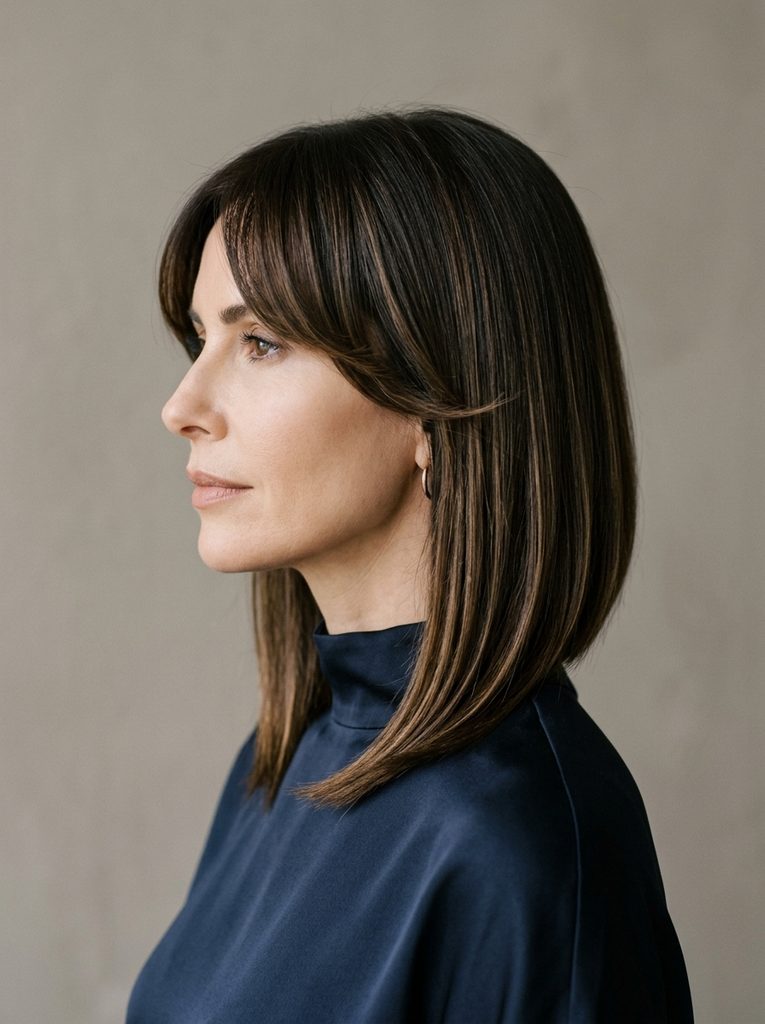
The soft inverted A-line lob with curtain framing features a graduated baseline where the hair length is subtly shorter at the back of the neck and extends forward into longer panels along the collarbones. The forward angle is kept gentle, following the natural jawline to create an elongating profile that flatters round and square face shapes. Soft curtain layers are cut into the front panels starting at the cheekbones, preventing the cut from looking like a severe geometric block. This structure provides a clean, minimalist style that adds the appearance of density to fine, straight hair while offering a flattering frame for women over forty.
To style this sleek inverted lob, apply an anti-humidity smoothing spray and a dime-sized amount of leave-in conditioning lotion to damp hair. Section the hair horizontally starting at the nape, using a medium ceramic round brush to dry the lower back layers straight down against the neck. Move upward to the longer front sections, using a flat paddle brush to dry the hair forward while keeping the blow dryer nozzle pointed downward to align the cuticle scales. For the curtain layers, roll the brush backward away from the face to create a soft outward wing. Pass a ceramic flat iron down the angled front panels on low heat, finishing with a light mist of shine spray across the top canopy.
                 +---------------------------------+
                 |  Smooth Top Canopy & Center Part|
                 +---------------------------------+
                                  |
            +-------------------------------------------+
            |  Cheekbone-Grazing Outward Curtain Wings  |
            +-------------------------------------------+
                                  |
            +-------------------------------------------+
            |  Graduated Inverted Collarbone Baseline   |
            +-------------------------------------------+
 SAVE TO PINTEREST
Bixie Hybrid Crop with Soft Feathered Curtains
Execution Process
The bixie hybrid crop with soft feathered curtains merges the structural volume of a short pixie with the face-framing length of a chin bob, resting right at earlobe level. This cut features feathered interior graduation that allows individual strands to separate into soft, wispy points around the crown and temples. The front curtain layers are cut to sit lightly across the cheekbones, parting softly in the center to open up the forehead and highlight the eyes. The neckline is shear-tapered to lay smoothly against the neck, while the sides retain enough length to tuck behind the ears or frame the jawline, offering a playful, low-maintenance silhouette.
Creating this bixie style begins on damp hair prepped with a texturizing sea-salt spray and a small pump of volumizing mousse. Rough-dry the hair using your fingers, lifting the crown upward and pushing the front curtain pieces backward toward the temples. Once dry, pass a mini flat iron through the front curtain layers, curving the plates outward to accentuate the feathered wings. Warm a pea-sized amount of lightweight styling paste between your fingertips and rake through the top layers, pulling individual tendrils forward around the cheekbones to create an effortless, dimensional finish while smoothing the shorter side and nape sections flat against the head.
 SAVE TO PINTEREST
Mid-Length French Shag with Swept Curtain Tiers
How to Create
The mid-length French shag with swept curtain tiers pairs shoulder-skimming lengths with effortless, piecey internal layering and elongated curtain bangs. Drawing inspiration from classic Parisian styling, this haircut avoids overly polished symmetry in favor of soft, natural texture and touchable movement. The curtain fringe begins at the bridge of the nose and sweeps outward toward the cheekbones, blending seamlessly into the stepped layers along the perimeter. This cut is particularly effective for women with thick, unruly, or wavy hair, as the interior layering removes bulk while enhancing the natural bounce and shape of the hair.
| Hair Section | Tool & Method | Aesthetic Benefit |
|---|---|---|
| Front Fringe | Slide-Cutting from Nose to Cheek | Creates sweeping, open facial frame |
| Crown Area | High-Elevation Point-Cutting | Maximizes natural root lift without stiffness |
| Mid-Lengths | Channel Carving with Shears | Removes internal weight to encourage bounce |
| Perimeter Base | Shattered Edge Trimming | Produces airy, touchable flicked-out ends |
To create this French shag look, apply a lightweight styling lotion and heat protectant spray to damp hair, combing through with a wide-tooth comb for even distribution. Separate the center-parted curtain fringe, blow-drying it forward with a small round brush before rolling the brush backward toward the temples while applying warm airflow to set the outward sweep. Blow-dry the remaining hair using your hands and a diffuser on low heat to encourage natural wave formation. Once dry, use a flat iron to lightly bend random surface strands in alternating directions, finishing with a generous mist of dry texturizing spray through the mid-lengths for a lived-in, matte finish.
 SAVE TO PINTEREST
Dimensional Wavy Lob with Curtain Framing
Setup Method
The dimensional wavy lob with curtain framing combines shoulder-grazing length with loose, undulating beach waves and outward-sweeping curtain layers. This style incorporates subtle internal graduation throughout the mid-lengths, allowing waves to stack naturally without creating excess width at the bottom. The curtain layers blend into the upper wave tiers, creating a seamless frame around the eyes and cheekbones that softens facial features. The interplay between soft wave bends and parted curtain fringe produces a relaxed, youthful aesthetic that works exceptionally well for women with natural wave patterns or fine hair seeking dimensional volume.
       +---------------------------------------------+
       |   Center-Parted Soft Curtain Frame          |
       +---------------------------------------------+
                              |
       +---------------------------------------------+
       |   Undulating Interlocking Beach Wave Body   |
       +---------------------------------------------+
                              |
       +---------------------------------------------+
       |   Shoulder-Grazing Textured Perimeter Base  |
       +---------------------------------------------+
To set up this wavy lob, apply a thermal heat protectant and a leave-in wave cream from roots to ends on damp hair. Blow-dry using a paddle brush until completely dry. Divide the hair into horizontal tiers, taking one-inch vertical subsections and wrapping them around a one-and-a-quarter-inch curling iron, alternating directions toward and away from the face while leaving the bottom inch of each strand uncurled. For the curtain layers, curl away from the face at eye level to form soft outward wings. Allow all curls to cool completely before raking your fingers through the strands to break them into fluid, interlocking waves. Finish with a drop of argan oil smoothed over the ends to eliminate flyaways.
 SAVE TO PINTEREST
Sleek Glass Lob with Precision Curtain Layers
Step-by-Step Guide
The sleek glass lob with precision curtain layers pairs an ultra-smooth, mirror-like reflective surface with clean, razor-sharp curtain framing. Cut to graze the collarbones, the main body hangs as a sleek, continuous curtain of hair that emphasizes density and healthy strand thickness. The front curtain layers are slide-cut with high precision, starting at the cheekbones and tapering down to the clavicle, adding softness to the face without disrupting the sleek glass-hair effect. This minimalist style delivers a polished, high-fashion aesthetic that is ideal for formal occasions and professional environments.
To style this glass lob, apply an anti-humidity thermal barrier spray and a smoothing leave-in serum to clean, damp hair. Blow-dry using a high-tension paddle brush technique, keeping the blow dryer concentrator nozzle pointed downward along the hair cuticle to ensure a flat, smooth surface. Pass a ceramic flat iron set to 325 degrees Fahrenheit down thin half-inch subsections, gliding steadily from roots to tips. For the curtain fringe, glide the flat iron downward before rotating your wrist slightly outward at the cheekbones to create a subtle, sleek flare. Finish by warming a single drop of squalane oil between your palms and smoothing it over the canopy to lock in high-gloss shine.
                 +---------------------------------+
                 |  Crisp Center Part & Sleek Roots|
                 +---------------------------------+
                                  |
            +-------------------------------------------+
            |  Precision Slide-Cut Curtain Cheek Wings  |
            +-------------------------------------------+
                                  |
            +-------------------------------------------+
            |  Mirror-Reflective Clavicle Glass Drape   |
            +-------------------------------------------+
 SAVE TO PINTEREST
Rounded Layered Curl Canopy with Curtain Tendrils
Execution Process
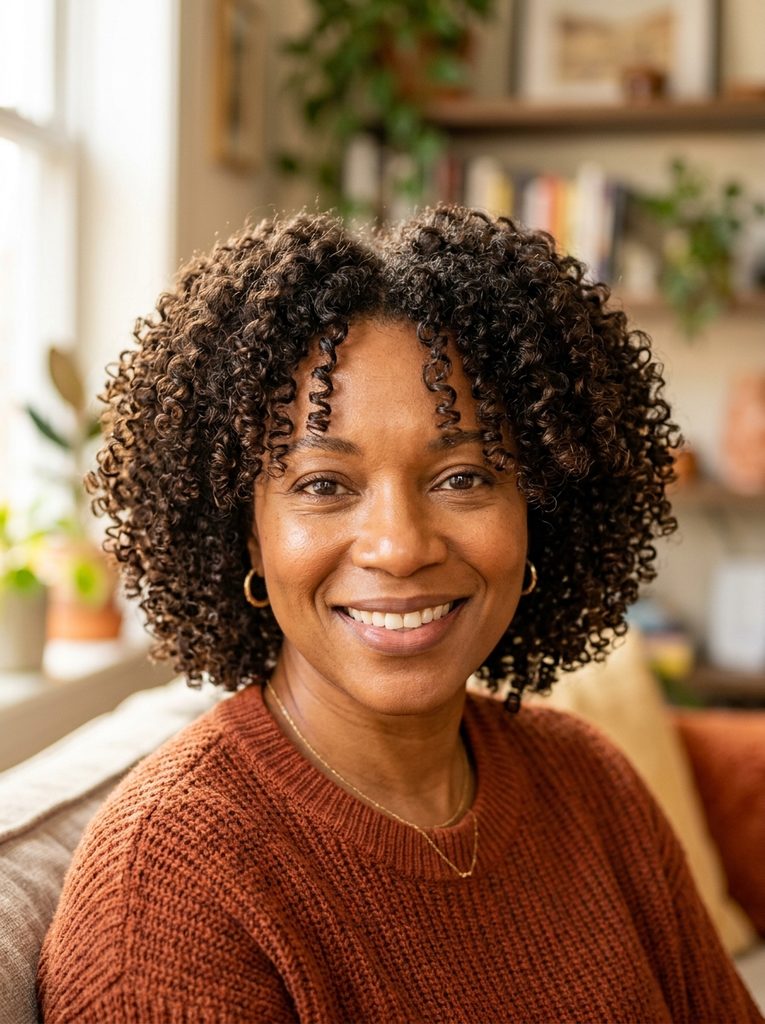
The rounded layered curl canopy with curtain tendrils is engineered specifically for Type 3 and Type 4 curl patterns, utilizing dry-cutting techniques to create a balanced, spherical silhouette with face-framing curl tendrils. By shaping each curl cluster in its natural dry state, this cut prevents the bottom-heavy triangular shape common in unlayered curly cuts. The curtain layers are cut as soft, cheekbone-grazing curl clusters that part in the center, framing the face with bouncy ringlets without obstructing vision. The shorter crown layers allow tight curls to spring upward naturally, establishing dramatic height, healthy bounce, and soft, touchable volume that showcases natural curl definition.
Creating this low-maintenance curly look begins on soaking-wet hair prepped with a hydrating leave-in conditioner and a botanical curl-defining gel. Use the praying-hands method to smooth the product over large sections, then gently scrunch upward toward the scalp to encourage natural clump formation. Separate the front curtain curl tendrils and define them around your finger. Attach a deep-bowl diffuser to your blow dryer, drying on low airflow and low heat while hovering around the crown without touching the curls. Once completely dry, massage a few drops of jojoba oil into your fingertips and gently scrunch the curls to break the gel cast, using an afro pick at the roots to expand crown volume while keeping the rounded shape intact.
 SAVE TO PINTEREST
Common Beginner Mistakes and How to Avoid Them
When cutting and styling soft curtain layers over forty, beginners frequently make several common errors that can compromise the haircut’s shape, volume, and facial balance. A widespread mistake is cutting the shortest point of the curtain fringe too high—such as above the brow or directly across the eye line—which can create an awkward, blocky appearance that closes off the face. To prevent this, ensure the shortest tier begins at the cheekbone or the bridge of the nose, allowing the layers to sweep naturally outward. Another frequent mistake is applying heavy styling creams, waxes, or dense silicone serums directly onto the root area, which weighs down fine hair and results in a flat, separated appearance.
+-------------------------------------------------------------+
|              Common Error: Curtain Fringe Cut Too Short     |
|        (Closes off the face and creates blocky lines)       |
+-------------------------------------------------------------+
                               |
                               v
+-------------------------------------------------------------+
|       Solution: Start Shortest Tier at Cheekbone Level      |
|         (Opens facial dimensions and sweeps outward cleanly)|
+-------------------------------------------------------------+
Beginners also frequently roll round brushes inward toward the face when blow-drying curtain fringe, which creates a dated, curled-under look rather than a modern outward flare. Always roll the brush backward away from the face and set with a cool shot of air to achieve an effortless sweep. Neglecting regular maintenance trims is another common error, as overgrown curtain layers lose their cheekbone-framing lift; schedule trims every six to eight weeks. Finally, avoid using excessively high heat on delicate front layers without a thermal protectant, as heat damage quickly causes frizz and breakage along the hairline.
Practical Tips for Better Results
Achieving salon-quality results with soft curtain layers at home relies on proper product application, directional airflow control, and consistent nighttime care routines. When blow-drying curtain layers, always dry the root base forward toward the nose first before directing the lengths backward; this creates natural root elevation and prevents the fringe from splitting flat against the forehead. When using thermal heat tools, maintain temperatures between 300 and 350 degrees Fahrenheit to preserve moisture and elasticity in mature hair strands.
+-------------------------------------------------------------+
|          Blow-Dry Fringe Roots Forward, Then Sweep Back     |
|             (Generates natural root lift and arch memory)   |
+-------------------------------------------------------------+
                               |
                               v
+-------------------------------------------------------------+
|         Set Warm Sections in Velcro Rollers for 15 Min      |
|           (Locks in long-lasting outward-sweeping shape)    |
+-------------------------------------------------------------+
                               |
                               v
+-------------------------------------------------------------+
|         Sleep on Silk Pillowcases for Friction Control      |
|            (Protects delicate face-framing ends from frizz) |
+-------------------------------------------------------------+
To preserve your styled shape overnight, sleep on a high-grade silk or satin pillowcase. Smooth fabrics eliminate friction against hair cuticles, preventing morning bedhead and extending the life of your blowout. To refresh second-day curtain layers without washing your entire head, lightly mist the front fringe with water and a drop of leave-in conditioner, wrap it around a velcro roller for ten minutes while doing your morning routine, and release for instant volume. Incorporating a weekly deep conditioning protein mask keeps hair fibers hydrated, soft, and resilient over time.
Styling, Presentation, or Organization Ideas
Organizing your daily styling tools and hair care essentials creates an efficient, stress-free morning routine. Use heat-resistant countertop caddies or drawer organizers to store flat irons, round brushes, and blow dryers safely, keeping power cords wrapped neatly to prevent tangling. Group your wet-prep products—such as root sprays, leave-in conditioners, and thermal protectants—separately from dry finishing sprays, styling pastes, and shine oils on an acrylic vanity organizer for quick access during styling sessions.
+-------------------------------------------------------------------+
|                  VANITY HAIR STYLING STATION MAP                  |
+-------------------------------------------------------------------+
|   [ Wet-Prep Zone ]     [ Finishing Products ]  [ Hardware Tools ]|
|   - Root-Lift Spray     - Flexible Hairspray    - Ceramic Round Brush|
|   - Leave-in Lotion     - Dry Texture Spray     - Ceramic Flat Iron|
|   - Thermal Protectant  - Squalane Shine Oil    - Ionic Blow Dryer |
|                                                                   |
|   [================= Heat-Safe Tool Counter Storage ==============]|
|   - Silicone tool rests, sectioning clips, and velcro roller set   |
+-------------------------------------------------------------------+
Enhance your haircut presentation by pairing it with accessories and clothing necklines that complement your face-framing curtain layers. Cheekbone-skimming curtain wings pair beautifully with open boatneck tops, structured blazers, or V-neck collars that highlight the neck and collarbones. Pair shorter bobs and pixies with statement earrings, such as architectural hoops or drop pearls, which draw attention to the jawline. Adding decorative metal hair pins or tortoiseshell barrettes to secure one side back provides an elegant finishing touch for formal events and special occasions.
Budget or Time Planning
Adopting a soft curtain layered haircut is a cost-effective and time-efficient grooming choice over the long term. Because well-layered cuts work with your natural texture and growth patterns, they require fewer daily heat-styling sessions and less styling product per wash. A single bottle of high-quality styling foam or finishing oil can last for several months, as only small amounts are needed to style layered strands. You can optimize your budget by investing in versatile multi-purpose tools—such as a ceramic flat iron with curved edges that can both straighten and create waves—eliminating the need to buy multiple specialized devices.
| Styling Activity | Daily Duration | Weekly Frequency | Estimated Expense Window |
|---|---|---|---|
| Full Wash & Blowout | 15 – 20 Minutes | 2 to 3 Times Weekly | Low (Reduced Product Use) |
| Morning Fringe Refresh | 3 – 5 Minutes | Daily | Nominal (Velcro Roller/Mist) |
| Second-Day Restyle | 5 – 8 Minutes | Alternate Days | Minimal (Dry Shampoo) |
| Salon Maintenance Trim | 30 – 45 Minutes | Every 6 to 8 Weeks | Standard Salon Rate |
From a daily time-management perspective, a curtain layered cut significantly reduces morning preparation time. While a full wash and blowout session takes under twenty minutes, daily touch-ups typically require less than five minutes. By protecting your style overnight and using lightweight texturizing products, you can wake up with intact volume and effortless texture, starting each day with a polished, confident appearance.
Creative Expansion and Advanced Inspiration
Once you have established your core curtain layered haircut, exploring advanced color placement and subtle structural tweaks offers exciting opportunities for personal expression. Introducing dimensional color—such as hand-painted “money piece” highlights along the curtain fringe, subtle balayage, or soft silver blending—adds visual depth and separation to the framing tiers. Because the layers catch light at different angles, subtle color contrasts make the textured ends stand out with high visual clarity while blending natural grays seamlessly.
Key Takeaway: Adding subtle face-framing highlights or experimenting with parting shifts elevates a classic curtain layered cut into a custom, modern style that highlights natural movement and facial bone structure.
Another creative avenue is experimenting with parting shifts—transitioning from a crisp center part for symmetrical framing to a deep side sweep for instant root volume. You can also incorporate subtle disconnected undercut details beneath a bob or pixie, allowing thick hair to lay flatter while adding a touch of contemporary flair. These creative variations ensure your haircut remains a dynamic, versatile signature look that evolves alongside your personal style.