10 hairstyles for women over 40 thick hair

 SAVE TO PINTEREST
Thick hair offers natural volume and texture, which can create many styling possibilities for women over 40. On Pinterest, hairstyle inspiration boards frequently feature thick hair transformations that focus on shaping volume and creating balanced silhouettes.
Thick hair can appear heavy or difficult to manage if it is cut without proper structure. However, the right haircut techniques can turn natural density into a visual advantage. Strategic layering, thoughtful length selection, and subtle texturizing can transform thick hair into a refined and modern hairstyle that feels comfortable for everyday wear.
This article explores practical hairstyle ideas designed specifically for women over 40 with thick hair. Readers will learn how various haircut techniques help control volume while maintaining movement and elegance.
Each hairstyle idea explains the structure of the cut and how it enhances natural hair density. Step-by-step guidance also helps readers understand how these styles can be created and maintained. These hairstyles focus on realistic approaches that complement natural hair texture and daily routines. By understanding how thick hair behaves and how strategic cuts influence its shape, women can choose hairstyles that highlight fullness while maintaining balance and sophistication.
Why This Idea Is Trending or Useful
Hairstyles for thick hair continue to trend on Pinterest because many individuals seek practical ways to manage natural volume while maintaining style. Thick hair naturally creates fullness, but without proper structure it can appear bulky or difficult to control. Hairstyle inspiration boards frequently highlight layered and textured haircuts that shape thick hair into more balanced forms. These styles demonstrate how adjusting length, layering, and parting techniques can transform dense hair into a polished look.
Another reason these hairstyles remain popular is the shift toward natural texture and effortless styling. Instead of heavily styled hair, many people now prefer haircuts that allow natural thickness to become part of the design. Strategic layering removes excess weight while preserving the fullness that makes thick hair visually striking. Pinterest inspiration often emphasizes these techniques because they help simplify daily hair routines.
These hairstyle ideas are also practical for beginners because they rely on fundamental haircut structures rather than complicated styling methods. Many styles can be maintained with simple tools such as a round brush and blow dryer. The combination of natural volume, manageable styling, and modern appearance makes thick hair hairstyles a frequently searched topic.
Materials and Preparation
Preparing thick hair before cutting or styling helps maintain control and ensures the final hairstyle remains balanced. Thick hair often requires more sectioning than finer textures because the density can make it difficult to see how the hair falls naturally. Basic hairstyling tools include a wide-tooth comb, hair clips for sectioning, professional scissors, and a blow dryer with a round brush. Texturizing scissors may also be used to soften the ends and reduce excessive bulk.
Hair preparation begins with washing and conditioning to improve manageability. Clean hair allows the stylist to observe natural movement and determine where volume should be reduced. After washing, gently towel dry the hair and detangle it using a wide-tooth comb. The hair should then be divided into several sections to ensure precise cutting and styling.
Planning the hairstyle structure is also an important step. Thick hair may require layers to distribute weight or longer lengths to prevent excessive volume at the sides. Understanding the desired shape helps guide the cutting process. Once the hair is properly prepared and sectioned, styling becomes easier and the final result appears more controlled and balanced.
MAIN IDEAS
Idea 1: Long Layered Haircut for Thick Hair
How to Create
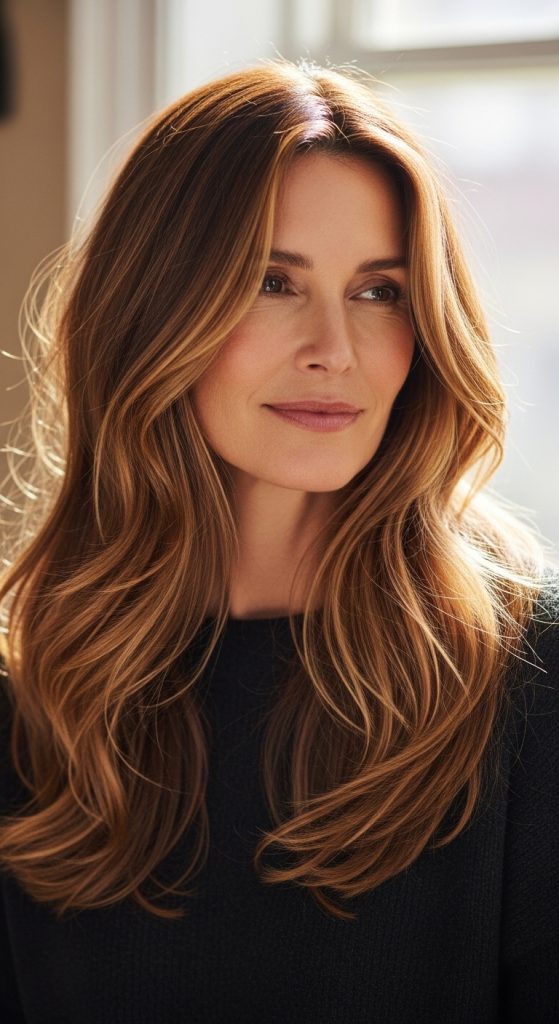
A long layered haircut is one of the most effective ways to manage thick hair while preserving its natural fullness. Layers help distribute the hair’s weight so the ends do not appear overly dense. Without layering, thick hair can form a heavy outline that reduces movement and makes styling more difficult. By introducing gradual layers throughout the hair, the strands fall more naturally and create a softer silhouette.
 SAVE TO PINTEREST
This hairstyle is widely featured in Pinterest hairstyle inspiration because it maintains length while improving manageability. Long layers allow thick hair to flow freely rather than stacking heavily at the ends. The layered structure also enhances natural movement and highlights shine throughout the hair. This makes the style suitable for both straight and wavy textures.
To create this haircut, begin by establishing a base length below the shoulders. The hair should then be divided into sections. Each section is cut slightly shorter than the one beneath it, creating a gradual layering pattern.
During styling, blow dry the hair using a round brush to lift the roots and enhance movement. The layers will fall naturally along the shoulders, creating a balanced and elegant look that highlights thick hair’s natural density.
Idea 2: Shoulder-Length Layered Cut
Step-by-Step Guide
 SAVE TO PINTEREST
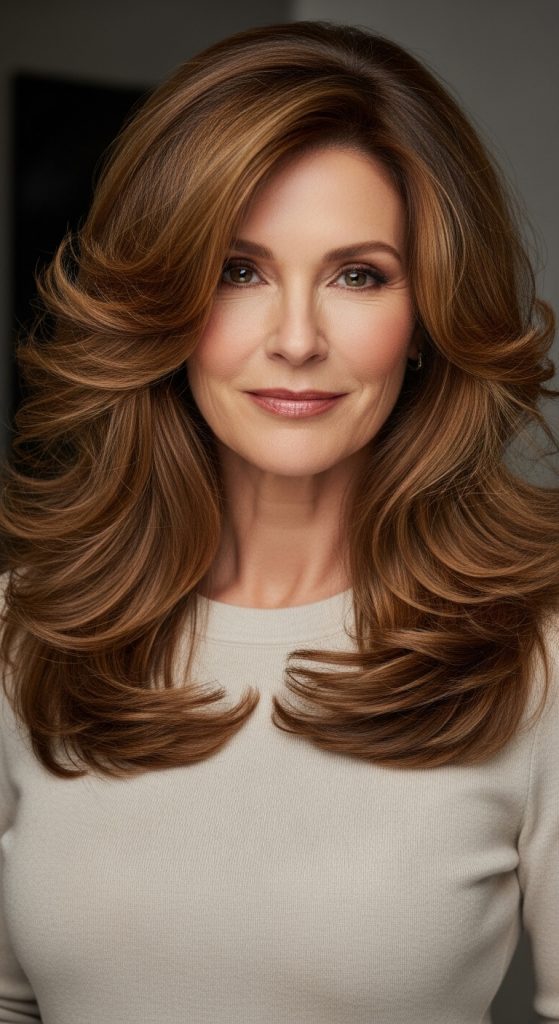
A shoulder-length layered haircut provides a balanced solution for thick hair that feels heavy at longer lengths. This haircut reduces weight while maintaining enough length for styling flexibility. The layers create space between strands, allowing thick hair to appear lighter and more manageable.
This hairstyle frequently appears in Pinterest hairstyle inspiration because it combines practicality with modern structure. Shoulder-length hair allows thick hair to maintain fullness while still being easy to style. The layered design prevents the hair from forming a triangular shape, which can occur when thick hair is cut in a single length.
To create this haircut, begin by trimming the base length to reach the shoulders. Once the outline is established, introduce layers throughout the mid sections of the hair. These layers should blend smoothly with the base length.
During styling, blow dry the hair while lifting sections with a round brush. This technique enhances volume at the crown while allowing the layered ends to move freely.
Idea 3: Thick Hair with Face-Framing Layers
How to Make
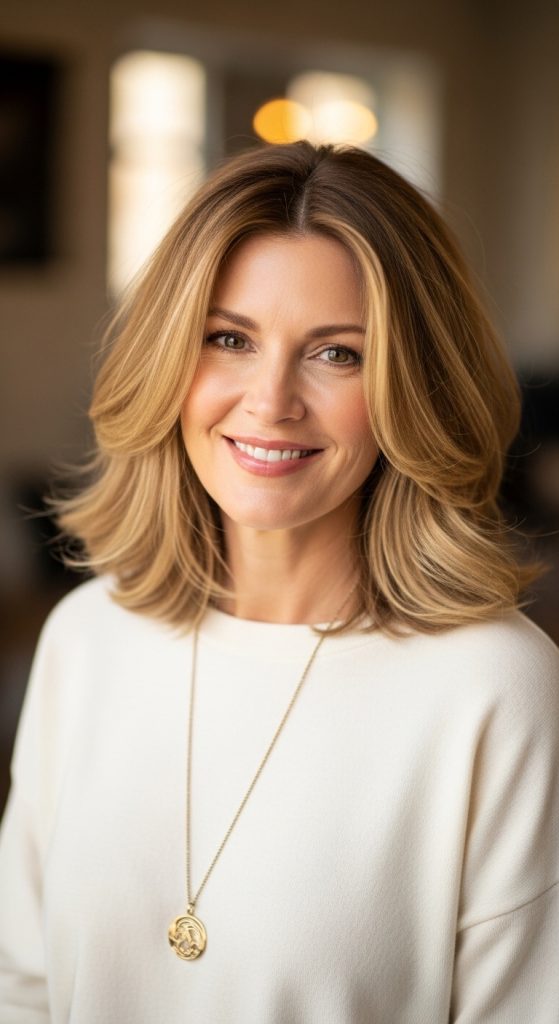
Face-framing layers highlight facial features while maintaining the fullness of thick hair. These layers begin near the cheekbones and gradually blend into the longer sections of hair. The shorter pieces help shape the hairstyle and soften the overall appearance.
 SAVE TO PINTEREST
Pinterest hairstyle inspiration often features face-framing layers because they create a flattering structure without removing significant length. Thick hair benefits from this approach because it reduces bulk around the front of the hairstyle.
To achieve this look, section the hair near the temples and trim the front pieces slightly shorter than the rest of the hair. These layers should blend gradually into the longer sections behind them.
During styling, blow dry the front sections away from the face using a round brush. This technique enhances the framing effect and highlights the layered structure.
Idea 4: Textured Lob for Thick Hair
How to Create
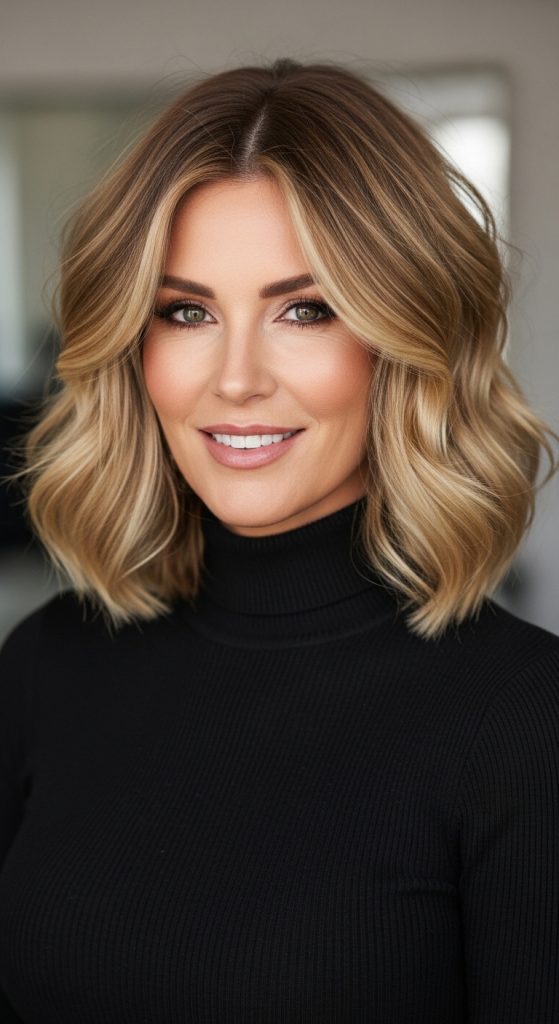
A textured lob, or long bob, is one of the most practical hairstyles for women over 40 with thick hair. This haircut typically falls between the chin and the shoulders, creating a balanced length that reduces heaviness while maintaining fullness. Thick hair often benefits from a lob because the shorter length naturally reduces weight. When texture and layers are introduced, the haircut becomes even more manageable. Instead of forming a dense shape, the hair develops movement and dimension.
This hairstyle frequently appears in Pinterest hairstyle inspiration because it blends elegance with practicality. A textured lob works well in professional settings while still feeling modern and relaxed. The texture prevents thick hair from appearing overly structured or bulky. Instead, the layers create natural separation between strands, allowing the hairstyle to feel lighter and more dynamic.
 SAVE TO PINTEREST
To create this haircut, begin by trimming the hair to a length that falls just above or slightly below the shoulders. Once the base length is established, subtle layers are introduced through the mid sections of the hair. The ends are softened using texturizing techniques to reduce bulk.
During styling, blow dry the hair using a round brush while lifting sections gently. This technique enhances natural movement and allows the textured layers to fall naturally. The finished hairstyle displays a balanced shape with controlled volume.
Idea 5: Long Hair with Curtain Bangs
Step-by-Step Guide
 SAVE TO PINTEREST
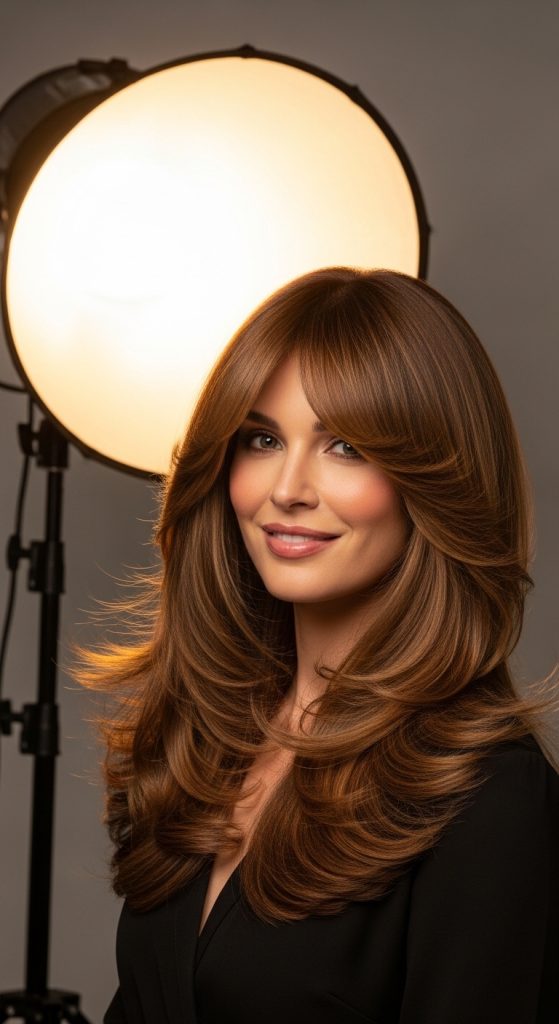
Curtain bangs combined with long hair create a hairstyle that softens thick hair while maintaining length. Curtain bangs are parted near the center and gradually lengthen toward the sides of the face. This structure creates a soft frame that blends naturally into the rest of the hair. For thick hair, curtain bangs help reduce bulk around the front while adding structure to the hairstyle.
This style is commonly featured in Pinterest hairstyle inspiration because it offers a modern update to long hairstyles. Curtain bangs complement thick hair by breaking up the density around the forehead. Instead of appearing heavy, the front sections fall lightly along the sides of the face.
To create this look, begin by sectioning the hair near the temples. The center portion of the bangs should be trimmed slightly shorter, while the sides gradually extend toward the cheekbones. This shape allows the bangs to blend smoothly into the surrounding layers.
During styling, blow dry the bangs using a round brush while directing them outward from the face. This technique helps create the signature curtain shape. The rest of the hair can remain straight or styled with soft waves for additional movement.
Idea 6: Side-Parted Layered Hair
How to Make
A side-parted layered hairstyle introduces asymmetry and natural movement into thick hair. The side part shifts more hair to one side of the head, creating a dynamic silhouette that reduces the appearance of heaviness. Combined with layers, this style allows thick hair to fall more naturally along the shoulders.
 SAVE TO PINTEREST
Pinterest hairstyle inspiration frequently highlights side-parted styles because they add visual interest without requiring dramatic cuts. The side part also helps frame the face by directing hair diagonally across the forehead. Layers enhance this effect by allowing the strands to move freely rather than stacking heavily.
To achieve this hairstyle, begin by creating a part slightly to one side of the head using a comb. The part should start near the outer edge of the eyebrow and extend toward the crown.
Next, introduce layers throughout the hair to distribute weight evenly. These layers should blend smoothly with the base length. During styling, blow dry the hair while directing it away from the part. This technique enhances volume and highlights the layered structure.
Idea 7: Thick Hair with Soft Waves
 SAVE TO PINTEREST
How to Create
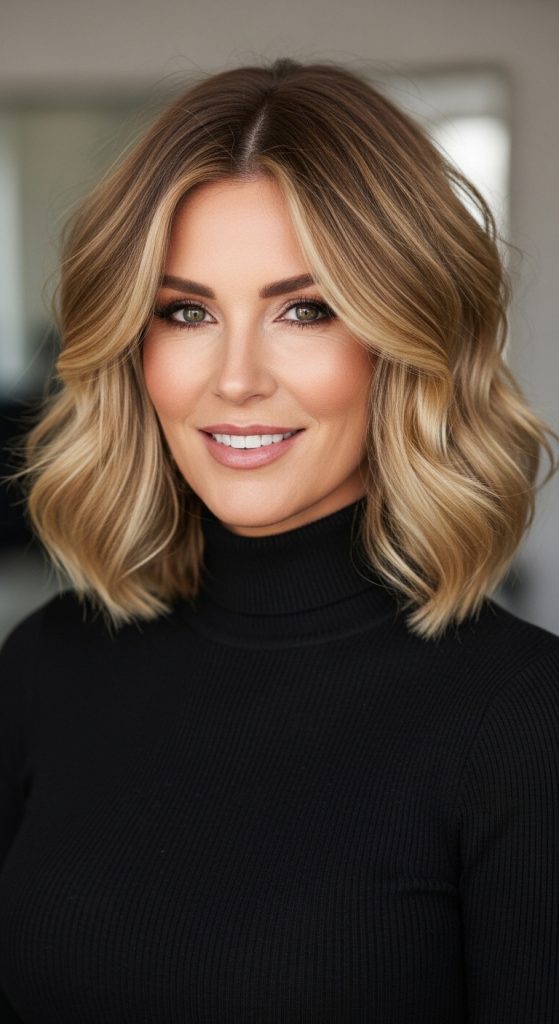
Soft waves help manage thick hair by adding movement and separating dense strands. Instead of appearing as a single heavy shape, the waves create gentle curves that allow the hair to fall more naturally. This technique works particularly well for thick hair because it distributes volume evenly across the hairstyle.
This hairstyle appears frequently in Pinterest hairstyle inspiration because it creates an elegant appearance while remaining simple to achieve. Soft waves add texture and dimension without drastically changing the haircut. The result is a style that works well for everyday wear as well as formal occasions.
To create soft waves, begin with dry hair that has been brushed smoothly. Divide the hair into several sections to make styling easier. Starting near the mid lengths, wrap each section around a curling iron or use a round brush during blow drying to create gentle waves.
After forming the waves, separate them using fingers to maintain a natural appearance. Avoid brushing the curls directly, as this can reduce the layered definition. The finished hairstyle displays soft flowing waves with balanced volume.
Idea 8: Voluminous Crown Layers
Execution Process
 SAVE TO PINTEREST
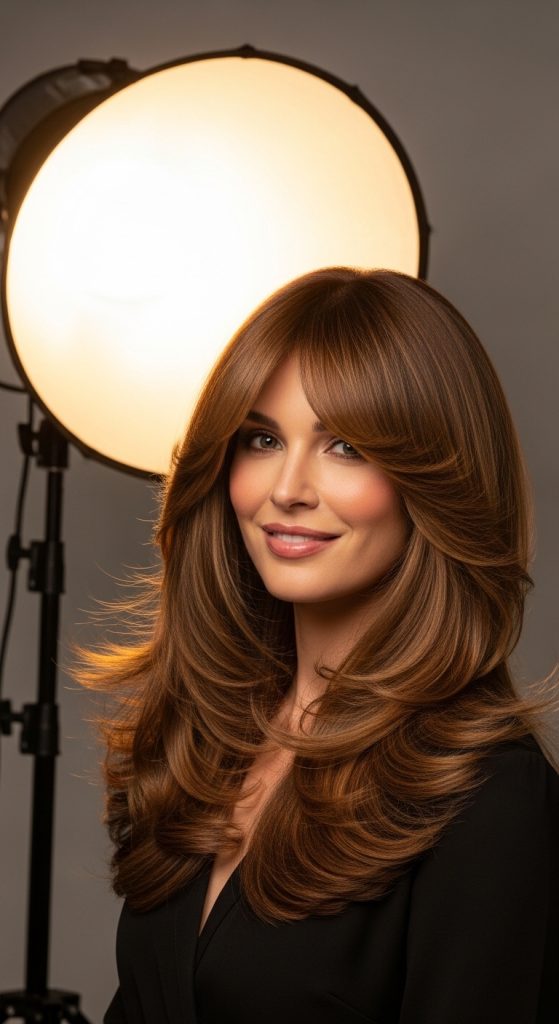
Crown layers focus on creating height and movement at the top of thick hairstyles. Thick hair can sometimes appear flat at the crown because the weight pulls the hair downward. Shorter layers placed near the crown help lift the hair and create a more balanced silhouette.
Pinterest hairstyle inspiration often features crown layering because it transforms the shape of thick hair without reducing overall length. The shorter layers blend gradually into the longer sections below, ensuring the hairstyle maintains cohesion.
To create crown layers, begin by sectioning the hair at the top of the head. These sections are trimmed slightly shorter than the surrounding hair. The ends should be softened to ensure smooth blending.
During styling, blow dry the crown area while lifting the roots using a round brush. This technique enhances the layered structure and increases volume at the top of the hairstyle. The finished look displays natural fullness with controlled shape.
Idea 9: Side-Swept Bangs with Layers
Setup Method
Side-swept bangs introduce a diagonal fringe that blends naturally with layered thick hair. The bangs begin near the eyebrow and gradually extend toward the cheekbone. This angled shape helps soften the front of the hairstyle while maintaining a structured appearance.
 SAVE TO PINTEREST
This hairstyle appears frequently in Pinterest hairstyle inspiration because it provides facial framing without overwhelming thick hair. The side-swept design helps break up the density near the forehead and allows the rest of the hair to flow naturally.
To create this haircut, begin by trimming the bangs diagonally so the shortest point begins near the eyebrow. The length gradually increases toward the side of the face.
Layers are then added throughout the hair to distribute weight evenly. During styling, blow dry the bangs across the forehead using a round brush. This motion creates the sweeping effect and helps blend the fringe into the surrounding hair.
Idea 10: Thick Hair with Textured Ends
 SAVE TO PINTEREST
Step-by-Step Guide
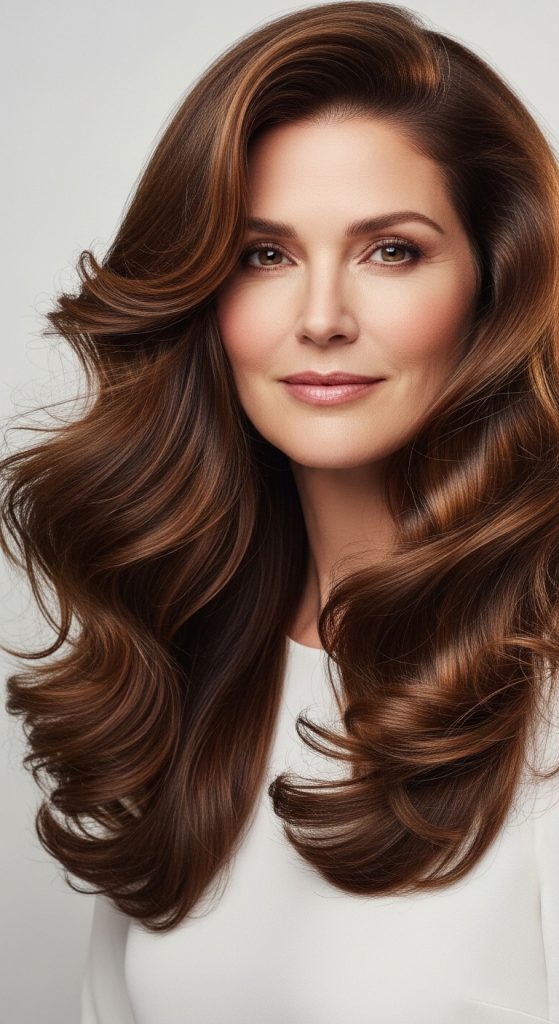
Textured ends help reduce the heaviness that often occurs in thick hair. Instead of maintaining a blunt edge, the ends are trimmed using techniques that create subtle variation in length. This texture allows the hair to appear lighter and more flexible while maintaining its fullness.
Pinterest hairstyle inspiration frequently includes textured ends because they enhance movement in thick hairstyles. The slight variation between strands prevents the hair from appearing dense or stiff. Instead, the hair moves naturally with each layer.
To create textured ends, begin by trimming the base length of the hair. The stylist then uses point-cutting or texturizing techniques to soften the edges of the hair.
During styling, apply a lightweight product and gently separate the ends using fingers. This method enhances the textured appearance while maintaining natural flow. The finished hairstyle displays thick hair with visible movement and balanced structure.