The straight long bob, universally known as the straight lob, represents one of the most versatile, polished, and enduring hairstyles in contemporary hair fashion. Resting gracefully between the chin and the collarbone, the straight lob delivers the lightweight manageability of shorter cuts while preserving the styling versatility, movement, and face-framing benefits of longer lengths. Readers exploring this detailed style guide will gain practical knowledge regarding precise cutting angles, structural sectioning techniques, thermal straightening protocols, and customized shape adaptations tailored to diverse facial profiles and hair densities. Understanding how perimeter weight lines, subtle internal layering, and heat-protective finishing products interact allows stylists and at-home hair enthusiasts to achieve smooth, glass-like finishes with natural movement. This guide provides comprehensive, actionable insights into ten distinct straight lob variations, covering everything from blunt minimalist perimeters to asymmetrical editorial angles. By following proper hair preparation and sectioning methodologies, you will be equipped to execute, customize, and maintain a sleek, modern straight lob that elevates everyday personal styling with timeless sophistication.
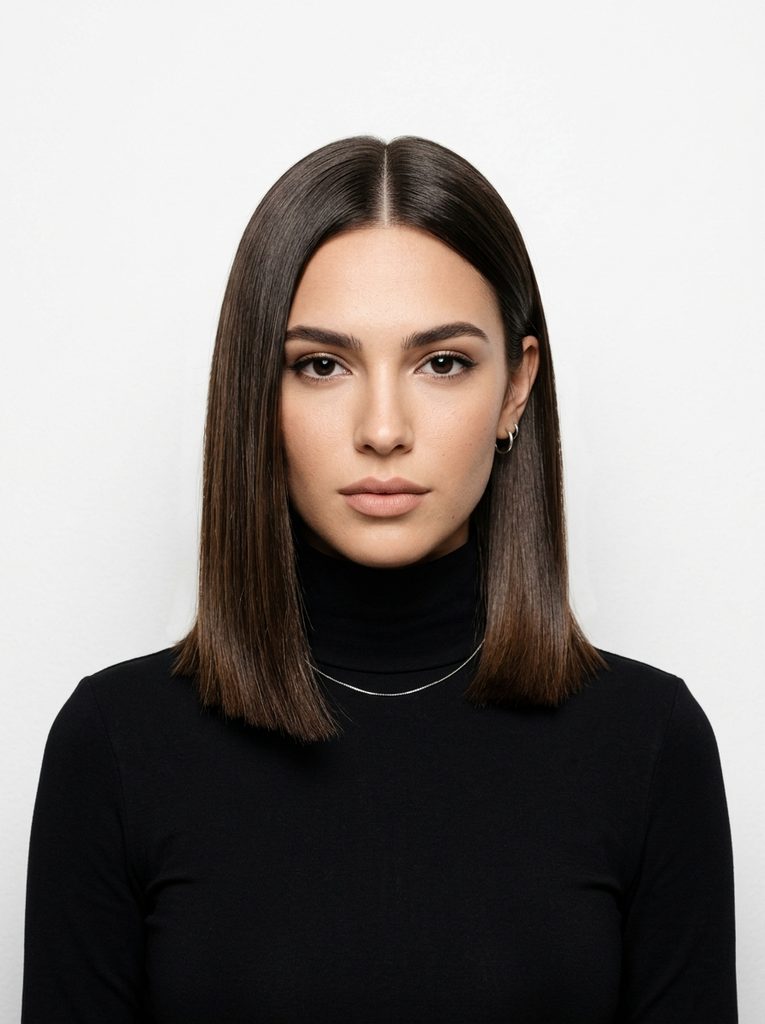
Why This Idea Is Trending or Useful
The straight lob continues to dominate modern Pinterest inspiration boards and editorial styling platforms due to its seamless union of high visual elegance, practical functionality, and low-maintenance daily care. Unlike extreme pixie cuts or high-maintenance floor-length styles, the shoulder-grazing straight lob provides sufficient length to pull back into chic low buns or ponytails while dramatically reducing blow-drying and thermal styling time. Its modern design relevance lies in its ability to adapt effortlessly to both casual streetwear and formal professional aesthetics through simple adjustments in parting, texture, and edge geometry. From a DIY appeal standpoint, maintaining and styling a straight lob at home is highly accessible for beginners, requiring only basic thermal tools, heat protectants, and proper brushwork to achieve salon-quality results. Furthermore, the clean horizontal or angled perimeter lines of a straight lob create the optical illusion of increased hair thickness, making it a valuable styling solution for individuals with fine or thinning hair textures seeking fuller, more structured silhouettes without artificial volume enhancements.
Materials and Preparation
Achieving an impeccable straight lob haircut begins with gathering professional-grade cutting and styling equipment, followed by systematic hair preparation to ensure optimal strand alignment and precision results. Essential cutting tools include Japanese stainless steel straight-edge cutting shears, wide and fine-toothed carbon sectioning combs, four to six heavy-duty non-slip sectioning clips, and a precision neck trimmer for perimeter cleanups. For heat styling and maintenance, you will need a ionic tourmaline ceramic flat iron with adjustable temperature controls, a boar-bristle paddle brush, a lightweight silicone-free heat protectant spray, and an argan-infused smoothing serum. Preparation begins with thoroughly washing the hair using a clarifying, sulfate-free shampoo to remove product residues that impede sleek styling, followed by a lightweight moisture-balancing conditioner to seal the cuticle. Gently towel-dry the hair before applying a heat-activated straightening primer, then blow-dry using a paddle brush directed downward from roots to ends to establish flat, tangle-free alignment before initiating any structural cutting or precision thermal work.
10 Lob Haircut Straight Ideas
Idea 1: Classic Blunt Perimeter Straight Lob
Step-by-Step Guide
The classic blunt perimeter straight lob is defined by a perfectly level, razor-sharp horizontal baseline that rests cleanly across the collarbones without any visible exterior layering. This minimalist design emphasizes solid structural weight, creating crisp geometric edges that make the entire hair canopy appear noticeably thicker, healthier, and denser. By eliminating tapered ends and surface layers, the hair falls in a uniform sheet of sleek strands that catch light evenly across the back and shoulders. This silhouette works exceptionally well on fine to medium hair textures, as the uninterrupted weight line prevents the stringy separation often seen at the ends of longer, unlayered styles.
To execute this clean haircut, section dry, flat-ironed hair into a classic four-quadrant grid using your carbon comb and sectioning clips, parting down the center from forehead to nape and across from ear to ear. Begin at the nape by releasing a horizontal half-inch sub-section, combing the strands completely flat against the neck under zero elevation and zero tension to prevent bounce-back shortening. Hold your cutting shears horizontally, cutting a crisp baseline parallel to the shoulders, moving systematically from the center outward to both sides. Drop subsequent half-inch sections down, aligning each layer precisely with the initial guide line until reaching the crown. Finish by applying a dime-sized drop of smoothing serum through the mid-lengths and running a flat iron down the perimeter to lock in the blunt edge.
+-------------------------------------------------------------+
|              CLASSIC BLUNT STRAIGHT LOB GRID                |
+-------------------------------------------------------------+
|  [ Crown: Center Part Alignment ]                           |
|               |                                             |
|  [ Mid-Zone: Zero-Elevation Fall ]                          |
|               |                                             |
|  [ Baseline: Razor-Sharp Horizontal Blunt Weight Line ]     |
+-------------------------------------------------------------+