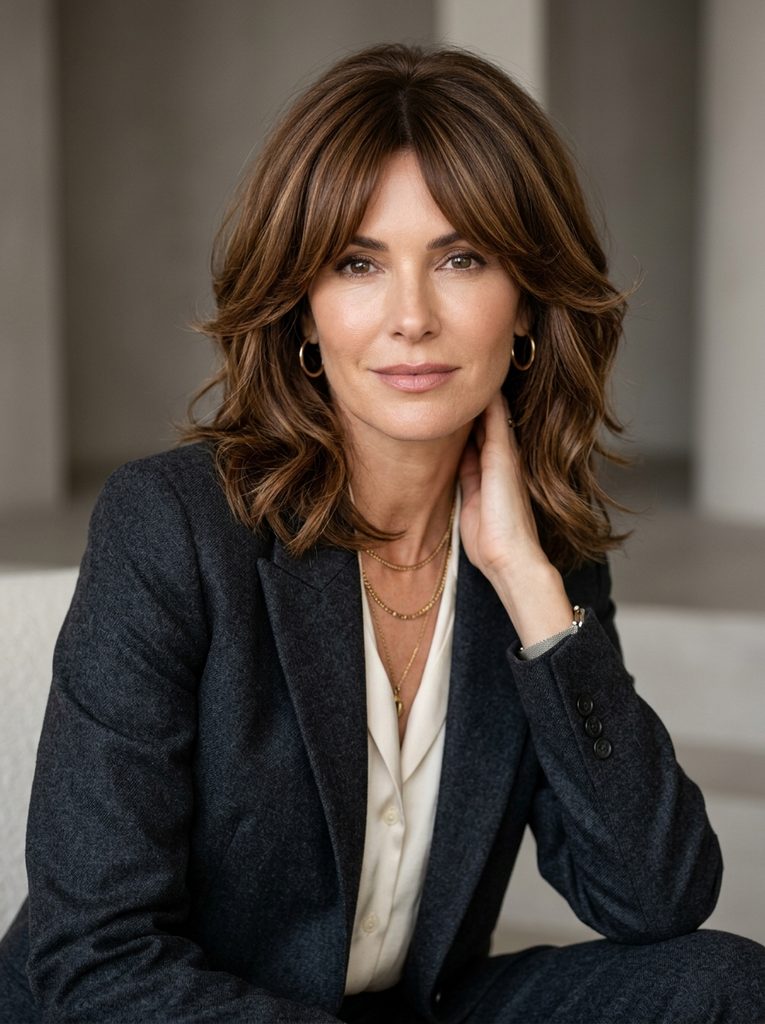
The textured wolf cut represents a modern, transformative, and youth-enhancing hairstyle that blends the structural crown volume of a vintage shag with the flowing perimeter layers of a classic mullet. As hair matures past the age of forty, strands frequently experience natural shifts in density, elasticity, and hydration, causing traditional blunt cuts or heavy long hairstyles to pull facial features downward. Transitioning to a tailored textured wolf cut directly addresses these anatomical changes by redistributing weight upward, boosting natural root lift, and framing the face with soft, sweeping curtain layers that highlight the cheekbones. This comprehensive haircut guide outlines ten distinct variations of the textured wolf cut designed specifically for mature hair profiles, ranging from cropped collarbone bobs to flowing mid-back layers. Readers will explore the technical mechanics of dry point-cutting, internal weight relief, fringe geometry, and low-maintenance styling routines. Adopting a customized wolf cut provides immense practical value, allowing women over forty to achieve effortless, touchable volume without demanding hours of round-brush blow-drying. By following the cutting methods, styling workflows, and care practices detailed in this tutorial, you will discover how to maintain a fresh, vibrant, and fashion-forward silhouette.
Why This Idea Is Trending or Useful
The sustained popularity of the textured wolf cut across contemporary Pinterest ideas, salon lookbooks, and style feeds highlights a widespread desire for dynamic, age-positive hair design that celebrates natural texture. For women over forty, this cut provides exceptional practical utility by breaking away from rigid, high-maintenance salon blowouts in favor of an effortless, lived-in aesthetic. The combination of short crown layers and tapered face-framing tendrils softens expression lines across the forehead and temples while accentuating the jawline with flattering precision. This cut holds immense DIY and styling appeal because it works in harmony with natural bends, loose waves, and textured spirals, drastically reducing the heat damage associated with daily flat ironing. Beginners find the wolf cut uniquely accessible for consultation planning, as its broken, multi-tiered perimeter grows out seamlessly over months without displaying harsh lines of demarcation between appointments. By removing heavy bulk from the lower lengths while preserving foundational perimeter coverage, the textured wolf cut delivers a versatile, high-impact aesthetic that balances contemporary rock-and-roll edge with sophisticated, everyday elegance for mature women.
Materials and Preparation
Achieving and maintaining a professional-grade textured wolf cut on mature hair requires precise cutting tools, proper structural preparation, and specialized lightweight hair care formulas. For salon consultations or trim maintenance, essential cutting hardware includes sharp Japanese stainless steel shears, a guarded feathering razor, sectioning duckbill clips, a wide-toothed detangling comb, and a fine-toothed tail comb. The styling setup requires a tourmaline ceramic hair dryer with a broad bowl diffuser attachment, an ultra-fine water misting spray bottle, a medium ceramic round brush, and a natural boar-bristle brush. The cosmetic product collection must focus on weightless volume, thermal defense, and flexible definition: a botanical volumizing mousse, a sea-salt texturizing spray, a dry texturizing finishing mist, a heat protectant spray rated up to 450°F, and a gentle clarifying shampoo. Begin preparation by washing the hair with a residue-free hydrating shampoo, applying a lightweight moisture conditioner exclusively from the mid-lengths to the ends to protect root volume. Towel-blot excess moisture with a microfiber hair wrap, detangle starting from the ends, and establish your natural parting line before starting sectioning.
1. The Classic Collarbone Textured Wolf Cut
Step-by-Step Guide
The classic collarbone textured wolf cut provides an accessible, balanced introduction to this hybrid style, anchoring the overall perimeter at the clavicle while introducing heavy, fragmented crown layers. For women over forty, resting the base perimeter at the collarbone prevents the bottom from looking thin or stringy, maintaining a solid visual foundation. The top half features rounded, short layers cut at high elevation, creating an immediate boost in crown volume that lifts the entire facial silhouette. Soft, blended curtain bangs sweep outward toward the temples, framing the eyes and breaking up forehead lines. This silhouette works seamlessly across straight, wavy, and fine hair textures, delivering a polished, modern look suitable for casual and professional settings.
+-------------------------------------------------------------+
|              [Classic Collarbone Wolf Matrix]               |
|                                                             |
|                      /\     /\                              |
|                     /  \   /  \    <-- Rounded Crown Tier   |
|                    /    \ /    \       (90-Degree Elevation)|
|                   . - ~ ~ ~ - .                             |
|               . '     . - .     ' .                         |
|             /       /       \       \                       |
|            |   ( Swept Curtain )     | <-- Cheekbone Wings  |
|            |   ( Framing Wings )     |     (Slide-Cut Angle)|
|            |       |         |       |                      |
|   +================ Soft Collarbone Base =================+ |
|   |  Point-Cut Textured Perimeter Resting at Clavicle     | |
|   +=======================================================+ |
|                                                             |
|  ==================== Structural Matrix ==================  |
|  [ Crown Volumization Balances Collarbone Base Density    ]  |
+-------------------------------------------------------------+
Divide clean, damp hair into four working quadrants, separating the top horseshoe crown section from the lower nape. Comb the nape hair straight down at zero degrees and point-cut a soft horizontal baseline at the collarbones, avoiding blunt straight lines to keep the perimeter light. Release the top horseshoe section, lift vertical pie-shaped subsections straight up at a ninety-degree angle, and cut the ends using deep point-cutting to build short, supportive crown layers. Connect the crown layers to the front side panels by holding your shears at a forty-five-degree downward angle, slide-cutting from the cheekbones to the baseline to create sweeping curtain wings. Apply a golf-ball-sized amount of volumizing mousse to damp roots, rough-dry with a diffuser until eighty percent dry, and finish by sweeping the curtain bangs away from the face with a round brush.