10 Feathered Collarbone Cut Over 40 Haircut Ideas
The feathered collarbone haircut stands as one of the most flattering, adaptable, and structurally balanced silhouettes for women over forty. Resting precisely along the clavicle, this medium-length cut bridges the gap between the low-maintenance ease of shorter crops and the versatile styling options of longer locks. In this comprehensive hair tutorial, you will explore professional cutting methods, strategic weight distribution techniques, and practical daily styling routines across ten distinct feathered collarbone variations. You will learn how to evaluate natural hair density shifts, introduce soft perimeter feathering, and incorporate face-framing tiers that highlight cheekbones and visually lift the jawline. Exploring these curated Pinterest ideas provides actionable guidance for refreshing your personal aesthetic while addressing common mature hair concerns, such as diminished elasticity, shifting texture, or crown flattening. Understanding the architectural mechanics of collarbone feathering enables you to preserve perimeter thickness while generating dynamic root volume and airy, fluid movement. This guide delivers structured, step by step instructions to prepare you for clear salon consultations and confident home styling, ensuring your medium-length haircut remains sophisticated, modern, and effortless across every professional and casual setting.
The Enduring Appeal of Feathered Collarbone Styling
Feathered collarbone haircuts continue to lead contemporary beauty trends for women over forty because they provide an optimal balance of elegance, youthful energy, and everyday practicality. As natural hair patterns shift with age, overly long styles can drag facial features downward, while ultra-short cuts may feel like an intimidating aesthetic commitment. The collarbone length provides a functional middle ground, offering enough vertical length to elongate the neck while remaining light enough to maintain natural bounce and root lift. These trending ideas dominate modern style inspiration because they deliver high visual impact with minimal daily heat styling, allowing natural hair textures to flourish effortlessly. The cut accommodates a wide range of hair types; fine strands gain visual density from internal point-cutting, while coarse textures achieve manageable weight relief through seamless exterior feathering. For beginners seeking an elevated yet low-risk update, this silhouette allows for easy ponytails, sophisticated French twists, and effortless air-dried waves. By pairing manageable daily upkeep with refined aesthetic balance, the feathered collarbone haircut remains a premier choice for modern, confident mature women.
Essential Tools, Products, and Initial Preparation
Achieving an accurate, flattering feathered collarbone haircut requires systematic preparation, proper tool selection, and careful strand analysis before cutting or styling begins. The primary materials required include professional Japanese steel cutting shears, texturizing thinning shears, sectioning clips, a fine-toothed cutting comb, a lightweight thermal protectant spray, and an ionic hair dryer with a medium ceramic round brush. Preparation begins by analyzing baseline hair density, scalp whorls, and growth cowlicks around the hairline while the hair is completely dry. Cleanse the hair with a gentle volumizing, sulfate-free shampoo followed by a weightless moisture-balancing conditioner to eliminate residues without collapsing natural strand elasticity. Towel-dry hair to eighty percent dampness using a smooth microfiber towel to prevent mechanical cuticle friction and strand breakage. Comb through the lengths using a wide-toothed comb to remove tangles smoothly without stretching wet fibers. Planning your target perimeter length relative to the clavicle ensures that the final silhouette enhances your facial architecture while accounting for natural dry shrinkage.
1. Soft Wispy Italian Feathered Lob
Step-by-Step Guide
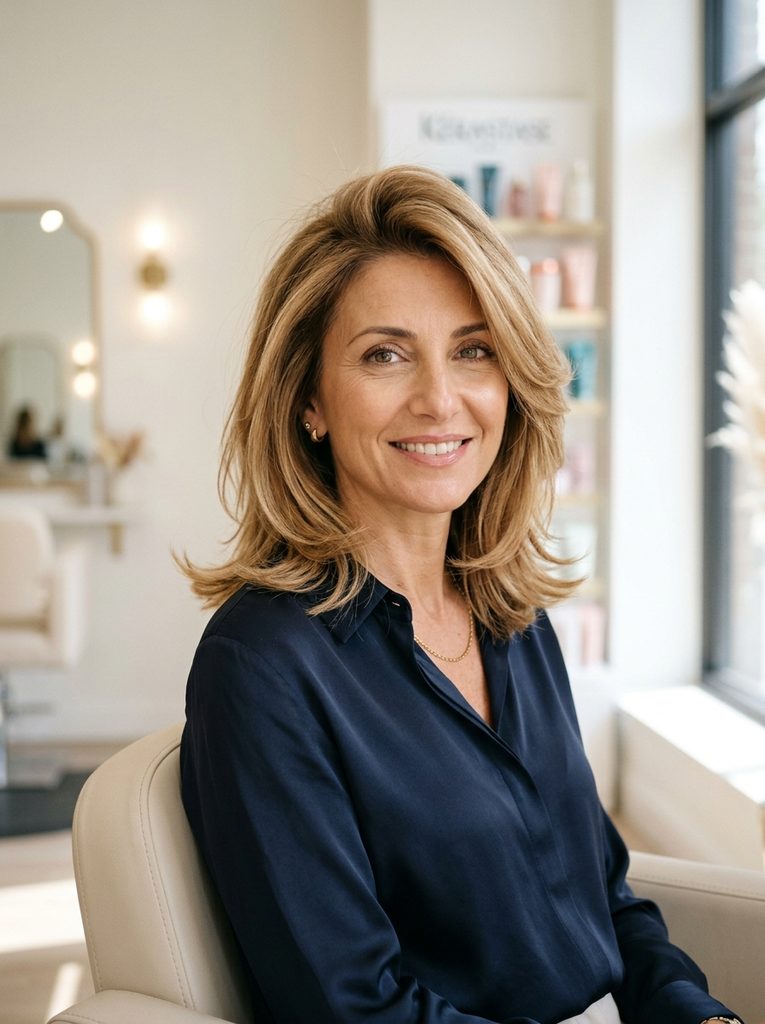
The soft wispy Italian feathered lob combines the full-bodied luxury of classic continental styling with contemporary shattered perimeter feathering. Resting cleanly at the clavicle, this cut features a substantial baseline that is softened with light slicing along the ends to allow the tips to curve naturally around the neck. The interior layers are concentrated around the mid-lengths, providing internal airiness that encourages natural volume and touchable bounce without thinning out the perimeter density. This silhouette is exceptionally flattering for women over forty, as the soft movement along the collarbone frames the neck gracefully while the lifted crown creates balanced vertical facial proportions.
To execute this cut, section clean, damp hair into four standard quadrants, isolating the top crown area with clips. Lower the back nape quadrants and establish a solid perimeter baseline at the collarbone using straight cutting shears held parallel to the floor. Release the crown sections in horizontal tiers, elevating each panel to forty-five degrees and slide-cutting the tips with texturizing shears to introduce soft, blended interior graduation. Apply a nickel-sized amount of lightweight volumizing mousse to damp roots and mid-lengths. Blow-dry using a large ceramic round brush, rolling the ends upward and outward at the base of the neck to set a subtle, sophisticated feathered curve.
 SAVE TO PINTEREST
2. Winged Butterfly Collarbone Cut with Curtain Bangs
Execution Process
The winged butterfly collarbone cut with curtain bangs focuses on multi-tiered, cascading layers that create dynamic root volume and outward wing-like motion. This concept uses short, face-framing layers that begin around the cheekbones, transitioning seamlessly into longer, flowing tiers that graze the clavicle. The accompanying curtain bangs part gently down the center, sweeping outward to open up the eye area and accentuate high cheekbones. This cut provides an optimal solution for medium-to-thick hair densities, removing excess internal weight and allowing natural waves to bounce freely without creating heavy, flat sections around the crown.
Begin by parting damp hair down the center and isolating a triangular fringe section at the front hairline, securing the remaining hair back. Establish the collarbone baseline using sharp shears, lightly feathering the bottom half-inch to eliminate rigid weight lines. Elevate the front quadrants forward at a ninety-degree angle, slide-cutting diagonally from the nose down toward the perimeter to establish the feathered face-framing tiers. Move to the back crown, lifting panels vertically and point-cutting the ends to blend top volume into the baseline. Apply a thermal protectant spray, then blow-dry the curtain fringe outward using a medium round brush before diffusing the remaining lengths.
 SAVE TO PINTEREST
3. Sleek A-Line Feathered Lob with Internal Weight Relief
Setup Method
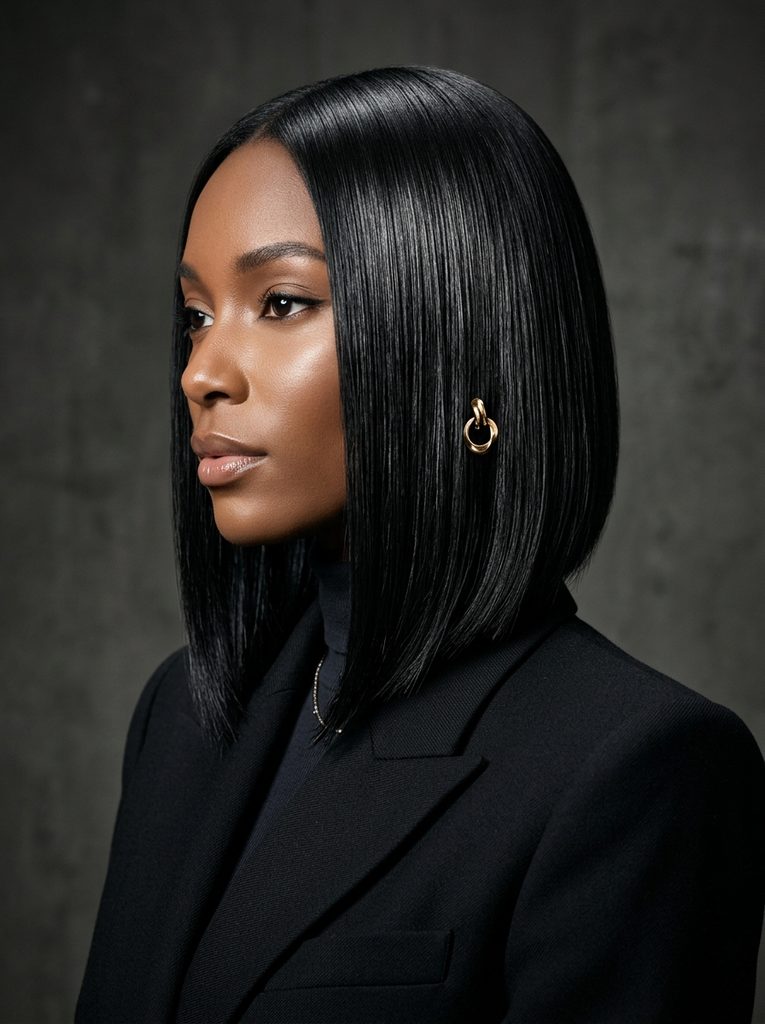
The sleek A-line feathered lob delivers an architectural, modern design aesthetic characterized by a clean forward slant and concealed perimeter texturizing. This concept features a perimeter that is subtly shorter at the nape of the neck, angling gently downward to graze the collarbone at the front. Instead of visible exterior surface steps, this cut relies on internal point-cutting and undercut carving to remove heavy hair density from underneath the exterior mantle. The resulting silhouette maintains the appearance of a solid, smooth perimeter while providing internal airiness, allowing the hair to fall smoothly against the jawline.
Start by tilting the head forward and establishing a clean horizontal baseline across the nape using sharp shears. Section away the top crown mantle using clips, then use texturizing shears or deep point-cutting techniques on the middle occipital sections to hollow out excess internal weight. Release the upper perimeter and cut along a ten-degree forward downward angle, aligning the front perimeter with the collarbone. Apply a dime-sized amount of smoothing heat protectant serum throughout damp strands, then blow-dry using a paddle brush with downward tension. Finish by passing a flat iron through two-inch sections, feathering the front ends slightly inward toward the neck.
 SAVE TO PINTEREST
4. Choppy Deconstructed Feathered Shag with Wispy Fringe
How to Create
The choppy deconstructed feathered shag with a wispy fringe embraces a lived-in, effortless aesthetic through deliberate interior point-cutting and razor-feathered edges. Falling precisely at the collarbone, this cut breaks up dense hair masses into touchable, airy tiers that move naturally with daily activity. The light, wispy fringe skims the eyebrows, softening forehead expression lines while drawing focus directly to the eyes. This cut is particularly suited for naturally wavy or slightly coarse hair, as the interior razor work releases natural strand bends without requiring extensive daily heat styling or chemical smoothing treatments.
To create this deconstructed shape, divide clean, towel-dried hair into horizontal tiers starting from the occipital bone downward. Cut the baseline length at the collarbone using deep vertical point-cuts, inserting the tips of the shears an inch into the hair to create an irregular, feathered perimeter. Elevate random one-inch vertical panels throughout the crown to ninety degrees, chipping into the ends with shears to establish varied layer depths across the top mantle. Cut a soft, eyebrow-grazing fringe dry using vertical snips. Apply a liberal mist of texturizing wave spray across damp hair, scrunching upward with your hands to activate natural wave bends.
 SAVE TO PINTEREST
5. Soft Curved Inverted Lob with Jawline Feathering
Step-by-Step Guide
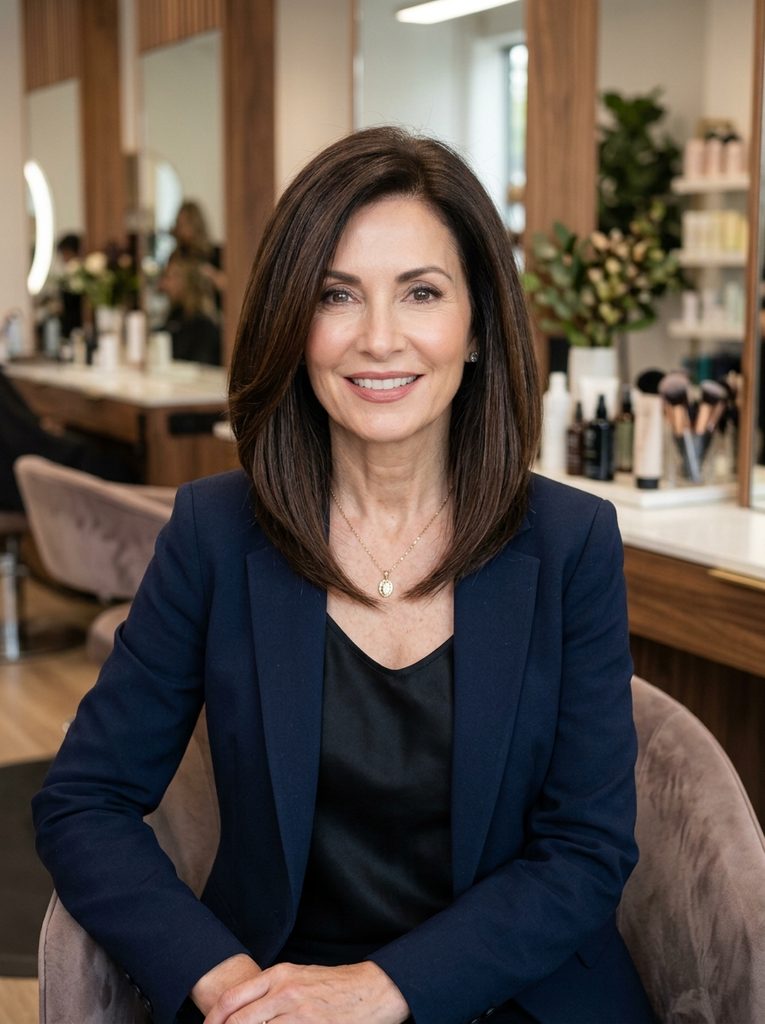
The soft curved inverted lob with jawline feathering features gentle, rounded layers that frame the perimeter of the face from the cheekbones down to the collarbone. Unlike sharp industrial cuts, this variation utilizes curved interior slicing to create soft, feminine C-curves that hug facial contours smoothly. The rounded geometry balances angular jawlines and softens mature facial lines, providing a youthful, radiant frame. This style functions well across diverse hair textures, allowing natural waves to nestle into the tiered curves while preserving a healthy, dense baseline perimeter.
To create this haircut, divide damp hair down the center and isolate the front quadrant panels forward of the ears. Comb the front hair forward at a low forty-five-degree elevation, using slide-cutting techniques with sharp shears to carve smooth, continuous C-shaped curves from the cheekbone down to the collarbone baseline. Elevate the crown sections straight up to ninety degrees, point-cutting the tips to introduce soft surface tiers that blend into the face framing. Apply a lightweight blow-dry lotion throughout the mid-lengths. Dry the hair using a large ceramic round brush, rolling the face-framing panels inward toward the chin to emphasize the soft, feathered curvature.
 SAVE TO PINTEREST
6. Parisian Feathered Collarbone Cut with Brow-Skimming Bangs
Execution Process
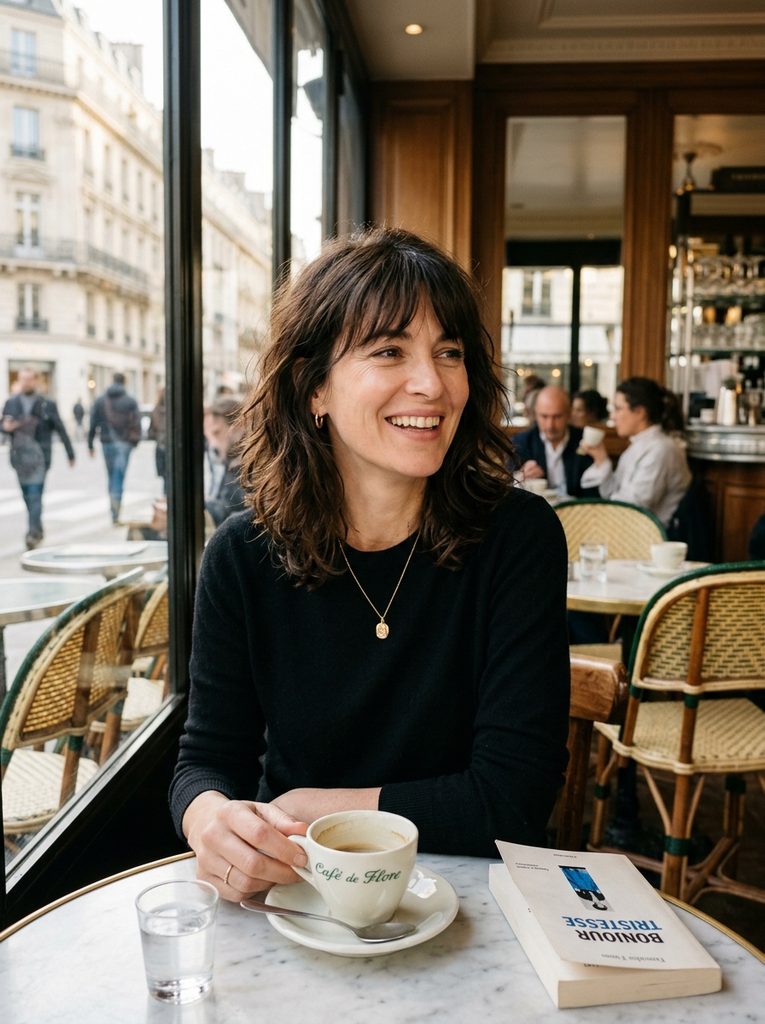
The Parisian feathered collarbone cut with brow-skimming bangs captures effortless European chic through classic proportions, soft feathered textures, and a straight, piecey fringe. This design pairs a classic collarbone-skimming baseline with light surface texturizing and full, wispy bangs that rest precisely at the eyebrow level. The exterior perimeter remains slightly blunt, while the interior and surface layers receive light razor feathering to encourage touchable, undone movement. This cut frames the eyes as a central focal point while balancing facial length, making it exceptionally flattering for oval and high-forehead face shapes.
To craft this timeless cut, isolate a horizontal triangular fringe section extending from the outer corners of the eyebrows to the high point of the head. Cut the fringe dry using the tips of straight shears held vertically, establishing a soft, feathered baseline right at the eyebrow line. Cut the main perimeter length at the collarbone using blunt horizontal shears, then lightly feather the bottom half-inch using texturizing shears to soften the edge. Elevate small surface panels across the top canopy, slicing lightly down the strand with a feather razor. Apply a light leave-in styling cream to damp strands, blow-drying the fringe straight downward with a paddle brush while diffusing the lengths.
 SAVE TO PINTEREST
7. Voluminous Wolf-Style Feathered Lob for Dense Strands
Setup Method
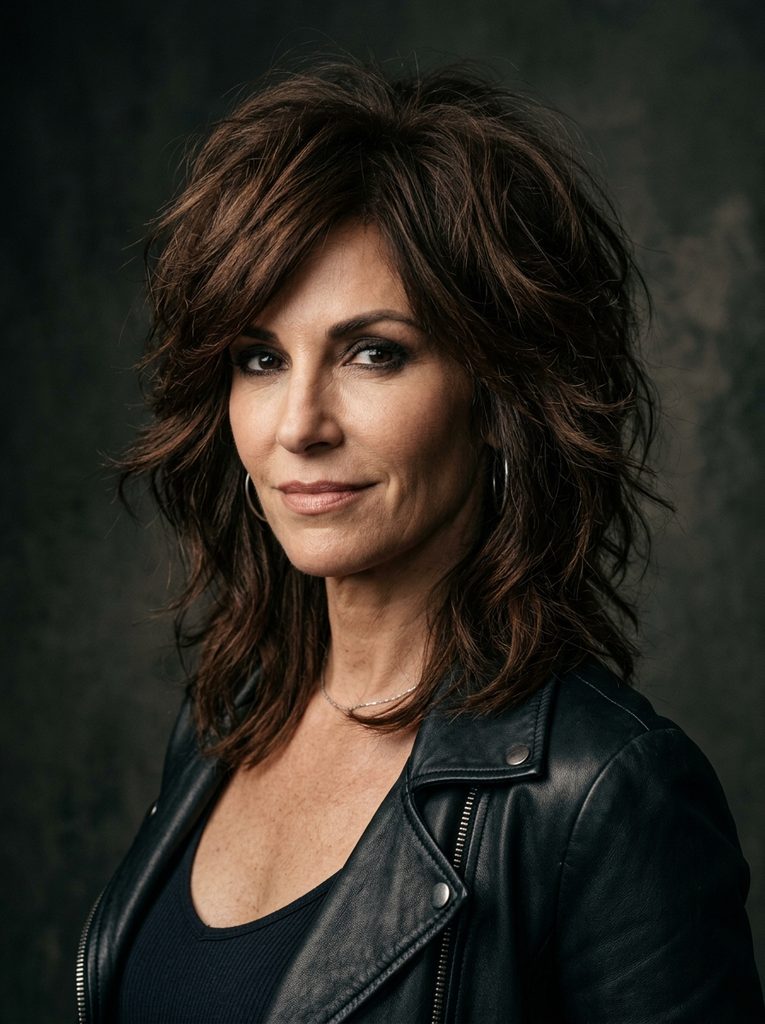
The voluminous wolf-style feathered lob combines the dramatic volume of a classic shag with the structured perimeter of a medium-length long bob. This concept utilizes aggressive short layering through the crown and temple areas, contrasted against a defined, collarbone-grazing baseline. The high-contrast tiering generates explosive root volume and architectural texture at the top of the head while maintaining enough density at the bottom to preserve a cohesive lob silhouette. This style is particularly effective for thick, heavy hair that typically falls flat under its own weight, as the substantial crown weight removal allows the hair to expand upward and outward dynamically.
Begin by sectioning the hair into a top horseshoe crown area and lower perimeter quadrants, clipping the top out of the way. Establish a solid collarbone baseline across the lower perimeter using horizontal scissor cuts to anchor the structural length. Release the horseshoe section, over-directing the hair straight up and forward toward the forehead, cutting horizontally across the top to create short, dramatic crown layers. Blend the transition zones between the crown and lower perimeter using slide-cutting techniques along the parietal ridge. Work a volumizing root powder into damp roots before blow-drying with your head inverted, finishing by defining feathered ends with a matte styling paste.
 SAVE TO PINTEREST
8. Classic Solid Collarbone Cut with Hidden Feathered Tiers
How to Create
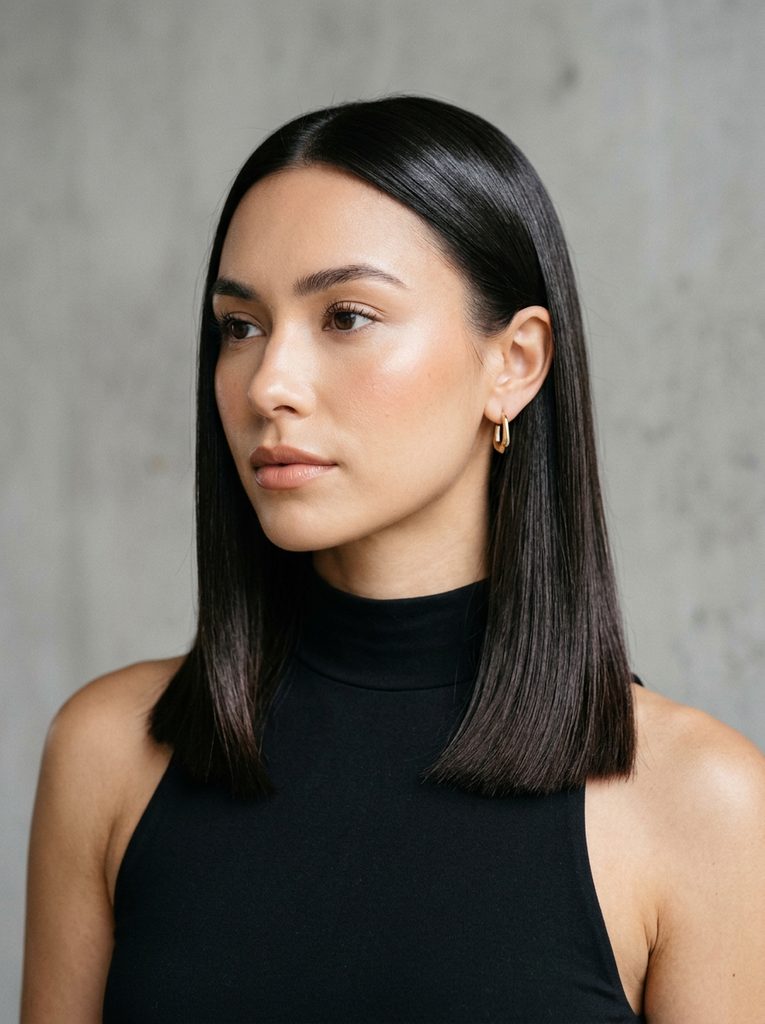
The classic solid collarbone cut with hidden feathered tiers delivers the striking appearance of a heavy, solid perimeter while eliminating the internal density that causes bulkiness. This design appears entirely one-length and razor-sharp from the exterior mantle, while the interior under-layers feature concealed channel cuts or a subtle nape undercut. By removing dense hair clusters from the interior occipital zone, the top hair falls completely flat and uniform without developing an undesirable bell or triangular shape. This specialized technique is ideal for thick, coarse hair types that want a modern minimalist style without struggling against excessive volume.
Start by parting the hair horizontally from the top of the left ear to the top of the right ear, pinning the upper bulk securely away from the nape. Use texturizing shears or point-cutting techniques to reduce the density of this isolated lower tier by thirty to forty percent, maintaining length while removing internal mass. Drop the remaining hair down over the thinned section and establish a crisp, razor-sharp blunt baseline at the collarbone using professional straight cutting shears. Apply a smoothing thermal styling serum from roots to tips. Use a ceramic flat iron in smooth, slow passes to press the hair straight, highlighting the precise, clean exterior edge with subtle feathered ends.
 SAVE TO PINTEREST
9. Dimensional Asymmetrical Feathered Cut with Deep Side Part
Step-by-Step Guide
The dimensional asymmetrical feathered cut introduces high-fashion architectural geometry through a deliberate variation in length between the left and right sides. This design features one side that rests comfortably at the collarbone, while the opposing side is cut one to two inches shorter, cascading diagonally across the chest. A deep side parting complements the unequal proportions, sweeping a dense wave of layered hair across the forehead and cheekbone. The dynamic diagonal lines draw the eye across facial contours, creating an elongating, slimming visual effect that adds instant drama while maintaining soft feathered layers throughout.
Begin by establishing a deep side part aligned with the arch of the client’s eyebrow, combing the hair flat to evaluate natural distribution. Cut the shorter side perimeter so it clears the shoulder cleanly, maintaining a sharp horizontal or slightly angled baseline. Cut the longer opposing side to graze the collarbone, then connect the two perimeters across the back nape using a smooth, diagonal traveling shear guide. Elevate the top layers on the heavier side to forty-five degrees and point-cut the ends to introduce soft, sweeping graduation that flows backward. Apply a light styling mousse to damp hair, blow-drying with a large round brush directed up and over to lock in root volume.
 SAVE TO PINTEREST
10. Whispering Wispy Feathered Shag for Fine Mature Hair
Execution Process
The whispering wispy feathered shag for fine strands maximizes volume and movement without thinning out the structural baseline perimeter. This concept uses short, strategic surface layers placed across the crown, paired with a solid, point-cut baseline around the clavicle. The surface feathering removes top weight, allowing fine wave patterns to spring upward and form airy, touchable texture. The solid perimeter provides structural support, preventing fine mature hair from appearing sparse or stringy. This cut is exceptionally low maintenance, air-drying quickly into an effortless shape that requires minimal product application.
Begin by dampening clean hair and sectioning it into four quadrants, isolating the crown area with clips. Cut the perimeter around the collarbone using shallow vertical point-cuts with straight shears, creating a soft baseline that preserves maximum hair density along the bottom edge. Elevate vertical panels across the top crown to ninety degrees, chipping lightly into the ends to establish short, weightless surface layers that blend toward the back. Apply a liberal mist of texturizing wave spray across damp strands, scrunching upward with your hands to activate natural body. Allow the hair to air-dry naturally, finishing with a light dusting of root-volumizing powder at the crown to lock in separated, airy height.
 SAVE TO PINTEREST
Common Beginner Mistakes and How to Avoid Them
Maintaining a feathered collarbone cut over forty requires avoiding common cutting and styling errors that lead to flat roots, frizzy textures, or unmanageable perimeters. A frequent mistake is over-feathering fine hair, which removes too much density from the baseline, leaving the ends looking thin, sparse, and broken against the collarbone. Prevent this by maintaining a strong, point-cut perimeter and confining texturizing strictly to the internal crown layers. Another widespread error is cutting the front framing layers too short while the hair is wet, failing to account for natural wave bounce and drying shrinkage that can cause face-framing pieces to ride up above the chin. Additionally, using heavy, oil-based waxes or silicone serums can weigh down medium-length layers, collapsing volume within hours of styling. Opt for lightweight water-based styling foams, sea salt sprays, and dry texturizing powders to preserve airy lift and clean layer separation throughout the day.
+------------------------------------+---------------------------------------+
| Common Feathered Cut Mistake       | Practical Prevention Strategy         |
+------------------------------------+---------------------------------------+
| Over-feathering fine baselines     | Maintain a dense, point-cut perimeter |
| Cutting wet framing layers too high| Allow 1-inch buffer for dry shrinkage |
| Using heavy oil-based styling wax  | Choose lightweight foams and sprays   |
| Neglecting thermal protectant spray| Apply heat defense prior to styling   |
+------------------------------------+---------------------------------------+
Practical Tips for Better Results
Achieving salon-quality results at home relies on consistent hair care habits and proper mechanical handling techniques that support mature hair health. When washing medium-length hair, always use lukewarm or cool water to rinse out conditioner, which seals the outer hair cuticle, enhances natural shine, and reduces unwanted frizz across feathered tiers. When blow-drying, rough-dry hair to eighty percent dryness using your fingers before introducing round brushes or styling tools; this reduces heat exposure time and preserves natural strand elasticity. To maintain healthy volume at the roots, clip small metal duckbill clips horizontally at the crown while air-drying, removing them once the hair is dry to reveal natural lift without heat damage. Sleep on a smooth silk or satin pillowcase to reduce nocturnal friction, preventing fine, feathered ends from tangling and snapping overnight.
Styling, Presentation, or Organization Ideas
The inherent versatility of a feathered collarbone cut allows for diverse daily styling adaptations that suit various personal aesthetics and social settings. For casual weekend outings, enhance natural texture by scrunching a lightweight sea salt spray into damp lengths and air-drying, creating an effortless, beach-inspired finish. For polished workplace environments, execute a smooth blowout using a ceramic paddle brush, tucking one side behind the ear to display statement earrings and emphasize the jawline. The collarbone length remains fully compatible with half-up topknots, claw clip French twists, and sleek low ponytails, providing complete practical versatility for workout sessions or warm weather. Pairing your feathered cut with dimensional hair coloring techniques, such as balayage ribbons or subtle face-framing babylights, further accentuates internal layer separation and brings multi-dimensional depth to everyday styles.
Budget or Time Planning
Maintaining the crisp perimeter, balanced weight distribution, and healthy texture of a feathered collarbone cut requires realistic salon scheduling and disciplined product budgeting. Because hair grows at an average rate of half an inch per month, medium-length cuts will begin to lose their distinct structural balance within six to eight weeks as the baseline pushes past the clavicle. Schedule routine maintenance trims every seven weeks with your stylist to keep perimeters clean, refresh the fringe, and restore internal weight balance. Allocate your hair care budget primarily toward foundational essentials: a professional thermal protectant spray, a sulfate-free volumizing shampoo, and a versatile dry texturizing spray. Investing in durable, ionic ceramic styling tools protects mature strands against heat-induced moisture loss, reducing the need for costly restorative salon conditioning treatments over time.
Creative Expansion and Advanced Inspiration
Once you have established your core feathered collarbone silhouette, you can explore creative customizations to adapt your look to changing seasons and personal style preferences. Experiment with subtle, semi-permanent gloss glazes that enhance natural silver, brunette, or blonde tones with cool violet or warm champagne reflections, providing brilliant shine without committing to permanent hair dye. You can also integrate hidden interior undercut patterns along the lower nape, keeping thick hair cool and manageable during warm summer months while maintaining a classic lob profile from the exterior. For special events, enhance natural wave patterns using a wide-barrel waver tool or heatless overnight silk ribbons, adding structured, ribbon-like texture throughout the feathered tiers. These creative updates allow your feathered collarbone haircut to evolve continuously, offering a versatile, empowering medium for sophisticated self-expression throughout every decade of life.