Curating a polished updo hairstyle allows women over fifty to achieve refined elegance, structural crown lift, and practical all-day comfort. As hair matures, changes in natural moisture retention, strand diameter, and density require styling techniques that distribute hair weight evenly without pulling tightly against the scalp. In this comprehensive hair tutorial, you will explore ten distinct updo concepts designed specifically for mature hair textures, ranging from relaxed French twists and low textured chignons to braided crown wraps and voluminous Gibson rolls. Readers will gain clear, step-by-step guidance on structural sectioning geometries, secure bobby pin placement, gentle backcombing mechanics, and lightweight product layering formulas. Incorporating an elevated updo frames the jawline, elongates the neck, and softens facial contours by introducing airy, touchable volume around the temples and crown. The detailed structural breakdowns outlined below provide actionable instructions on evaluating hair density, managing lived-in face-framing pieces, executing heat-safe prep routines, and preserving strand health for an ageless, sophisticated presentation across formal, business, and casual settings.
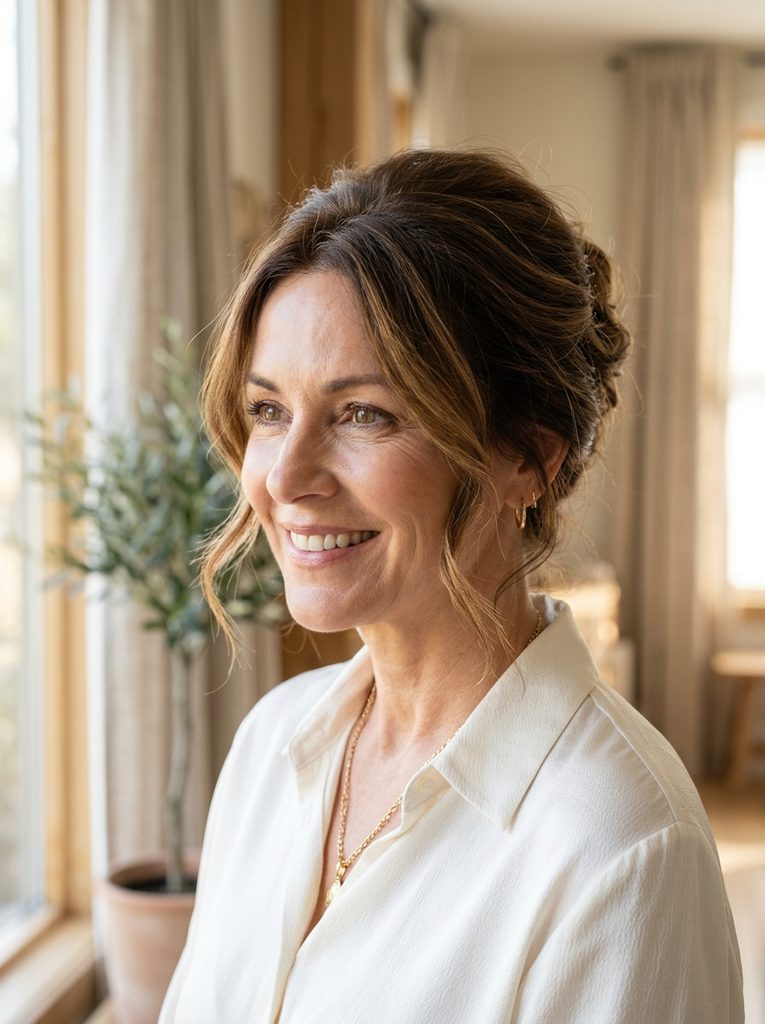
The widespread popularity of updo inspiration for mature women across digital style curation platforms and modern Pinterest ideas stems from a strong demand for versatile, age-positive hair design. Contemporary beauty trends increasingly prioritize soft, touchable updos over stiff, over-lacquered styles, making modern buns and twists an exceptional choice for active, mature lifestyles. The practical value of these hairstyles lies in their ability to protect delicate aging strands from daily friction while keeping hair neatly secured throughout long events. The design relevance focuses on facial lifting; positioning volume strategically at the occipital bone or mid-crown draws the visual center of gravity upward, accentuating the cheekbones and eyes. For beginners styling hair at home, modern updos provide an approachable DIY routine that relies on simple hair padding, mini claw pins, and texturizing sprays rather than complex professional salon equipment. Furthermore, relaxed updo techniques celebrate diverse hair colors, beautifully showcasing silver transitions, dimensional highlights, and multi-tonal lowlights with effortless sophistication.
Achieving a secure, professional updo at home requires deliberate workspace preparation, appropriate styling implements, and quality holding compounds before pinning begins. Essential physical tools include salon-grade steel bobby pins, open hair pins, seamless mini elastics, a fine-tooth teasing comb, a boar-bristle smoothing brush, sectioning clips, and a three-way handheld vanity mirror. Recommended styling materials encompass weightless dry texturizing sprays, flexible-hold finishing hairsprays, volumizing root powders, and botanical hair oils to smooth flyaways. Preparation begins with thoroughly dry hair washed twenty-four hours prior, as day-two hair provides natural grip that prevents pins from slipping out of place. Before styling, apply a light mist of texturizing spray through the mid-lengths and brush out any tangles from ends to roots. Planning the placement of your updo is equally critical; assess your face shape and neck posture to determine whether a low nape placement, mid-level chignon, or higher crown roll provides the most flattering vertical balance.
Relaxed French Twist with Feathered Tendrils
Step-by-Step Guide
The relaxed French twist with feathered tendrils reinterprets a classic formal silhouette by replacing stiff, plastered layers with soft, textured volume and loose face-framing strands. This hairstyle gathers mid-length to long hair into a vertical seam along the back of the head, tapering neatly from the crown down to the nape of the neck. Unlike traditional rigid twists, the modern variation incorporates gentle crown elevation and intentional softness around the hairline to flatter mature facial features. By leaving delicate wisps free around the temples and ears, this style softens forehead expression lines and creates an open, youthful frame that suits formal dinner dates, weddings, and business events.
Begin by misting dry texturizing spray across the roots and mid-lengths, using a teasing comb to backcomb the crown gently for subtle vertical height. Gather all the hair toward your non-dominant side, securing a vertical row of crisscrossed bobby pins from the nape upward along the center line. Smooth the free hair over the pinned foundation toward the opposite side, twisting the lengths upward into a tight vertical roll along the pinned seam. Tuck the loose ends inside the top opening of the roll, inserting long open hair pins vertically along the seam edge to anchor the twist securely to the base pins. Gently pull two thin, wispy strands loose around the temples, smoothing them with a drop of hair oil, and set the finished twist with a flexible-hold hairspray.