10 Asymmetrical Undercut Pixie Over 40 Haircut Ideas
 SAVE TO PINTEREST
The asymmetrical undercut pixie haircut is a precision-crafted, high-impact hairstyle designed to provide women over 40 with structural lift, facial contouring, and modern elegance. As natural hair matures, changes in hormone levels and follicle vitality often cause strands to lose density, elasticity, and root volume, causing traditional single-length cuts to appear heavy or static. An asymmetrical undercut pixie counters this issue by removing unnecessary bulk from one side and the nape through a tailored undercut, while allowing the opposite side and crown to cascade in longer, sweeping layers. This structural contrast naturally redirects visual focus upward and diagonally across the face, sharpening the jawline, highlighting the cheekbones, and opening up the eye area. This comprehensive guide details ten distinct asymmetrical undercut pixie concepts tailored specifically for mature women. Readers will explore the architectural principles behind clean sectioning, clipper graduation, crown elevation, fringe texturizing, and daily maintenance routines. Applying these practical techniques enables individuals to achieve a bespoke, salon-quality look that balances an edgy modern aesthetic with effortless daily functionality.
Why This Idea Is Trending or Useful
The asymmetrical undercut pixie has emerged as a dominant trend across modern Pinterest inspiration boards because it combines bold high-fashion design with unmatched daily practicality. Traditional short crops often require constant heat styling and heavy pomades to prevent flat silhouettes, but the asymmetrical undercut builds dynamic root elevation directly into the haircut’s architecture. This self-supporting geometry makes the style an accessible, beginner friendly option for anyone seeking an effortless, wash-and-go morning routine that remains polished and professional. Contemporary design standards prioritize clean, sculpted lines paired with touchable, lived-in layers across the top. The practical value of this haircut lies in its adaptability to diverse hair densities; fine textures gain significant volume from the structural undercut shelf, while thick or coarse textures shed unmanageable bulk along the neck and sides. The DIY appeal of quick styling, combined with graceful grow-out phases, makes this haircut a sustainable aesthetic choice. Its balanced asymmetry provides an immediate visual lift, offering a versatile framework that flatters mature facial features with confidence and sophistication.
Materials and Preparation
Achieving an accurate asymmetrical undercut pixie requires professional cutting tools, sectioning equipment, and lightweight styling formulations designed to support internal separation. Essential hardware includes high-grade Japanese steel cutting shears measuring 5.0 to 5.5 inches for detail work, professional adjustable clippers with guard attachments ranging from number two to four, a guarded texturizing razor, fine-toothed carbon fiber cutting combs, and duckbill sectioning clips. Thinning shears with 20 to 28 teeth are necessary for selective weight removal without disrupting the primary baseline. Preparation begins with a gentle clarifying wash to eliminate product residue, followed by a weightless, protein-enriched conditioner applied strictly to the mid-lengths to maintain root buoyancy. Mapping the disconnected parting and clipping the undercut should be performed on evenly damp hair to ensure crisp, clean lines. Conversely, crown layering, diagonal fringe carving, and surface texturizing must be finalized on completely dry hair to observe natural growth directions, whorls, and hairline cowlicks. Key planning considerations involve evaluating the client’s cranial curvature, natural hairline recession, jawline angle, and daily styling habits to avoid over-shortening sensitive perimeter zones.
Asymmetrical Undercut Pixie Inspirations for Women Over 40
Idea 1: Classic Sweeping Fringe Asymmetrical Undercut Pixie
Step-by-Step Guide
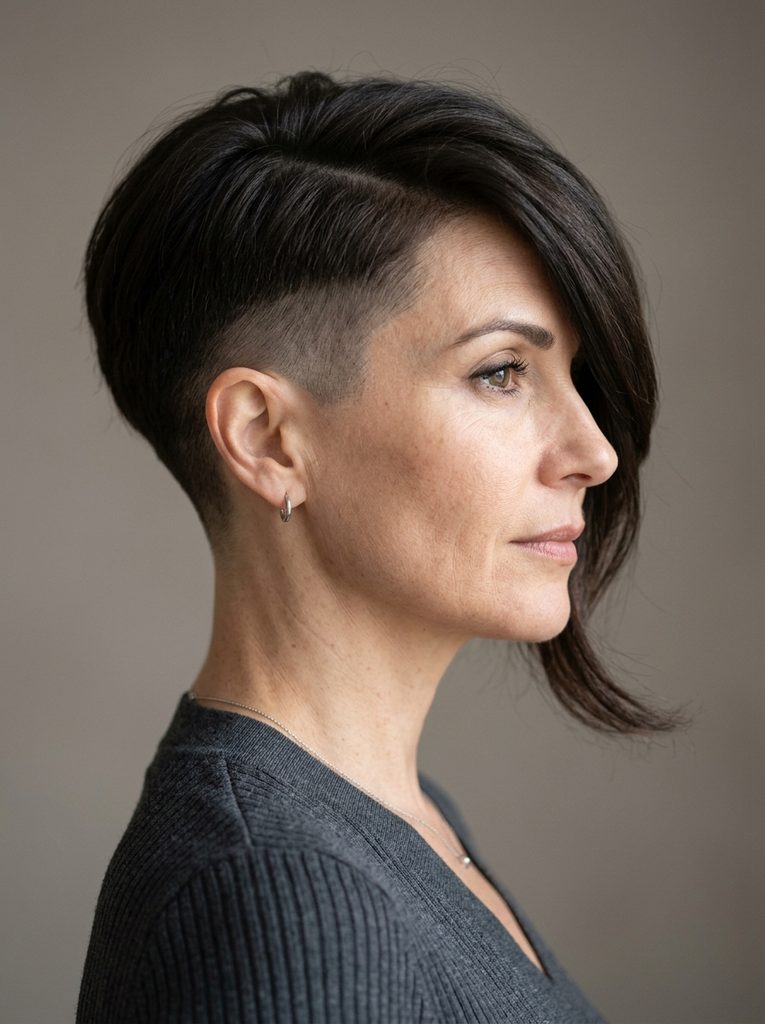
The classic sweeping fringe asymmetrical undercut pixie relies on an architectural silhouette that balances a closely clipped temple and nape with an elongated, cascading front drape. One side is cropped close to the scalp using a graduated clipper fade, exposing the ear and defining the cheekbone. The opposite side retains substantial length, featuring a dense, diagonal fringe that sweeps gracefully across the forehead from a deep side part. The crown is layered in fine increments to create natural root lift, which is particularly beneficial for mature hair that has lost internal density. This directional flow draws the eye diagonally across the facial plane, minimizing cheek width and softening forehead lines. The overall aesthetic is sleek, refined, and structured, providing an instant visual lift that highlights the natural beauty of women over 40.
Begin the haircut on damp hair by establishing a crisp, diagonal-back parting from the high recession point on the shallow side around to the opposite mastoid process. Clip the top canopy away securely. Use adjustable clippers with a number three guard to execute a graduated taper across the exposed temple and lower nape, blending smoothly down to a number two at the neckline. Release the top canopy, establishing a diagonal traveling guideline that ascends from the crown toward the longer front side. Elevate the crown sections to 90 degrees and point-cut deeply to build internal buoyancy. On dry hair, carve the sweeping fringe using slide-cutting shears, tapering from the eyebrow arch down to the opposite jawline. Blow-dry the fringe forward and across using a flat paddle brush, finishing with a drop of lightweight hair serum for a smooth, polished finish.
 SAVE TO PINTEREST
Idea 2: Textured High-Volume Crown Pixie with Hidden Temple Undercut
Execution Process
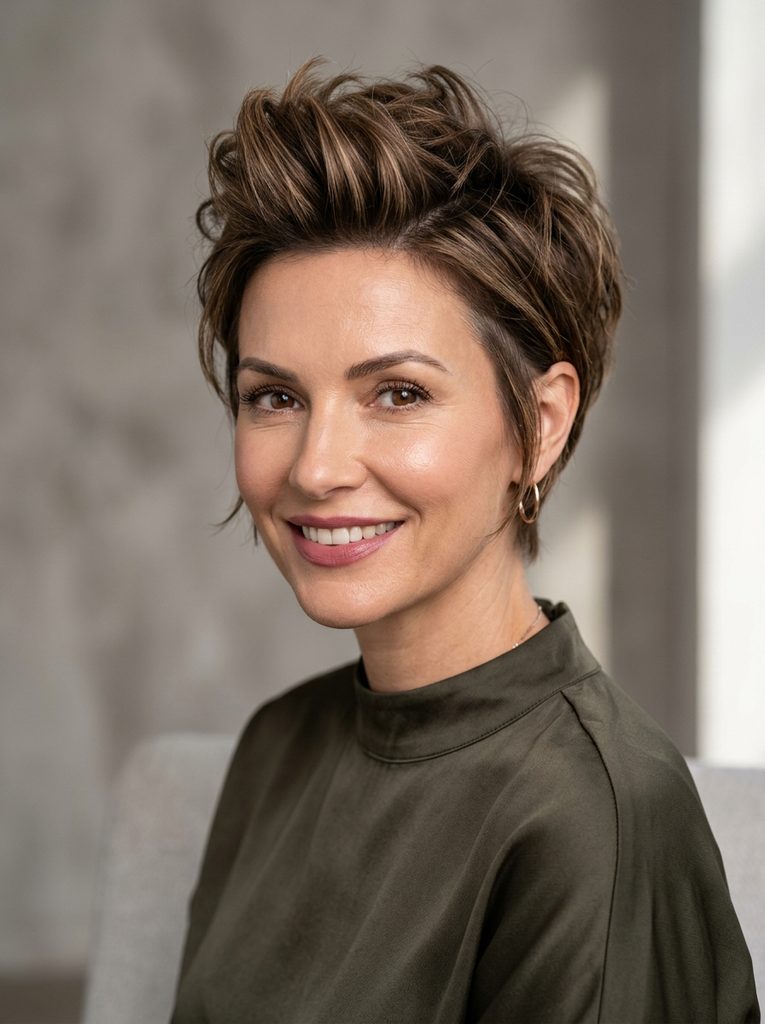
The textured high-volume crown pixie with a hidden temple undercut is designed to maximize vertical height while discreetly removing density from thick or unruly hair. The undercut is placed beneath the parietal ridge on one side, hidden beneath the longer top layers when combed flat, but revealed when the hair is swept upward or tucked behind the ear. The upper crown is cut into short, vertical point-cut tiers that stand off the scalp, creating durable volume that resists falling flat throughout the day. The sideburn on the long side is softly feathered to frame the jawline, while the nape is tapered into a clean, graduated curve. For mature women, this high-lift silhouette visually counteracts facial sagging by drawing visual attention upward toward the vertex of the head, delivering an energetic, youthful profile.
To create this haircut, dampen the hair and isolate a shallow horseshoe section beneath the parietal ridge on the chosen side, securing the upper canopy. Use clippers with a number four guard to remove bulk cleanly along the temple, tapering down slightly at the sideburn. Release the upper canopy and section the crown into horizontal panels centered at the apex. Elevate each panel vertically to 180 degrees and execute deep notch cutting to produce textured, varied lengths across the top surface. Blend the back into a soft, scissor-over-comb nape taper that contours the lower hairline. Blow-dry the crown using high airflow and low heat, using your fingers to lift the roots directly off the scalp. Finish on dry hair by working a pea-sized amount of matte texturizing paste through the crown, pinching the tips into defined vertical peaks.
 SAVE TO PINTEREST
Idea 3: Razored Shaggy Asymmetrical Pixie with Feathered Nape
How to Create
The razored shaggy asymmetrical pixie with a feathered nape is an airy, touchable haircut that eliminates all harsh perimeters in favor of soft, diffused terminations. Executed primarily with a guarded texturizing razor, every strand terminates in a feather-light point that drapes softly against the skin. One side features a soft, razor-tapered undercut that clears the ear, while the opposite side extends downward in shaggy, disconnected tiers that terminate past the jawline. The rear nape is lightly feathered with the razor, extending slightly past the natural hairline to create a soft, flattering frame for the neck. For women over 40, this design offers a gentle aesthetic that softens mature facial angles and injects natural movement into straight or slightly wavy hair textures, making daily styling effortless.
Begin on thoroughly saturated hair using a razor with a fresh blade to prevent dragging delicate hair strands. Divide the head into two asymmetrical zones using a deep, curved side part. On the shorter side, hold the razor at a 15-degree angle flat against the skin, carving soft, downward strokes to create a close, feathered taper around the ear. Transition to the longer side, elevating vertical subsections to 90 degrees and razor-slicing from the mid-shafts down to the ends to establish shattered, shaggy tiers. Lift the crown panels to 180 degrees and slice lightly across the surface to build weightless internal movement. Rough-dry the hair using a diffuser on low heat, using your hands to encourage strand separation. Finalize by detailing the long jawline pieces with dry shears to ensure fluid, separated drape.
 SAVE TO PINTEREST
Idea 4: Sleek Architectural Bob-Pixie Hybrid with Disconnected Undercut
How to Make
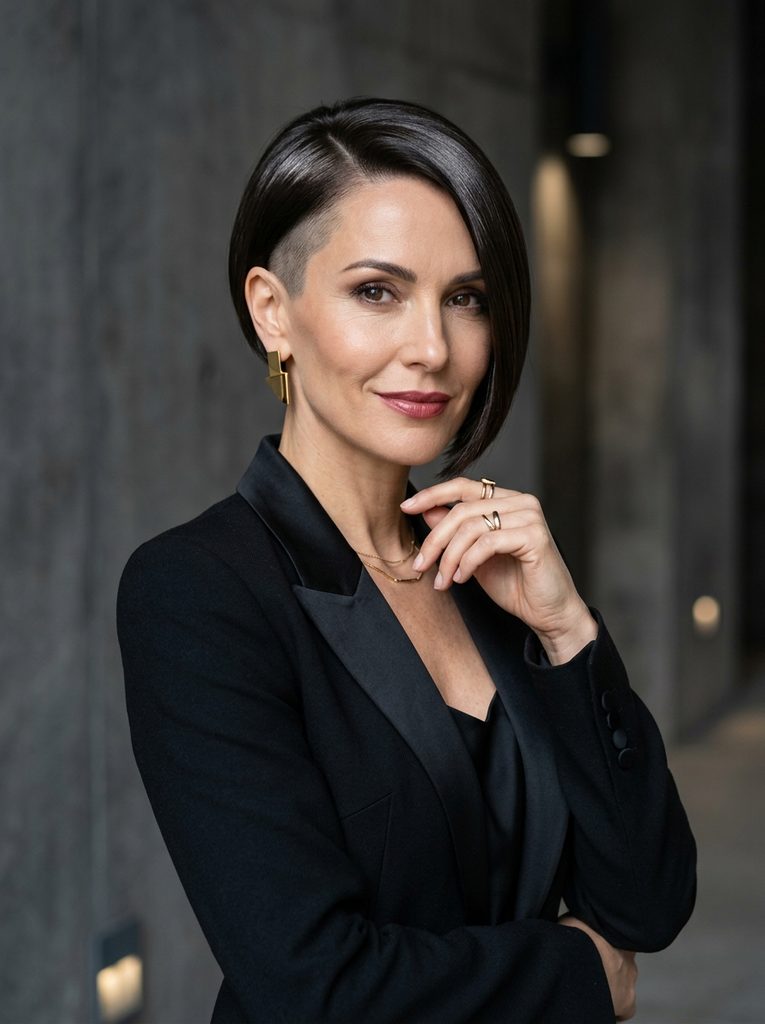
The sleek architectural bob-pixie hybrid with a disconnected undercut combines the crisp, polished line of a short bob with the bold contrast of an undercut crop. The shallow side and nape are clipped close with a precision fade, creating a stark, clean border along the hairline. The longer side is cut into a sharp, geometric bob shape that angles steeply from the crown down to the chin, hanging over the undercut base without blending. This structural disconnection allows the surface hair to swing freely without being pushed outward by underlying density. For women over 40, this cut delivers an executive, high-fashion appearance that sharpens soft jawlines, creates dramatic visual interest, and highlights healthy hair shine with minimal daily styling intervention.
Start on damp hair by isolating a clean horizontal parting around the occipital bone and up along the shallow temple, clipping the upper canopy securely away. Use clippers with a number two guard to create a uniform, clean taper across the entire lower section, terminating in a crisp, clean baseline along the neck. Release the upper hair and establish a deep side part. Cut the perimeter of the longer side along a steep diagonal-forward guideline that extends to the chin, using zero-elevation blunt cutting with shears for maximum sharpness. Lift the interior crown panels to 90 degrees and point-cut lightly across the surface to remove weight while keeping the exterior baseline intact. Blow-dry completely smooth using a flat paddle brush, finishing with a light flat-iron pass and a drop of shine serum.
 SAVE TO PINTEREST
Idea 5: Edgy Spiky Crown Pixie with Tapered Fade Undercut
Execution Process
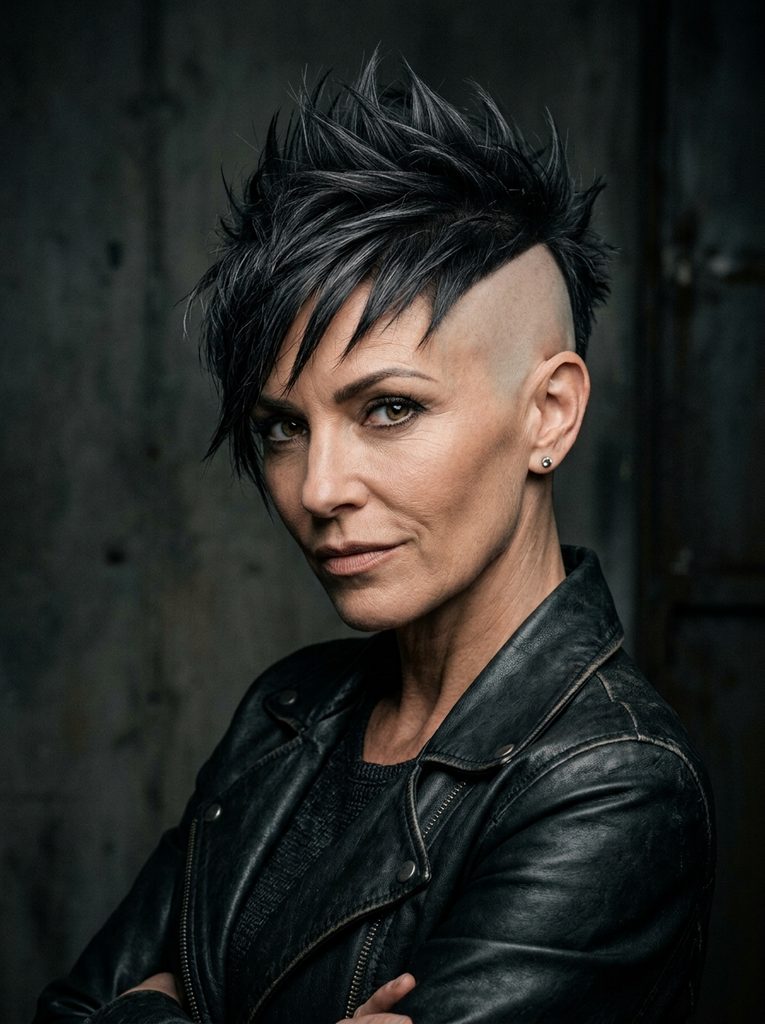
The edgy spiky crown pixie with a tapered fade undercut is a modern, high-contrast hairstyle designed for women who embrace bold, sculptural geometry. The undercut side is faded tightly from a skin taper up to a number two guard at the parting line, providing a clean, masculine-inspired foundation. In contrast, the top and opposite side feature heavily textured, spiky layers that stand vertically or angle sharply forward. The fringe on the long side is cut jagged and piecey, resting across the brow to highlight the eyes. This cut completely eliminates dragging weight, drawing all visual focus upward and outward. For mature women with active lifestyles, this energetic cut offers exceptional daily comfort, requiring less than five minutes of styling time while projecting a confident aesthetic.
Initiate the cut on damp hair by establishing a clean parting along the parietal ridge on the undercut side. Use professional clippers to execute a clean fade, starting with a number one guard at the sideburn and nape, blending upward into a number two at the disconnection line. Release the top canopy and divide it into radial subsections centered at the vertex. Lift each subsection straight up at 90 degrees and execute aggressive notch cuts at alternating depths, creating short, self-supporting tiers that stand independently. Cut the long front fringe dry using vertical shear tips to establish a jagged, piecey baseline across the brow. Blow-dry the crown rapidly using high airflow and fingers to direct the roots upward. Apply a fingertip amount of matte texturizing clay, working it through the crown to sculpt defined spiky points.
 SAVE TO PINTEREST
Idea 6: Soft Wavy Asymmetrical Undercut Pixie
Setup Method
The soft wavy asymmetrical undercut pixie is engineered specifically for mature hair with natural wave patterns or gentle body. The undercut is kept soft and graduated, cropped close around one ear and the nape using a scissor-over-comb technique rather than bare clippers. The longer side and crown are cut in cascading tiers that follow the natural wave formation, allowing the curls to stack into soft, rounded volume across the top and side of the face. The longer pieces curve gently around the cheekbone, softening angular features and framing the eyes. This cut celebrates natural hair texture while providing a tailored, professional framework that keeps mature waves looking defined, bouncy, and controlled without expanding into an unmanageable shape.
Begin on thoroughly conditioned, damp hair by sectioning a clean parting from the recession point across to the opposite ear, isolating the undercut zone. Use shears over comb with light tension to cut a soft, graduated taper along the exposed temple and nape, following the natural hairline to prevent harsh edges. Release the top canopy, taking horizontal subsections lifted to 45 degrees, and point-cut along the curve of the head to establish cascading tiers that support natural wave formation. Carve delicate, pliable wisps around the long cheekbone side using vertical shear tips. Apply a lightweight curl-defining lotion evenly through the damp lengths. Dry the cut using a diffuser on low heat, gently cupping the waves upward toward the scalp without disrupting the root alignment. Finish by misting with a flexible-hold hairspray to preserve definition.
 SAVE TO PINTEREST
Idea 7: Voluminous Platinum Pixie with High-Contrast Dark Undercut
How to Create
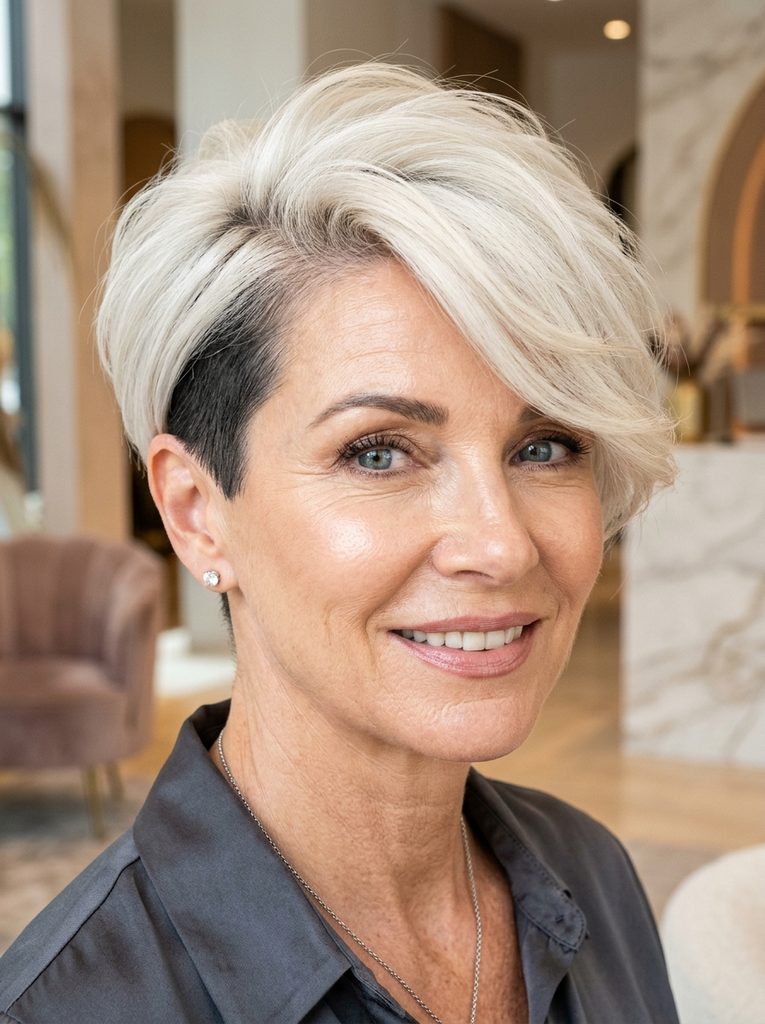
The voluminous platinum pixie with a high-contrast dark undercut uses color dimension and structural disconnection to create maximum visual depth. The closely cropped undercut area is maintained in a deeper natural tone, providing a solid shadow beneath the lightened surface canopy. The longer top layers are cut in multi-directional increments, allowing the bright, platinum surface strands to separate and reveal the dark base beneath. The asymmetry is highlighted by a long, side-swept fringe that drapes past the cheekbone, contrasting sharply against the cropped, dark temple. For women over 50 with naturally graying or lightened hair, this style turns color transitions into an intentional design feature, giving fine hair the appearance of dense, multi-layered thickness.
Start on damp hair by establishing a precise, curved parting running from the temple around the occipital bone, clipping the upper crown away. Use clippers with a number three guard to create a uniform, clean taper across the lower perimeter, creating a clean base for the dimensional color. Release the upper crown and divide it into horizontal subsections. Elevate each panel straight up to 90 degrees from the scalp and point-cut along a traveling guide to build rounded internal volume. Cut the sweeping diagonal fringe on dry hair, tapering from the brow arch down to the opposite cheekbone. Blow-dry the crown forward and upward using a medium ceramic round brush to build root lift. Finish the style by applying a micro-dusting of volumizing powder at the roots to lock in height.
 SAVE TO PINTEREST
Idea 8: Tapered Nape Italian Pixie with Deep Sweeping Part
Step-by-Step Guide
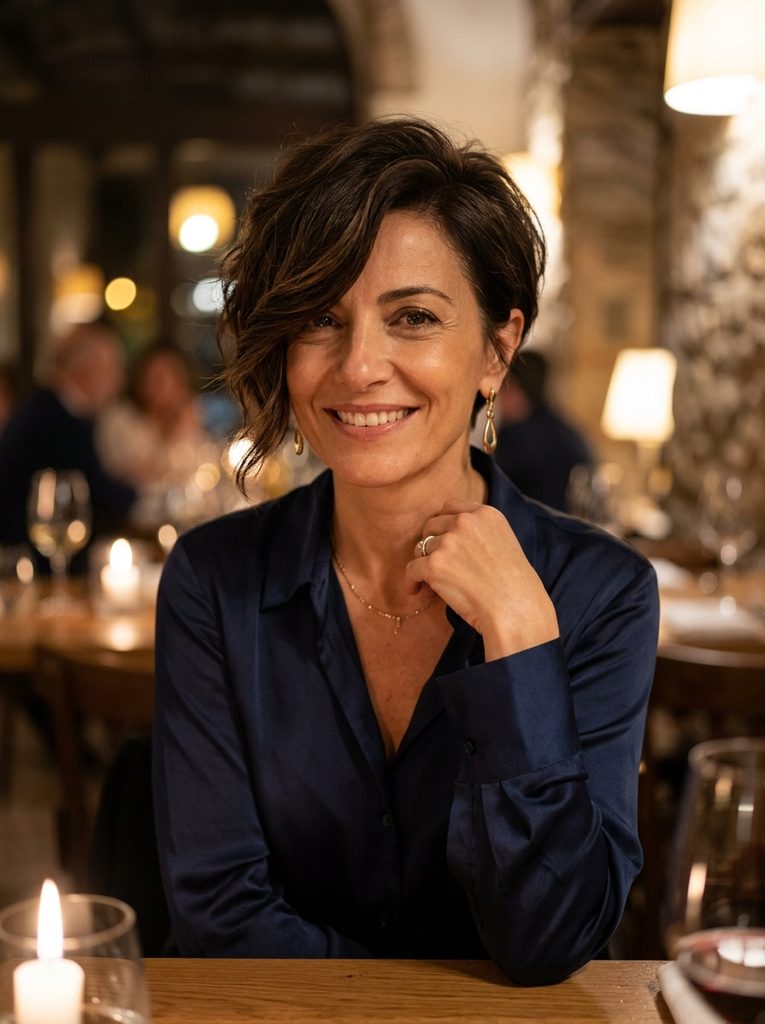
The tapered nape Italian pixie with a deep sweeping part is a luxurious, chunky short cut that combines structured perimeter weight with airy, touchable surface layers. One side features a soft, graduated undercut that clears the ear, while the opposite side extends downward in chunky, feathered tiers that graze the jawline. The styling centers around a deep, casual side part that can be flipped effortlessly, instantly generating dramatic root lift. This cut is particularly flattering for mature women because the fuller perimeter on the long side adds the appearance of thickness and vitality to thinning ends, while the tailored undercut eliminates bulk around the neck. It projects an effortlessly chic aura that transitions easily between professional and casual settings.
Initiate the haircut on damp hair by establishing a deep side parting aligned with the outer corner of the eye. Isolate the shallow temple and lower nape, using a shear-over-comb technique to build a soft, graduated taper that hugs the neck seamlessly. Transition to the heavier side, angling the baseline diagonally downward toward the jaw, utilizing zero-elevation point cutting to maintain length while creating a soft edge. Elevate the crown sections to 90 degrees and use slide cutting through the mid-lengths to debulk the interior without compromising the asymmetrical outline. Blow-dry the entire shape with a large round ceramic brush, rolling the hair away from the face to create soft, touchable waves. Finish by running fingers through the crown to encourage natural, lived-in separation.
 SAVE TO PINTEREST
Idea 9: Geometric Asymmetrical Crop with Micro-Fringe Accents
Execution Process
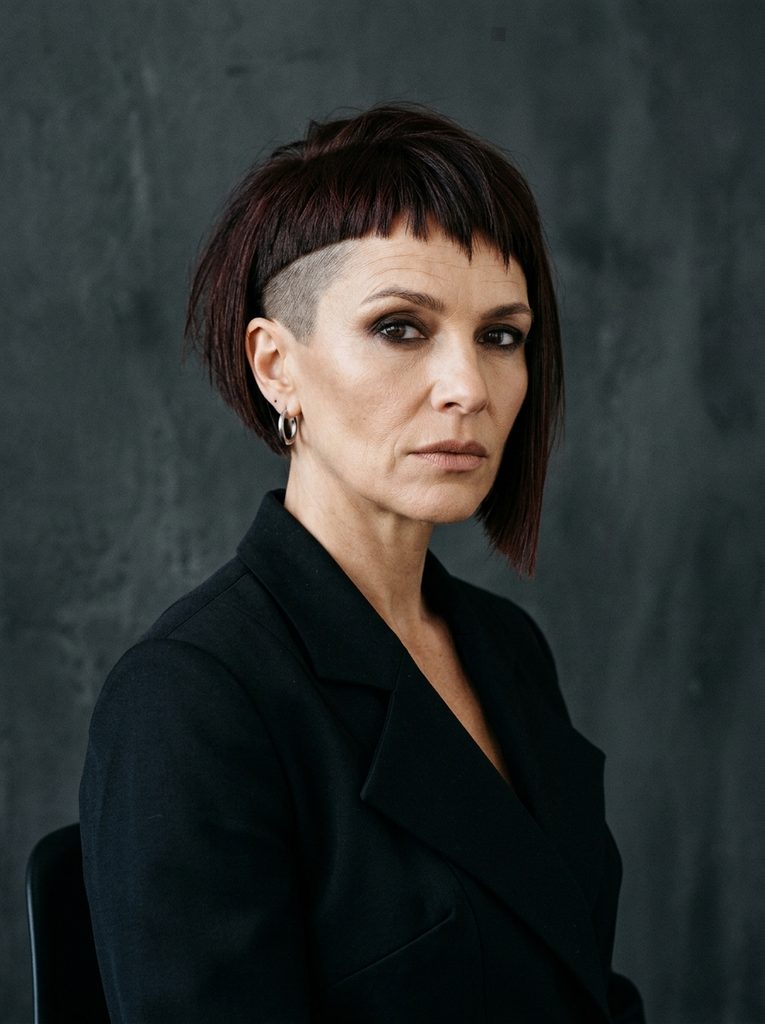
The geometric asymmetrical crop with micro-fringe accents is an avant-garde short haircut that combines clean architectural lines with high-contrast texturizing. One side of the head is cropped down to a tight undercut that extends from the temple down to the nape, establishing a crisp, modern boundary. The opposite side falls in structured, razor-cut layers that frame the cheekbone, while the front features a textured micro-fringe that rests well above the eyebrows. This short fringe opens up the eye area and creates vertical space that counteracts facial roundness. For women over 40 seeking a bold, artistic style, this haircut delivers high visual impact, sharpens facial contours, and transforms fine or thick hair into a modern design statement.
Begin on damp hair by isolating the micro-fringe with a shallow horizontal parting across the forehead, approximately one inch back from the hairline. Cut the micro-fringe dry with vertical shears, keeping the placement high above the eyebrows and using micro-point cuts to create a textured, see-through edge. Section the undercut zone cleanly with duckbill clips, using clippers with a number two guard to create a uniform taper along the temple and nape. Release the remaining hair on the longer side, elevating panels to 45 degrees and razor-slicing downward from the cheekbone to the perimeter to carve broken, geometric layers. Blow-dry the hair straight down using a flat paddle brush to smooth the cuticle. Once dry, detail the front perimeter points with thinning shears for clean, fluid movement.
 SAVE TO PINTEREST
Idea 10: Piecey Bixie Undercut with Wispy Temple Tendrils
How to Make
The piecey bixie undercut with wispy temple tendrils merges the cropped ease of an undercut pixie with the versatile perimeter of a short bob. The lower nape and one side are cut into a close, graduated taper, removing all excess weight and visually elongating the neck. The top canopy falls over the undercut in soft, cascading tiers that terminate around the earlobe, featuring delicate, razor-carved tendrils that frame the cheekbones. The fringe is cut with soft graduation, blending smoothly into the long side layers. This hybrid cut is suited for women over 40 who want to experiment with an undercut while retaining soft, feminine face-framing pieces, providing an instant visual lift that remains easy to manage and style.
Begin on damp hair by isolating the crown and parietal sections with clips, leaving the nape and shallow temple exposed below the occiput. Use a shear-over-comb technique to create a graduated taper that follows the natural hairline cleanly. Release the lateral and parietal sections, elevating the hair horizontally to 90 degrees and razor-cutting soft, feathered layers that terminate around the earlobes. Bring down the crown section, lift the hair straight up to 180 degrees, and point-cut deeply across the top surface to build weightless volume. Cut the wispy side fringe dry, starting at the bridge of the nose and slide-cutting outward to the cheekbones. Blow-dry the tapered nape flat with a paddle brush while lifting the crown layers with your fingers. Finish by applying a drop of lightweight styling lotion to define the feathered tips.
 SAVE TO PINTEREST
Common Beginner Mistakes and How to Avoid Them
The most frequent error when executing an asymmetrical undercut pixie on women over 40 is cutting the undercut section too high up the skull, extending past the parietal ridge. An excessively high undercut removes critical structural support for the top layers, causing the longer canopy to fall limp and exposing scalp contours awkwardly. To avoid this, stylists should strictly anchor the undercut line along or below the parietal ridge, following the natural curvature of the skull. Another common mistake is creating a blunt, horizontal line along the longer front drape, which creates a boxy, heavy appearance that weighs down mature facial features. Always ensure the longer side is detailed with slide cutting or point texturizing to maintain a soft, feathered finish. Over-thinning fine hair with aggressive thinning shears is another widespread issue; excessive thinning strips away strand density, leaving the top layers looking stringy and sparse. Stylists must preserve baseline density before applying internal weight reduction techniques. Finally, failing to identify natural crown whorls and hairline cowlicks before cutting can cause the crown layers to stand upright or split awkwardly once dry. Always evaluate the hair’s natural growth direction in a completely dry state before finalizing layer lengths.
Practical Tips for Better Results
Achieving optimal results with an asymmetrical undercut pixie requires using proper drying methods and selecting weightless styling products that promote separation without collapsing root volume. When blow-drying, use a directional flat-wrap technique—brushing the longer canopy across the scalp in alternating directions with a vent or paddle brush. This neutralizes natural cowlicks, flattens the cuticle, and distributes root volume evenly across the crown. Avoid using heavy waxes, dense pomades, or silicone-heavy oils, as these formulations weigh down fine mature hair fibers, causing the layers to clump into greasy, separated sections. Instead, prioritize lightweight styling options such as dry texturizing sprays, root-lifting mousses, and matte volume powders applied directly to the roots. When detailing the longer fringe, apply a tiny drop of lightweight hair serum to your fingertips and lightly pinch only the tips to emphasize razor-cut separation. To refresh the cut between washes without wetting the entire head, mist the roots with water, apply dry shampoo to absorb excess oils, and blow-dry the crown upside down for thirty seconds to instantly restore volume.
Styling, Presentation, or Organization Ideas
Organizing a dedicated daily styling station ensures that maintaining an asymmetrical undercut pixie remains quick, effortless, and consistent every morning. Keep essential styling tools neatly arranged: a professional lightweight ionic hairdryer with a precision concentrator nozzle, a small ceramic round brush for fringe shaping, a wide-tooth comb for wet detangling, and a multi-directional vent brush for root elevation. Group styling products according to their application stage: root-lifting mousses for damp prep, heat protectants for blow-drying, and dry texturizing sprays for final finishing. For a polished, professional presentation, style the haircut with a sleek finish—smoothing the undercut side flat against the scalp while blow-drying the longer canopy into a smooth, beveled drape across the cheekbone. For an everyday relaxed look, rough-dry the hair using only hands and directional airflow, finishing with a light dusting of volumizing powder at the crown to lock in height. This systematic approach ensures your short cut looks intentional, modern, and aligned with current aesthetic trends.
Budget or Time Planning
Maintaining a precision asymmetrical undercut pixie requires realistic time allocation and financial planning to keep structural lines sharp and crown volume balanced. An initial haircut transformation at a salon typically requires 45 to 60 minutes, allowing sufficient time for consultation, wet baseline mapping, clipper detailing, drying, and precision dry texturizing. Because the closely cropped undercut reveals growth quickly, this style requires maintenance trims every 3 to 5 weeks to preserve the clean perimeter and keep the longer canopy properly proportioned. To optimize personal grooming budgets, schedule full haircut appointments every other visit, utilizing quick, low-cost “clipper cleanup and neck trim” services in between. Daily styling is exceptionally time-efficient, requiring only 5 to 8 minutes when using the correct prep products and drying techniques. Investing in high-quality professional home tools, such as an ionic dryer, ceramic brushes, and personal trimmers for minor neck touch-ups, reduces daily styling friction while preserving hair health over the long term.
Creative Expansion and Advanced Inspiration
Once the foundational asymmetrical undercut pixie is established, women over 40 can explore advanced color placements and subtle texture variations to further enhance the cut’s multi-dimensional architecture. Dimensional color techniques work hand-in-hand with structural short cuts; incorporating delicate baby-lights, face-framing highlights, or subtle balayage creates contrasting depth that visually separates individual layers. Placing brighter tones around the sweeping fringe draws the eye upward, accentuating vertical height, while keeping the cropped undercut naturally dark creates a shadow effect that defines the jawline. Mature women embracing natural gray or silver hair can incorporate clear gloss treatments or violet-toning glazes to enhance shine and give the layered cut a luminous finish. For special occasions, experiment with subtle parting shifts or light styling irons to introduce soft waves to the longer side. Minimalist hair accessories, such as architectural metal bobby pins or sleek barrettes placed just above the undercut line, provide a sophisticated touch that highlights the contrast between the cropped side and sweeping canopy.