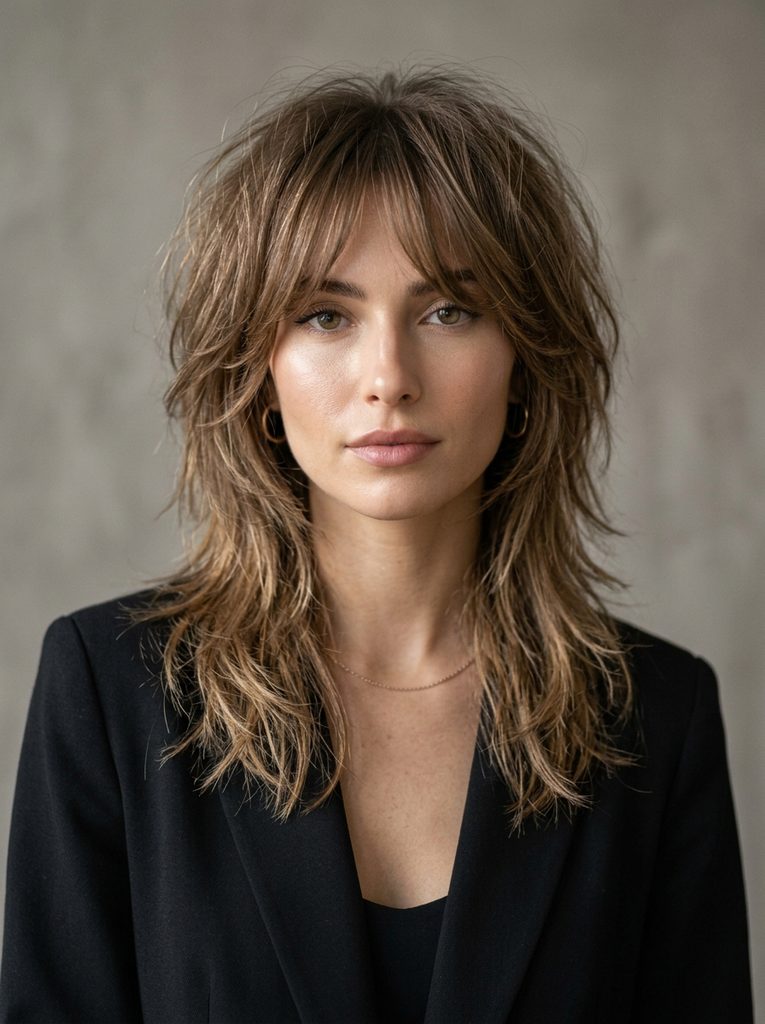
The fairy shag haircut for straight hair is an airy, multi-dimensional hairstyle that blends vintage seventies shags with ethereal, wispy perimeter detailing. Straight hair textures frequently struggle with flatness, limp volume, and a lack of natural movement when cut into blunt or heavy shapes. By integrating strategically carved interior layers with delicate, piecey exterior ends, the fairy shag transforms straight hair into an effortless, weightless silhouette full of natural texture and separation. This comprehensive guide outlines the anatomy of the cut, the fundamental techniques required to build dynamic shape, and ten distinct variations suited for every face shape, hair density, and length. Readers will learn how professional stylists map sectioning patterns, debulk weight without creating harsh lines, select tailored styling products, and preserve structural movement between salon visits. Adapting this cut to straight hair allows individuals to achieve instant crown volume, frame facial features with precision, and eliminate time-consuming heat styling routines. The architectural balance of soft fringes, feathered temples, and wispy perimeters offers a versatile aesthetic that bridges alternative styling with everyday elegance, delivering a bespoke haircut that enhances the natural density and shine of straight hair textures.
Why This Idea Is Trending or Useful
The fairy shag has emerged as a dominant trend across digital inspiration boards due to its intersection of low-maintenance functionality and distinct visual character. Straight hair often requires excessive thermal styling, backcombing, or heavy chemical treatments to achieve noticeable body, but the fairy shag builds structural volume directly into the haircut itself. This structural approach eliminates the daily struggle against flat roots, making it an exceptionally beginner friendly option for individuals seeking an effortless morning routine. Modern design trends consistently favor lived-in, organic shapes over rigid, high-maintenance salon blowouts, and the fairy shag perfectly captures this relaxed aesthetic. Additionally, the cut offers remarkable accessibility across various hair thicknesses; fine hair gains the illusion of fuller density through stacked crown layers, while thick hair sheds cumbersome weight via internal point cutting and slide cutting techniques. The DIY appeal of maintaining micro-trims at home, combined with the haircut’s ability to grow out seamlessly without awkward transition phases, makes it an enduring choice for sustainable beauty routines. Its adaptable nature allows wearers to customize perimeter lengths and fringe profiles, creating a modern design that elevates natural hair dynamics with minimal daily effort.
Materials and Preparation
Achieving a clean fairy shag on straight hair requires specific cutting tools, texturizing implements, and lightweight styling formulations designed to support internal movement. Essential hardware includes professional Japanese steel shears ranging from 5.5 to 6 inches for precise point cutting, feathering razors with guarded blades for soft perimeter carving, sectioning clips, and a fine-tooth cutting comb for tension control. Thinning shears with 20 to 30 teeth provide controlled weight reduction without disrupting the overall shape. Preparation begins with a clarifying shampoo wash followed by a weightless, silicone-free conditioner to ensure the hair fibers remain clean, pliable, and free of product residue that could mask natural growth patterns. Work with damp hair when mapping baseline perimeters, but transition to completely dry hair when executing internal texturizing, slide cutting, and crown weight removal. Planning considerations must evaluate the client’s hair density, natural cowlicks, hairline direction, and cranial structure before removing length. Assessing these variables beforehand prevents over-layering fine hair or creating unwanted ledge effects in dense hair, ensuring that every carved layer sits flush and transitions smoothly into the surrounding sections.
Fairy Shag Variations for Straight Hair
Idea 1: Classic Wispy Fairy Shag with Curtain Bangs
Concept and Profile
The classic wispy fairy shag with curtain bangs relies on soft, arching facial framing and balanced internal layering to elevate straight hair without compromising overall density. This variation establishes an ethereal frame around the cheekbones, using center-parted bangs that taper gently downward into feathered temple sections. The silhouette emphasizes crown height and soft, separated lengths, creating a dynamic visual hierarchy that breaks up flat vertical lines. Straight hair benefits significantly from this profile because the multi-tiered interior layers remove heavy bulk from the mid-lengths, allowing the crown to lift naturally. The perimeter remains lightweight, featuring delicate ends that flare slightly outward when hitting the collarbones. This balance ensures the cut maintains a continuous cascade of movement while avoiding a hollow baseline. The curtain bangs serve as an adaptable anchor, permitting wearers to tuck them behind the ears or sweep them forward to contour the eye line. The overall aesthetic is romantic, lightweight, and structured to highlight the natural gloss and smoothness inherent to straight hair textures.
Step-by-Step Guide
To execute this classic cut, begin by sectioning the hair into four primary quadrants: two front-temple sections and two posterior quadrants split vertically down the occipital ridge. Establish the perimeter baseline across the collarbones using zero-elevation point cutting to maintain soft, diffused edges. Isolate a triangular fringe section at the apex of the forehead and cut the curtain bangs using a center-outward slide cutting technique, over-directing each side across the opposite eye to achieve a graduated taper. Transition to the crown by lifting horizontal partings at a 90-degree angle from the scalp, cutting the interior layers in a curved traveling guide to generate lift. Connect the shortest crown layers to the front perimeter using deep diagonal-forward point cutting, ensuring no abrupt demarcations occur between the bangs and the side lengths. Dry the hair straight with a round ceramic brush focused solely on lifting the roots. Once dry, soften the interior weight by slide cutting through the mid-lengths with texturizing shears, establishing effortless airiness throughout the cut.