Idea 5: Long Cascade Fairy Shag with Soft Tendrils
Concept and Profile
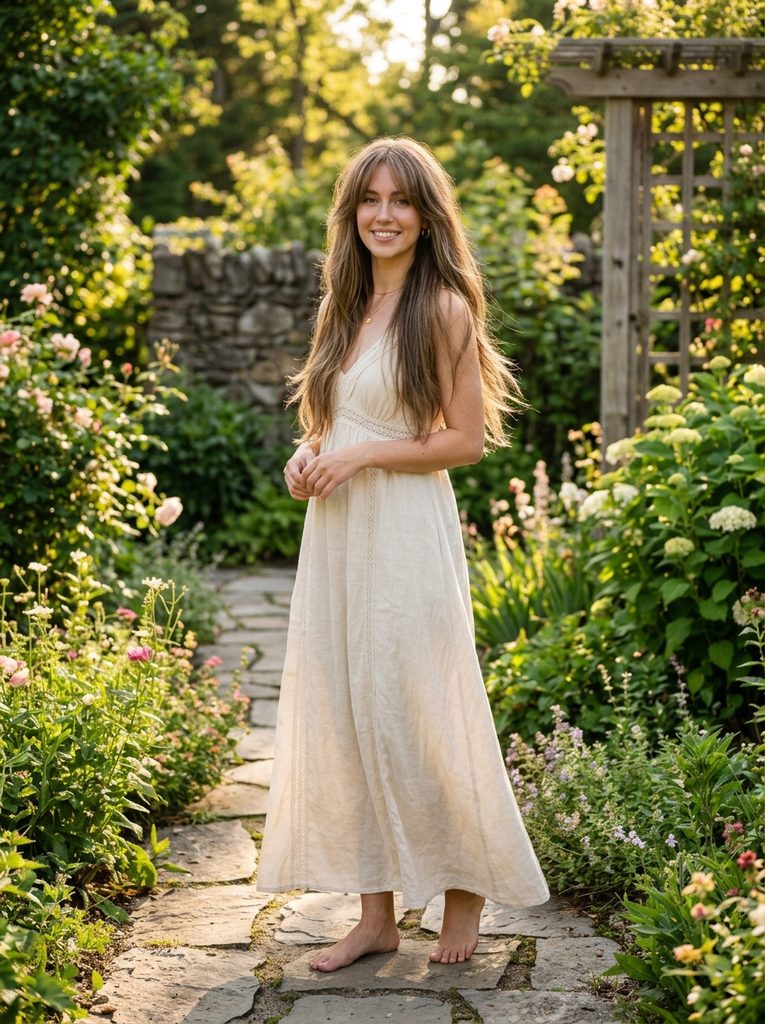
The long cascade fairy shag provides a method for retaining substantial hair length while completely eliminating the heavy, curtain-like drag common to long, straight hair. Traditional long straight cuts often appear static, pulling flat at the scalp due to gravity; this variation counters that issue by carving a network of internal layers extending from cheekbone level down to mid-back. The surface displays cascading ribbons of hair that catch natural air currents, while the perimeter remains airy, textured, and tapered into soft tendrils. The styling focuses on framing the neck and shoulders with delicate, elongated wisps that contrast with the dense interior body. This cut is suitable for thick, straight strands that require extensive weight distribution to gain lift, as well as finer hair looking to maintain length without appearing stringy. The result is a flowing, organic shape that feels completely weightless, offering versatile movement and dimension across extended lengths.
How to Create
Initiate the haircut on thoroughly detangled, damp hair by parting it cleanly down the center. Establish the extended perimeter length using vertical point cutting along the back baseline, angling the shears deeply to avoid creating a rigid horizontal edge. Create a halo section around the top of the crown and isolate it. For the lower mid-lengths, use vertical travel partings lifted at a 90-degree elevation, point cutting deeply into the hair shaft to remove internal mass while leaving perimeter length untouched. Bring down the halo section and over-direct it forward to the front hairline, cutting in an ascending angle to create short, buoyant top layers that cascade down into the mid-lengths. Dry the hair using a paddle brush with directional airflow to flatten the cuticles while keeping the roots lifted. Once dry, perform channel cutting through the interior—deliberately removing slender ribbons of hair internally to allow the remaining straight strands to float freely and form distinct, floating tendrils.