Idea 2: Feathered Pixie Fairy Shag
Concept and Profile
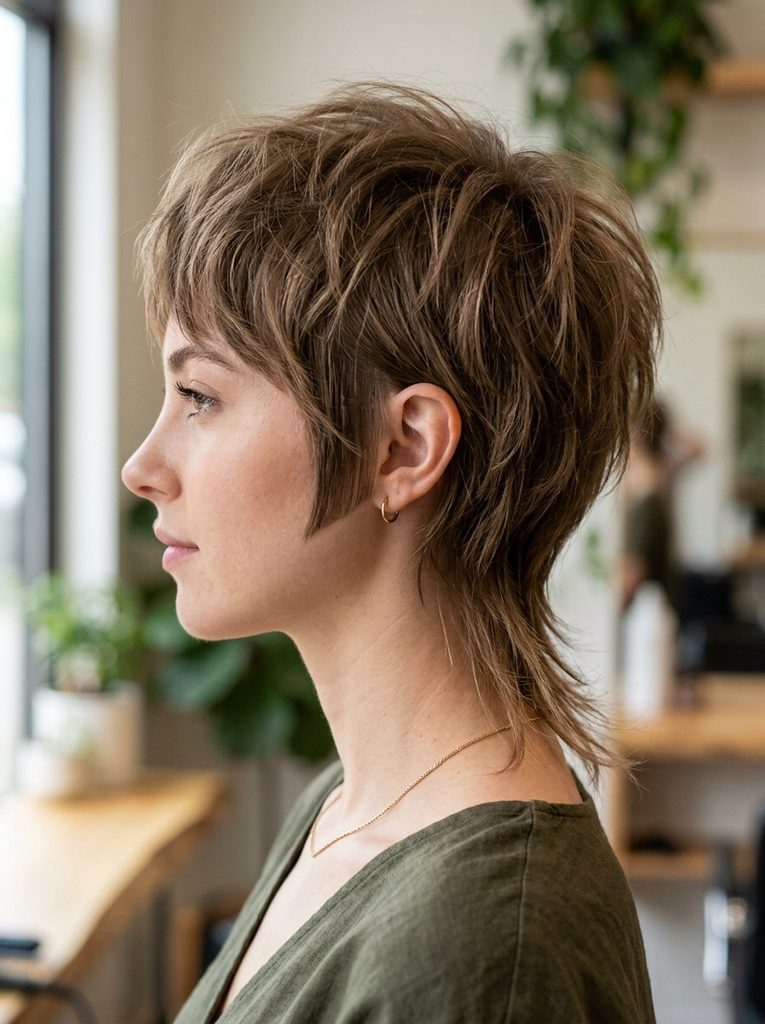
The feathered pixie fairy shag merges the compact structure of a cropped pixie with the elongated, wispy elements characteristic of traditional shag silhouettes. Designed specifically for shorter straight hair, this cut accentuates the jawline, ears, and neck through delicate, directional layering. The top sections are carved into soft, feathered pieces that can be directed forward or swept to the side, generating volume at the parietal ridge where straight hair typically lies flat. The back tapers neatly into an elongated, wispy nape that extends past the natural hairline, providing the signature fairy silhouette. This elongation at the neck grounds the short proportions, preventing the cut from looking like a standard masculine crop. Fine straight hair excels with this style because the close-cropped sides create contrast against the textured top, giving the visual impression of substantial thickness. The shape remains pliable and light, responding well to minimal product application while retaining its distinctive geometry throughout daily wear.
Execution Process
Begin the execution on clean, towel-dried hair by isolating the elongated nape section from the upper crown using a horizontal parting from mastoid to mastoid. Cut the nape perimeter with a guarded razor, utilizing light flicking motions to establish feathered, uneven points that rest softly against the neck. Section the parietal ridge and sides, working with vertical partings lifted at 45 degrees to maintain slight weight along the ear line while blending into the longer top sections. Move to the crown and over-direct all upper hair backward toward the apex, point cutting at a 90-degree elevation to build interior volume without removing surface length. For the fringe, carve fine, wispy micro-layers across the forehead using vertical razor strokes. Once the hair is fully blow-dried flat with a directional styling brush, refine the piecey surface by using dry-shears to notch into the hair shaft at random intervals. Apply a pea-sized amount of matte texturizing paste to the fingertips, lightly twisting individual points around the crown, ears, and nape to define the feathered silhouette.